
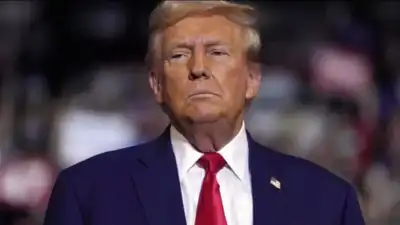
The slowdown comes as the Trump administration considers whether to resume military strikes on Iran after Tuesday’s midterm elections.
They say the situation brings back concerns about intelligence failures exposed after the September 11, 2001, al-Qaeda attacks. Lawmakers and their staff also briefly stopped receiving intelligence reports from Gabbard’s office following the US military intervention in Iran in June 2025 and again after the capture of former Venezuelan President Nicolás Maduro in January 2026, two people familiar with the matter said. The ODNI was established after the September 11 attacks to improve coordination among intelligence agencies. The NIC’s reports are designed to combine the views of all 18 US intelligence agencies. Gabbard’s office stopped briefing lawmakers on threats to US elections in 2025, according to two people familiar with the matter and a former US official. 11, 2001, al Qaeda attacks.
The disruption in intelligence sharing has not been previously reported.
The sharing of US intelligence on Iran and other global threats with Congress and government agencies has slowed, with some exchanges temporarily halted, during US president Donald Trump’s second term, eight current and former officials briefed on the matter told news agency Reuters. the fallout continues to affect intelligence-sharing arrangements, two US officials familiar with the matter said Although tensions have eased since Gabbard resigned in June. The dispute between the CIA and the ODNI, two of the country’s most important intelligence agencies, became one of the biggest turf battles in three decades, according to officials. It became so serious that White House Chief of Staff Susie Wiles had to step in several times to ease tensions, three former officials said. The NIC, already affected by staff cuts, has since slowed the production of its reports, two people familiar with the matter said. Five current and former officials said none of its assessments had focused on the war in Iran. A CIA spokesperson, Liz Lyons, said the agency “participates fully” in preparing intelligence assessments through the Presidential Daily Brief, which is led by the ODNI, and through the NIC. An ODNI official said the council had maintained assessment levels close to “historic trendlines”. “While Tulsi did not utilize the NIC, DNI Clayton has proven to be a good steward of the IC and recognizes the value of the NIC,” a US official said, referring to Director of National Intelligence Jay Clayton. Two former officials and a serving US official said this was happening, although they did not identify the subjects on which analysts were avoiding taking a different position. “Analysts still do the work, but this White House has made them irrelevant because the president treats unwelcome information as disloyalty,” said Julia Curlee, a former CIA analyst who said she was fired from Trump’s National Security Council last year for being transgender. Beth Sanner, a former deputy director of national intelligence during Trump’s first term, said the weakening of intelligence coordination could make it harder for policymakers to understand complex global threats. “All of these things are adding up in a really complex world where policymakers need to have a more sophisticated, nuanced, and integrated view of the world, and they are getting less,” she said. “The problem is that by taking actions which have the effect of hollowing out institutions where there’s actual intelligence community coordination on things, you’re creating little lily pads, and then everybody can pick their own lily pad to listen to,” he said. Clayton, who took over as director of national intelligence in August, has since restarted those briefings, officials said. “Director Clayton remains committed to ensuring that ODNI and the intelligence community have the resources they need to continue informing key US government decision-makers and keeping Americans safe,” the ODNI said in a statement to Reuters. The FBI stopped sharing some intelligence with the centre for several weeks late last year after its then-head, Joe Kent, and his staff tried to investigate the shooting of Charlie Kirk, the founder of Turning Point USA, two former officials said. FBI leaders told Kent they believed the NCTC was exceeding its authority. Earlier reporting noted: US intelligence sharing has fractured under Trump, report says US intelligence sharing on Iran and other global threats with Congress and across the federal government has slowed and, in some cases, temporarily stopped during President Donald Trump’s second term, according to eight current and former officials and people briefed on the matter. Earlier reporting noted: Former officials and outside experts said the disruptions risk leaving policymakers with an incomplete picture of threats facing the country, echoing intelligence failures exposed after the Sept. problems stemming from the clash persist, according to two US officials familiar with the matter While those tensions have subsided since her resignation in June.
Former officials and intelligence experts have warned that the disruptions could leave policymakers without a complete picture of threats facing the US. The slowdown comes as the Trump administration considers whether to resume military strikes on Iran after Tuesday’s midterm elections. The problems began during Tulsi Gabbard’s tenure as director of national intelligence, when her office was locked in a major dispute with the CIA. The CIA has stopped jointly preparing assessments with the National Intelligence Council (NIC), an analytical body within the Office of the Director of National Intelligence (ODNI). This has reduced the number of reports that bring together the views of different intelligence agencies for senior officials and policymakers, including on issues such as Iran. Gabbard’s team had accused lawmakers of leaking information to the press. The rift began after Gabbard’s office revoked the security clearances of serving and former intelligence officials about a year ago. One major consequence was the CIA’s decision to stop contributing to assessments prepared by the National Intelligence Council. For decades, the council has helped lawmakers and government officials understand international developments and make foreign policy decisions. The council had relied heavily on the CIA for analysis of countries such as Iran and Russia. The CIA continued to share intelligence with the council and contributed to some reports, but its analysts began focusing on assessments produced independently by the agency. Some former intelligence officials say analysts are increasingly cautious about producing assessments that might contradict the White House’s position, fearing political retaliation. Morgan Muir, who served as deputy director of national intelligence under former President Joe Biden and also briefed President George W. Bush, warned that the breakdown of coordination could leave officials relying on separate sources of information rather than a common assessment. The intelligence-sharing problems have also affected congressional briefings. A separate dispute also disrupted cooperation between the FBI and the National Counterterrorism Center (NCTC). The FBI did not respond to a request for comment.
The problems within the intelligence community emerged last year as the Trump administration cut staff and resources at national security agencies, including the ODNI and the CIA, while removing or sidelining officials it considered disloyal. Earlier reporting noted: The problems emerged during Tulsi Gabbard’s tenure as director of national intelligence, amid deep tensions between her office and the CIA. The slowdown comes as the administration weighs whether to resume strikes on Iran after the midterm elections on Tuesday.
Meanwhile, four former US officials said they were working on a bipartisan basis at Stanford University’s Hoover Institution to develop proposals for rebuilding the intelligence community under the next administration. You use AI every day. Now get your AI Quotient. Take the AIQ test.