
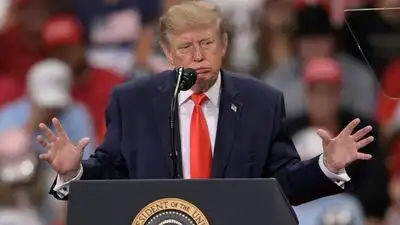
MAGA boss is getting huffy about the physical toll.
The reference was to the 1978 incident in Guyana, when more than 900 followers of cult leader Jim Jones died in a mass murder-suicide episode unparalleled in modern history. The president’s own rallies have become an increasingly unpredictable mixture of political campaigning, stand-up comedy, grievance therapy — and occasionally, an anatomy lecture even as his party’s ass is on line come November 3. Because interviewee often appears oblivious to the fact that the exchange is being consumed as comedy rather than political persuasion, the audience is invited to laugh, cringe or marvel.
But this is as close as I’ll ever get…There’s nothing like seeing a cult right up front,” he said. TOI Correspondent from Washington: US President Donald Trump has spent an extraordinary amount of campaign time discussing the physique of other public figures, including their butts, legs, and other physical attributes. GOP candidates have a rather more pressing anatomical question: does Trump still have legs to carry them over the line in the midterms elections While the Republican Party supremo may be preoccupied with posteriors and treating his MAGA masses to jokes about asses. At a Trump rally in South Carolina last week, a man approached by Fox News was asked the perfectly innocuous question: Why are you here? “Well, in the late 70s, I was a little too young to go to South America for the Jonestown Massacre. The reporter, who had assumed the man, a former Republican, was a Trump supporter, bolted in embarrassment to find someone else to interview. Yet this is the peculiar political chemistry of MAGA; Trump knows his audience, and his audience knows him. Their relationship is not necessarily built on policy consistency, intellectual coherence or even conventional political expectations; It is built on identity, grievance, resentment and an enduring conviction that Trump, however outrageous, is fighting their battles despite stories of grift and corruption Washington is now awash with. The generational friction has also become lucrative entertainment for many liberal podcasters and social-media influencers who have discovered that interviewing committed Trump supporters, asking seemingly straightforward questions, and allowing the answers to speak for themselves can generate enormous online engagement. The format is simple: find a MAGA dope, ask about a policy, a political contradiction or an extraordinary presidential statement, and let the conversation unfold. And Trump himself continues to supply the material.
There is also a generational divide that is becoming increasingly visible. At rallies and in interviews, parents and children sometimes find themselves on opposite sides of the Trump phenomenon. Younger family members challenge the president’s rhetoric and politics, while their parents remain devoted supporters. Trump has repeatedly turned this domestic disagreement into a campaign punchline, telling younger people, in effect, that their parents vote for him. It is a useful reminder that MAGA is not simply a political preference; For many, it has become an identity, strong enough to survive Thanksgiving dinner, family arguments, and interventions by offsprings armed with a smartphone and fact-check.