
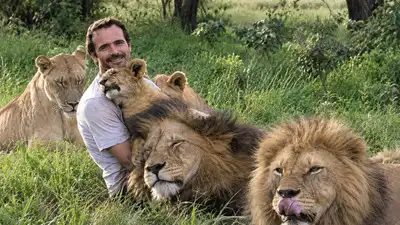
Representative image of Kevin Richardson with Lions (Wikimedia Commons)
From March 2024 to February 2025, the initiative focused its work in Dinokeng Game Reserve and the Greater Kruger landscape, according to the foundation’s annual report . As per the annual report, 2,019 snares were removed from Letaba in 2024, while in Dinokeng Game Reserve, 551 snares were removed. The drone unit recorded more than 108 flight hours and covered over 2,100 kilometres during 2024; this surveillance facilitated two arrests, according to the foundation’s report. In a separate branch of the initiative, the Dinokeng Volunteer Rangers, between February 2024 and February 2025, contributed 5,676 hours of service, equivalent to 473 individual patrol days. Through ten focused snare removal operations, they removed 134 active snares, a figure the report lists separately from the 551, and cleared more than 4,000 Lantana bushes from a riverside ecosystem, protecting native trees, insects, and animals that depend on the habitat. The share of learners able to define conservation accurately rose from 47% to 79%, whereas interest in conservation careers saw an increase from 17% to 36%, according to the annual report. In a separate programme, the Big 5 School Collective delivered age-appropriate conservation education to 400 children across 20 early childhood development centres.
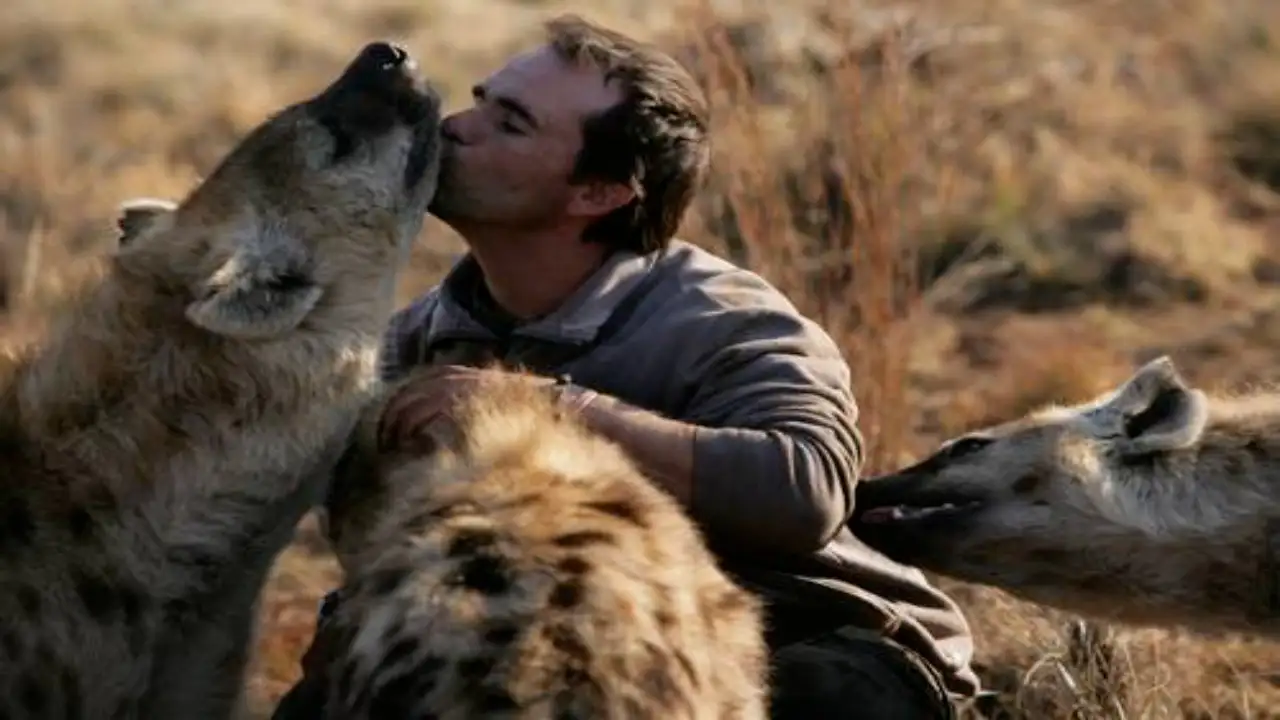
Concurrently, researchers working with EWT reported a sparse density of solitary lions in Letaba Ranch, a finding that elevated the importance of conserving every surviving predator within the region. The Kevin Richardson Foundation has implemented a sweeping strategy to protect ecosystems across South Africa, using advanced tracking technology with boots-on-the-ground defence. The foundation’s partnership with the Endangered Wildlife Trust (EWT) focused on wildlife monitoring and removal of snares in Letaba and surrounding areas. The foundation also supported drone surveillance and volunteer patrols. These operations addressed threats to wildlife from snares and poaching, while tracking technology helped field teams monitor animals and respond to possible danger. GPS collars and anti-poaching operations The foundation’s annual report describes a collaring programme intended to improve understanding of lion movements and intervention strategies when predators are placed in imminent danger. Lions were not the only species facing imminent danger from snares in the Greater Kruger landscape; other animals such as hyenas, buffalo, giraffes, elephants and zebras were also vulnerable. The report details a successful extraction of snares from four hyenas and warns that the loss of members from their complex social structures can have far-reaching impacts, beyond causing direct physical trauma. Representative image of Kevin richardson with Hyenas. (Image Credits: Wikimedia Commons) Drones, patrols and conservation education In Dinokeng , rangers used thermal-equipped drones to monitor wildlife and identify threats across difficult terrain, even during the nights. Furthermore, funding also supported training for the reserve’s nominated drone pilot, who obtained a Remote Pilot Licence and Beyond Visual Line of Sight certification. In addition, thirty awareness activities were conducted to educate visitors about conservation, responsible tourism, and support for local businesses. Complementing these initiatives, the foundation’s educational programmes sought to build a longer-term understanding of wildlife protection and engaged ten schools in underprivileged communities. You use AI every day. Now get your AI Quotient. Take the AIQ test.
For the EWT collaring project, seven lions were captured in 2024, of which four females and one male were fitted with satellite tracking devices, while a previously collared lioness received a replacement collar in December. The Global Giving project update, from January 2025, describes how data from the lion movement enabled EWT to develop an alert system. they did not remove the danger per se; as per the annual report, two GPS-collared lions were killed by snares in 2024, a year before the GlobalGiving update described the alert system Although these technologies supported field operations.
In addition, two spotted hyenas were fitted with GPS for behaviour monitoring and support tracking. The system would trigger notifications when movement patterns indicated potential threats, allowing field teams to respond quickly. On top of that, the two spotted hyenas were fitted with tracking collars to support behaviour monitoring and snare response.