
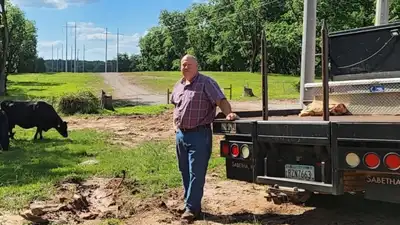
PC: Melin Farms/ AgWeb
Jeff Melin faces the loss of roughly 225 acres of his 450-acre property, which his family has owned for almost 80 years. The planned airport would occupy 730 acres and include a 6,000-foot runway and 124 hangars for express and corporate jets. In an interview with AgWeb, Melin described how the project is affecting his farm, including a 70-acre pecan grove containing trees more than a century old, several of which have already been cleared as work connected to the project begins. He said he has 90 days to empty a farm shop and expects to remove livestock from the operation. The airport project is scheduled to begin construction in 2026 and be completed in 2031. The proposed airport is across 730 acres in Spalding County and includes a 6,000-foot asphalt runway. At the edge of Melin’s 70-acre pecan grove, trees, many of them more than a century old, have already been cut down as construction-related work begins. The airport proposal dates back to 2012, when the existing Spalding County airport’s runway was considered too short and several potential locations were examined for a replacement. The proposed 730-acre site includes 124 hangars intended for express and corporate jets. The Georgia Department of Transportation has said the new airport would generate an estimated $24 million in economic impact each year for Spalding County. He told AgWeb that he has been given 90 days to clear a 40-by-60-foot shop containing decades of farm equipment. Melin compared the offer with other nearby land sales, including a 100-acre cattle farm that he said sold for $75,000 an acre to Georgia Power.
He said he does not yet have another building available and expects to have to remove at least 65 cows and 30 calves as a result. Reportedly, construction of the new Spalding County Airport is due to begin in 2026 and finish in 2031.
A Georgia cattle farmer says his family’s farm is being dismantled as Spalding County moves ahead with plans for a new airport. Melin said the land acquisition will affect not only the acreage itself but also the equipment, livestock and buildings that support his cattle operation. He said the farm had been continually improved through spending on fertiliser, lime, weed control and other land-management work, but argued that these investments were not reflected in the valuation. They wouldn’t give me an honest dollar,” he told AgWeb. The project follows years of studies covering environmental, archaeological and ecological issues, while Melin says he received letters and announcements rather than direct communication about the plans.
Concrete poles have been installed as the pecan trees give way to power lines, with the runway planned to replace part of the existing grassland. The farmer also questioned the valuation of the property being taken. “Nope.
He said his family had previously surrendered land for road widening when it was considered necessary for public safety, but sees the airport project differently. “Our farm was not for sale at any price because our lives were moulded around this land,” Melin told AgWeb. For Melin, the dispute centres on what will happen to a family farm maintained for generations. As construction moves forward, the proposed airport will transform part of the property from cattle pasture and a long-established pecan grove into infrastructure serving the new aviation facility. Catch the latest World News and Live updates. Download the TOI app.