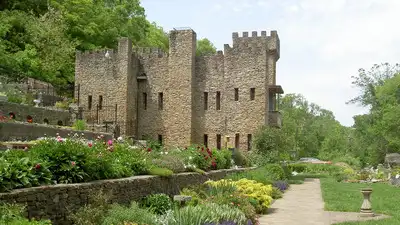
An exterior view of Loveland Castle in Loveland, Ohio. Image credits: Wikimedia Commons
Harry Andrews as an Army medic, a 1918 meningitis diagnosis and a return to Ohio The SPACES archive records that Andrews was born in 1890 and served in the US Army as a medic in World War I. Andrews reportedly suffered from spinal meningitis and was mistakenly declared dead in 1918, although he was still alive. The Knights of the Golden Trail and the lots Andrews bought in 1927 The latter part of Andrews’s life was tough. Roadtrippers reports that Andrews suffered severe burns while trying to extinguish a rubbish fire on the castle grounds in March 1981 and died a few days later. The official website indicates that their operating hours are 11:00 AM to 5:00 PM during April 1- September 30, and weekends only from October 1 – March 31. The castle is open from 11:00 AM to 5:00 PM from April 1 to September 30, and on weekends only from October 1 to March 31. Admission is $5 per person, and children aged 5 and under enter free, according to the official Loveland Castle website.
The mistake went uncorrected for about six months, and during that time his fiancée married someone else, according to the account. He stayed in Europe after the war to see the castles, according to Roadside America. Andrews was said to arm himself for protection.
Loveland Castle, known formally as Château Laroche, sits on the banks of the Little Miami River just north of the village of Loveland, Ohio, in Symmes Township, northeast of Cincinnati. A narrow, winding road drops down a hill to reach it. The stone building at the bottom looks out of place among the wooded river valley and the suburbs nearby. The castle operates as a museum run by volunteer knights, members of a brotherhood who take no vows except the Ten Commandments. Harry Delos Andrews built most of the property himself. He remained single for the rest of his life. In Ohio, he used to work for a local newspaper and taught a Sunday school class for boys. Roadside America mentions that Andrews was the target of thieves, vandalism, and nocturnal harassment at the castle. Andrews has bequeathed the castle to the Knights of the Golden Trail, who continue the maintenance of the castle and use it as a museum and tourist attraction. You use AI every day. Now get your AI Quotient. Take the AIQ test.
The museum guide at mnmuseumofthems.org gives 1927 as the year Andrews purchased the land. One account says that in the 1920s, The Cincinnati Enquirer offered riverside lots to readers who prepaid for a one-year subscription, and that Andrews acquired 11 lots this way, on which he later built the castle, according to Roadtrippers. Roadside America’s page on Château Laroche reports that Andrews kept a tally of his construction work, recording 2,600 sacks of cement, 32,000 quart-sized milk cartons used to make concrete bricks, 54,000 five-gallon buckets of dirt, and 56,000 pailfuls of stone. Construction began on June 5, 1929, with river stone and 32,000 milk carton bricks Andrews began building Château Laroche on June 5, 1929, according to the official Loveland Castle website. Andrews kept a tally of what went into the structure, which Roadside America reproduces: 2,600 sacks of cement, 32,000 quart-sized milk cartons used to make concrete bricks, 54,000 five-gallon buckets of dirt, and 56,000 pailfuls of stone. Andrews’s death in April 1981 and the Knights who run the museum today
A museum guide at mnmuseumofthems.org says Andrews formed an imaginary club for the boys in his class and called it the Knights of the Golden Trail. The parents of one of the Sunday school boys obtained riverfront land through a newspaper promotion and later sold it to Andrews and the Knights, according to the castle’s official history. The SPACES record says the finished structure took fifty years of labor, most of it done by Andrews himself. The stones in the walls of the upper floor chapel were collected on trips and given as gifts by Andrews’ admirers from around the world, according to Roadtrippers.
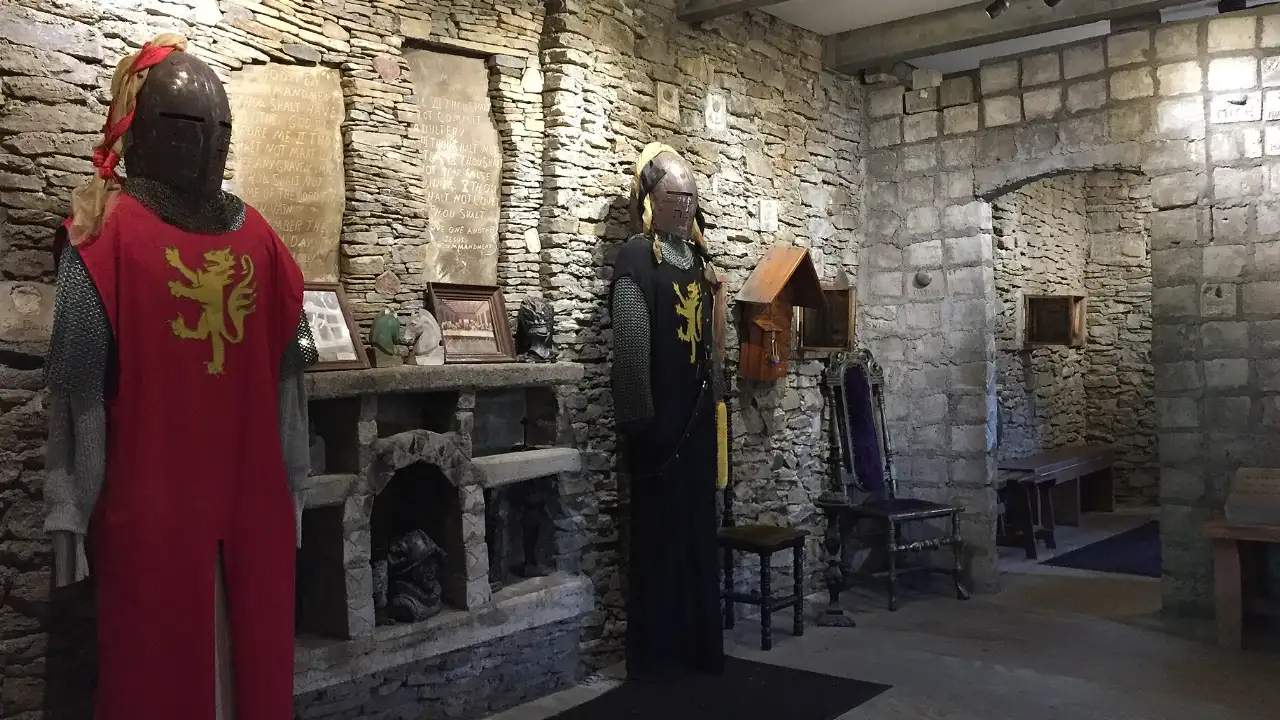
Boys swore that they would keep their promise of observing the Ten Commandments and stay away from the allurements of modern-day urban living. Accounts differ on which newspaper ran the promotion. The official history gives a different version, saying the promotion came from the Cincinnati Business Courier with a six-month prepaid subscription. As the buildings looked like towers, Andrews thought that knights needed a castle. Initially, Andrews employed limestone from the Little Miami River. When this resource was exhausted, he started making concrete bricks out of quart milk cartons. It comprised watchtowers, terraces, a banquet hall, a dry moat, and a dungeon. The interior of Château Laroche reflects Harry Andrews’s medieval-inspired design and hand-built stonework. Image credits: Wikimedia Commons The official Loveland Castle website and Atlas Obscura both describe a secret room that stayed a mystery until it crumbled from neglect, years after Andrews’ death.