
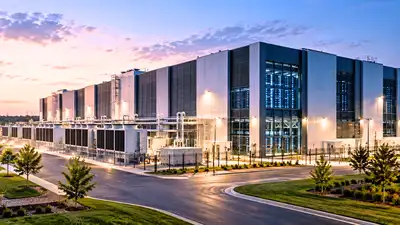
Representative AI image
A New Jersey property developer has filed a lawsuit seeking more than $300 million in damages after a township reversed its zoning rules to block artificial intelligence (AI) data centres, escalating a dispute that began with plans for two warehouses on vacant farmland. Hexa Builders, a Princeton-based development company, sued Monroe Township in Gloucester County in June 2026, accusing local officials of changing land-use rules and obstructing its revised application. In April 2026, Hexa submitted an amended application proposing a data centre of approximately one million square feet in place of the larger warehouse, while retaining a warehouse as part of the development. The company’s lawyer said the change followed market interest that had emerged before the township adopted the 2025 amendment allowing data centres.
The controversy intensified after residents opposed the prospect of a data centre near established residential areas. The township subsequently adopted ordinances removing data centres from the developer’s redevelopment site and prohibiting them across the municipality. The lawsuit challenges the legality of those decisions and raises broader questions about local planning powers as demand for AI computing infrastructure grows.
On April 22, the township council adopted two ordinances restricting data centres. On May 12, 2026, the planning board deemed Hexa’s amended application incomplete. Hexa filed its lawsuit on June 5, 2026, initially in New Jersey Superior Court. The case was transferred to federal court in Camden on July 6. The complaint contains 20 counts and alleges violations of New Jersey’s Municipal Land Use Law, the township’s application procedures and constitutional protections, including equal protection and freedom of speech.
The revised proposal became a focal point of the debate as residents raised concerns about the potential effects of large computing facilities on their community. Data centres can require substantial electricity and cooling infrastructure, while their environmental footprint depends on factors including cooling technology, energy supply and facility design. One removed them as a permitted use within Hexa’s redevelopment plan, while the other prohibited data centres across Monroe Township. The official redevelopment ordinance cited the site’s proximity to established residential areas and the need to ensure that permitted uses remained compatible with their surroundings. The decision became central to the subsequent lawsuit. The company also argues that officials responded to public opposition rather than following a consistent land-use approval process. These claims form part of the developer’s complaint and have not been established as judicial findings.
Hexa alleges that local officials applied submission requirements differently from those used for its warehouse proposal and deliberately prevented the revised application from being deemed complete before the new restrictions took effect.