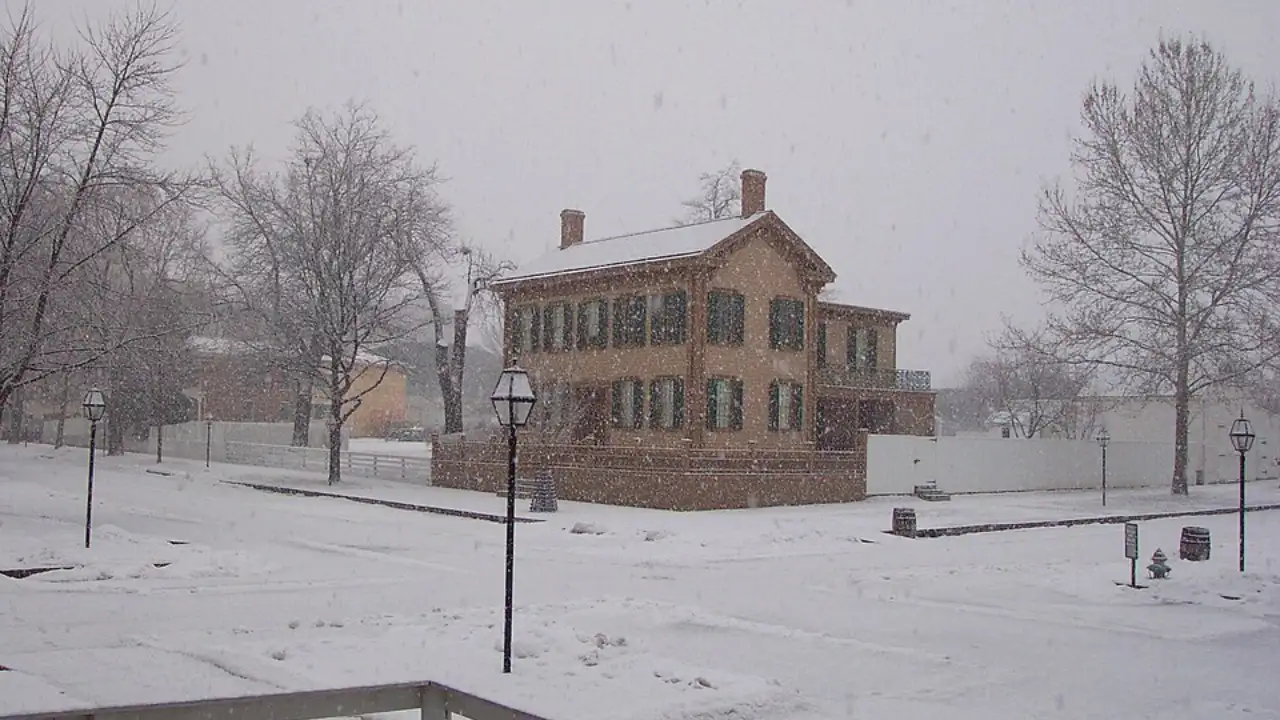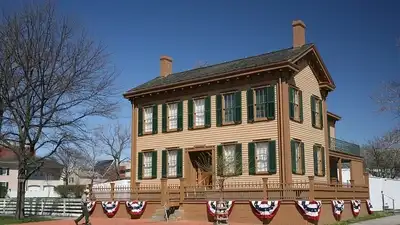
Lincoln Home National Historic Site in Springfield, Illinois. Image credits: Wikimedia Commons
In 1887, Robert Todd Lincoln transferred his family’s Springfield home to the State of Illinois, ensuring that the house where Abraham Lincoln and his family had lived for 17 years would be preserved for the future. Today, the same house is the centrepiece of Lincoln Home National Historic Site, which preserves the Lincoln residence and 14 other houses from the Lincoln-era neighbourhood in Springfield. The house was completed in December 1839 and stood only one and a half storeys high. The family moved into the house on May 1 1844, and it remained their home until they left Springfield for Washington, DC, in 1861. By 1860, the Springfield home had also become the setting from which Lincoln’s political career reached the presidency.
The National Park Se rvice reported that following their move to Washington, DC, the house was not sold; instead, it was rented to another family while the Lincolns stored their best furniture in anticipation of a potential return. Robert’s deed imposed two important conditions: the homestead had to be forever kept in good repair and should remain open to the public without an admission charge. Five years later, it became the home of Abraham Lincoln, Mary Todd Lincoln and their young son Robert. After winning the presidential election that November, Lincoln and his family prepared to move to the nation’s capital.
The decisive change came on 16 June 1887 when Robert Lincoln deeded the family home to the State of Illinois. The NPS describes this as a donation, while other Illinois historical documents describe the transfer as a symbolic $1 transaction. Notably, the preservation requirement Robert Lincoln established in 1887 would eventually outlast both the original family and the state ownership that followed.
Because abraham Lincoln was assassinated on 14 April 1865 and died the following morning, however, they never returned. Because it linked the transfer of ownership directly to the property’s future preservation, that condition was significant. Mary Lincoln did not return to live in Springfield after her husband’s death, and the property subsequently became a rental home, passing through several occupants before its preservation history began to take place. Rather than a commercial conflict, this nominal fee functioned as a standard legal consideration to formalize the contract, confirming the important outcome that Robert Lincoln gave up private ownership while imposing conditions intended to protect the house and its public character. Lincoln Home National Historic Site in Springfield, Illinois. Image credits: Wikimedia Commons The deed specified that the homestead was to be kept in good repair permanently and remain free to the public. Following the transfer, Oldroyd was named the homestead’s first caretaker as the state wanted to regulate the site’s existing tourist trade and lived on its second floor, thus bringing his rogue souvenier sales to a strict legal end.