
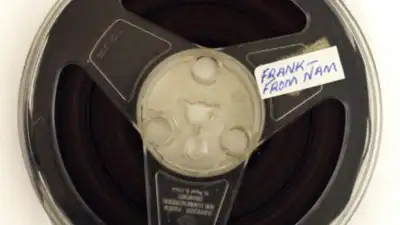
In March 1969, a 21-year-old American soldier stationed in Vietnam decided to do something different from writing a letter home. During the approximately 43-minute recording, he spoke more than 8,600 words, while the sound of a helicopter passing overhead captured the reality of a war thousands of miles from home. Frank A. Kowalczyk switched on a reel-to-reel tape recorder and began speaking to his mother in Illinois, sharing updates about his fellow soldiers, life in the Army, family gossip and his plans for the future. Fifty-seven years later, the recording is preserved by the Smithsonian’s National Postal Museum in Washington, DC.
Because such material was rarely available to him in Vietnam, hearing familiar sounds from home, he suggested, would be strange in the best possible way.
This is happening in Vietnam,” she said. The American Red Cross also operated recording facilities in Vietnam and the Pacific, while its “Voices from Home” programme helped families record messages for relatives serving overseas. What followed was not a carefully prepared account of military service, but a long, informal conversation with his family back home in Calumet City, Illinois. Kowalczyk’s recording moved between the ordinary details of life and the unsettling circumstances surrounding him. He asked his mother about his father’s work schedule, checked on his siblings and wondered whether neighbours back home had married. He also discussed his friends, his experiences in the Army and his frustration with the routine duties imposed on soldiers at Long Binh Post. He also talked about the differences between life in Vietnam and the world he had left behind. He described the military routine, the weather, the food and his experiences travelling around Saigon and nearby places. He mentioned learning Vietnamese and joked about how difficult it might be to stop using the language after returning home. For his daughter, Manda Kowalczyk, the sound has become one of the recording’s most powerful elements. Speaking to Smithsonian Magazine, she explained that the helicopter was a reminder of the distance between her father’s home and the place where he was serving. “These helicopters are not in Chicago. Kowalczyk also asked his mother to record a reply and send it back with news, weather reports or television audio. Such recordings allowed loved ones to hear familiar voices rather than relying exclusively on handwritten letters.