
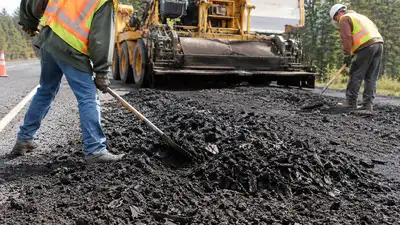
Representative AI image of road construction workers laying and spreading recycled rubber material during a road resurfacing project. Image Credits: ChatGPT.
A landslide took place in December 1994 on the State Route 100 Loop that is located near Ilwako, Washington, according to the National Oceanic and Atmospheric Administration . Rebuilding was done in the summer of 1995, when tire chips ranging from 2 to 6 inches in size were used as fillers for the asphalt. The road opened on November 3, 1995, although cracks began appearing in late December. Then, on 5th January 1996, the surface of the road recorded a temperature of 165 degrees Fahrenheit. Cracks first appeared in road surfaces in December 1995. In January 1996, heat was venting through the crack holes. By the third of January 1996, the temperature had risen up to 165° F. Furthermore, monitoring of air quality and underground water seepage started on 17 January 1996. The situation became more severe in March 1996, when an oil-like substance began seeping out of the ground with groundwater. Between 300 and 400 gallons of the substance had seeped from the hill before the leak was controlled on 14 March.
It was identified as pyrolytic oil resulting from thermal decomposition of rubber, according to NOAA.
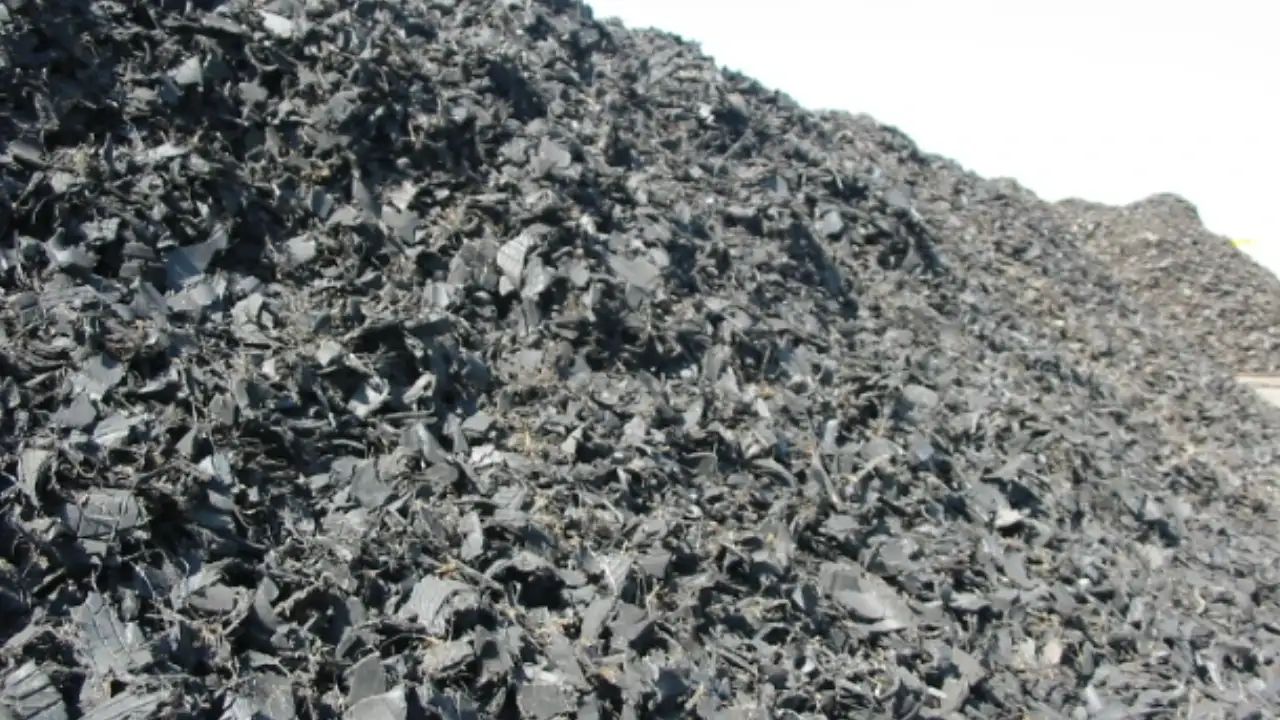
In 1995, there were three projects involving shredded tyres in the US that had heating difficulties, which involved two projects in Washington State and one project in Colorado. In July 1997, the Federal Highway Administration provided interim design guidelines for reducing internal heat generated by tyre shred fills. The guidelines gave a maximum allowable thickness of 3 m for some uses of tyre-derived aggregate fills.
The case was not a singular event. This prompted engineers and federal transportation authorities to reconsider the use of recycled tyres in large construction projects. They involved more regulation of the thickness of tyres used in the process, minimising the exposure of steel and avoiding high levels of moisture and air penetration. It was clear that, for material reuse to be effective in infrastructure development, the characteristics of the material had to be taken into account. Proper design of the use of tyre shred could make them useful engineering materials. Thus, the Ilwaco experience was an eye-opener for the experimentalists.