
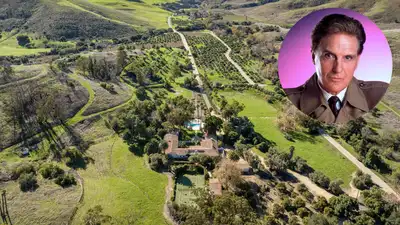
Stack had acreage in the Sacramento area that included a private game preserve and duck club, according to a 1971 United Press International report. It had been part of Stack’s family for decades, with his father purchasing it in 1925 and later leaving it to Robert and his brother Jim. In the 1970s, while Robert Stack was already a familiar face on American television, the actor owned an unusual piece of California real estate far removed from Hollywood’s studio lots and city life. The property was not simply a celebrity retreat acquired for prestige. Stack had grown up hunting there and remained closely connected to the property as an adult. His landholding also reflected a broader chapter in Hollywood history, when stars accumulated ranches, farms and rural retreats across California and the American West.
The 1971 UPI report placed Stack among a generation of Hollywood figures who owned substantial ranches and farmland outside the entertainment capital. A 1963 profile published in Guns Magazine reported that his father purchased the property in 1925 and eventually left it to Robert and his brother Jim Stack. The 1963 profile identified Stack’s private duck club as being near Colusa in California’s Sacramento Valley, an area known for wetlands and migratory waterfowl. The 1971 report noted that some stars purchased land specifically as a refuge from city life, while others saw it as a long-term investment.
retirement or recreation, it specifically said Stack owned acreage in the Sacramento area that included a game preserve and duck club While the article discussed celebrities who acquired land for investment. Hunting was carried out according to established seasons and regulations. The property gave the actor access to hunting grounds away from Los Angeles and reflected an interest that had been part of his life since childhood. Rather than being a piece of land purchased simply as a status symbol, the preserve had a family history and a practical purpose tied to Stack’s enthusiasm for hunting and shooting sports. Stack’s connection to the Sacramento-area property stretched back decades before his television fame. The brothers continued to own the land, with Stack saying they intended to keep it in the family so their children could enjoy it as they had. He also recalled beginning to hunt there when he was only seven years old. The detail adds a personal dimension to what might otherwise appear to be an unusual celebrity landholding. The property was not something Stack suddenly acquired after becoming famous. It was part of his family’s life and had been associated with him since childhood. The magazine described the property as a place where Stack could pursue his passion for duck hunting, with ducks, pheasants and other game birds present on the land. The location was a world away from the Hollywood environment in which Stack spent much of his professional life. Instead of film sets and television studios, the property offered open countryside, wildlife and the kind of outdoor recreation that had interested him from an early age. The attraction of these properties went beyond financial value. For celebrities living under intense public attention, rural land provided privacy and a chance to pursue interests away from cameras and crowds. The contrast between Hollywood and the countryside was significant. A star could spend the week working on film or television productions in Los Angeles and then retreat to a ranch, farm or hunting property surrounded by open land. Stack’s duck club represented precisely this kind of alternative world, allowing him to return to an environment associated with his childhood and sporting interests. Stack became famous for playing Eliot Ness in The Untouchables and later reached another generation of viewers as the host of Unsolved Mysteries. Yet his life away from the screen included competitive shooting, duck hunting and a longstanding connection to family land in Northern California. The Sacramento-area property helps reveal a side of Stack that was largely invisible to television audiences. Behind the Hollywood actor was a lifelong sportsman who had inherited a piece of California countryside and continued to use it for the activities he had enjoyed since childhood.
A 1963 Guns Magazine profile detailed his achievements and described how his acting career increasingly limited the amount of time he could devote to competition. His private duck club therefore fitted naturally into a lifestyle that combined entertainment with serious outdoor pursuits. His interest in the property was closely connected to a much broader passion for shooting sports. Stack was not simply an actor who occasionally went hunting. He became a highly accomplished competitive skeet shooter, earning recognition at national and international levels. Even as his Hollywood workload grew, however, shooting and hunting remained important interests.