
Iowa farmer Herman Carl Stille died in September 2020 at 94, leaving an estate worth about $10.9 million. His 2017 will directed the remainder to Floyd County Medical Center (FCMC) in Charles City to establish a cancer centre for local residents. On May 1, 2026, the Iowa Supreme Court ruled in favour of the medical centre.
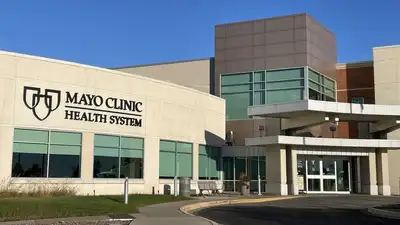
It also named the Mayo Foundation as the alternative recipient, for Alzheimer’s research, if the hospital lost its independence and became part of a major healthcare corporation. Mayo went to court after the hospital found it could not provide radiation treatment.
The hospital said the centre could still satisfy the other requirements. It proposed to staff an oncologist through cooperation or subcontracting with other facilities, and to transport patients to another facility for radiation. It also noted that more cancer patients are treated with chemotherapy than with radiation.
A farmer’s $10.9 million will with two conditions
The $10.9 million estate was mostly farmland. After several small charitable bequests, his will, signed in August 2017, gave the remainder to the hospital for a cancer centre. Attorney Michael Kennedy, who drafted the will, testified that Stille added the independence requirement in 2017. Stille’s earlier will, from 2011, had no such condition and named Mayo as the backup only if the cancer centre could not be established. After Stille’s death, FCMC began planning the centre, expecting roughly $10 million from the estate. The ruling ends a dispute that began in 2021 and leaves the remainder of the $10.9 million estate with FCMC.
If it lost its independent status and joined a major healthcare corporation, the remainder would go to Mayo Foundation for Alzheimer’s research.
The hospital says it will proceed with the Stille Cancer Centre on its campus. It says it is still unclear which cancer services will be available, including how radiation care will be provided for patients who need it. Stille was a cattle farmer and factory worker before he retired. He never married, had no children and left no living siblings or other identified heirs. He received care at FCMC for more than a decade and was the largest donor to the hospital’s charitable foundation. It required an oncologist on staff, office and consultation space, a family area and separate areas for radiation, chemotherapy and other treatments. The gift was contingent on the hospital staying independent. Stille’s sister had died from Alzheimer’s complications, and he feared facing the same disease. Administrators soon realised they could not provide on-site radiation. Radiation requires a linear accelerator, which is costly and heavily regulated. In Iowa, a hospital needs a certificate of need, and one is generally not issued when radiation facilities already operate within a certain radius. Several hospitals near FCMC already offered radiation. The machine is also expensive to run, and FCMC lacked the patient base to afford its upkeep.