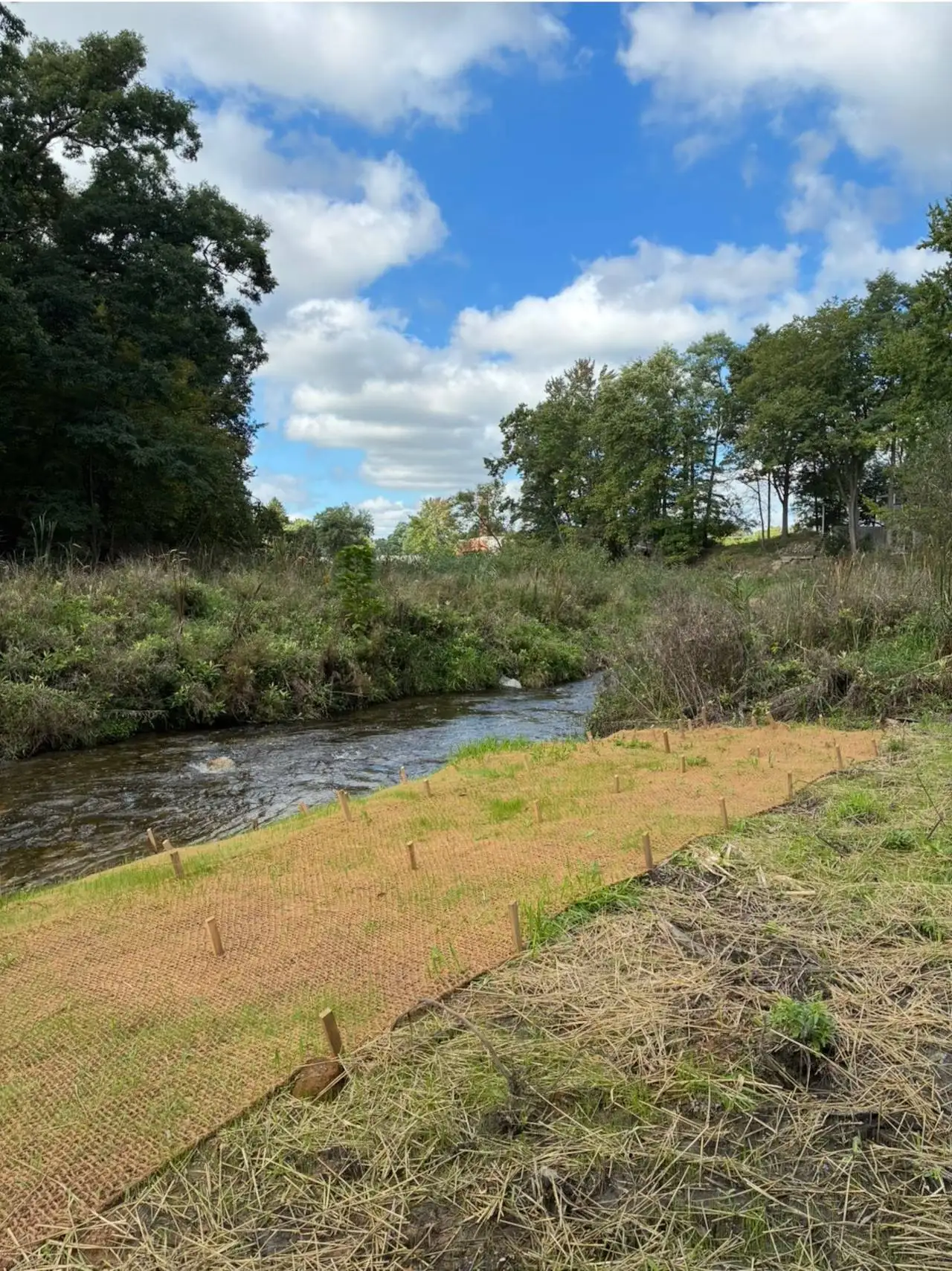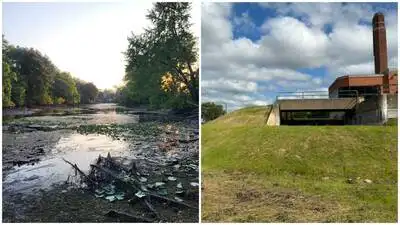
Michigan’s Brooklyn Dam has been removed after 85 years, transforming the River Raisin into a faster-flowing stream. (Photo: Peggy Hudson/Natalie Davies)
The project, which cost about $2 million and was funded through a combination of state and federal grants, is aimed at restoring a more natural river system and reducing the risks associated with the aging dam, according to MLive. A $2 million project redirected water from the high-risk Brooklyn Dam into a newly shaped river channel. (Photo: Natalie Davies) The Brooklyn Dam was built in 1939 and held between roughly 4 and 8 feet of water across about 21 acres. The new river path occupies an area where about 18.5 feet of dirt once stood beside the dam. The Brooklyn Dam became a greater concern after the Edenville Dam failed in Midland County in 2020. Dan Ross, who purchased the Brooklyn Dam and surrounding property in 2014, began noticing signs that his own structure could potentially fail. Losee said it took approximately 43 days to reduce the level by 10 to 12 feet. The River Raisin project aims to improve fish movement and restore native vegetation in Brooklyn, Michigan. (Photo: Natalie Davies) For Peggy Hudson, 71, the changes have been personal. Hudson grew up along the River Raisin and bought her childhood home in 2013. Since construction began, the water level has dropped between 5 and 10 feet, making the river much harder to see. The former dam was connected to 221 Mill Street, a property with a long industrial history. “But the question is, how much will each one of you be willing to pay to keep the dam? $10 grand a year? $15 grand? The Brooklyn Dam removal was funded through several state and federal grants totaling approximately $2 million.
Because dams are often tied to generations of personal memories, but he acknowledged that such decisions can be difficult.
Todd Losee, president of Niswander Environmental, said the former impoundment had become stagnant and was dominated by invasive aquatic vegetation. “(It was) pretty stagnant water dominated by invasive aquatic plants, really mucky,” Losee said during a tour of the former dam on Thursday, September 24. The project is already improving fish movement and restoring native vegetation, according to the River Raisin Watershed Council. Hudson said she once had several views of the water from her home. “That’s what I’m missing,” Hudson said as she showed a photograph of a sunset reflecting across the river from her backyard before the water level was lowered. Despite losing that familiar view, Hudson said she understood why the changes were necessary. Losee said the release of sediment along the river’s edge was one of the most controversial parts of the work. Niswander Environmental engineering consultant Ralph Reznick said maintaining aging dams can become increasingly expensive, sometimes making removal a more practical option. I know all those things,” Reznick said he wished he could tell residents during public meetings. Losee said the Brooklyn project could provide a model for how those grants can be used in other communities facing aging or high-risk dams.
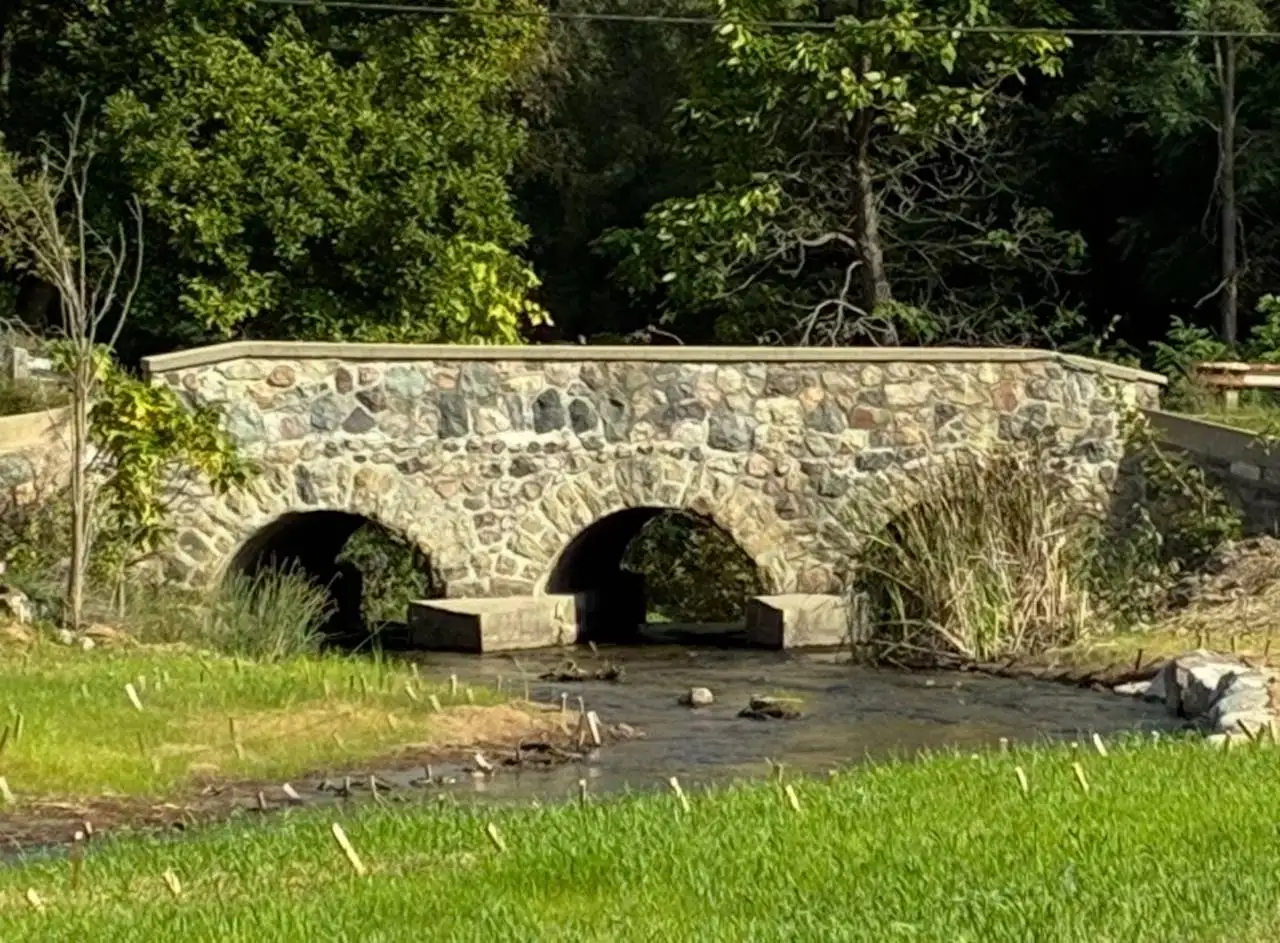
For generations, the River Raisin in Brooklyn, Michigan, was a familiar part of everyday life. Children skated across its frozen surface in winter, boats moved through it in summer and residents watched sunsets reflected on the water. After nearly five years of planning, public meetings and construction, water once held behind the Brooklyn Dam has been diverted into a newly shaped river channel, leaving what was once a tall, slow-moving stretch of water as a shallower, faster-flowing stream. Niswander Environmental, which specializes in wetland and stream mitigation projects, worked as a contractor and consultant on the project. The work has changed the course of the water rather than simply eliminating the former dam structure. Most of the old structure remains, but water now flows through an adjacent channel created by sloping the riverbed. He contacted Michigan’s Department of Environment, Great Lakes and Energy, or EGLE. The agency issued an emergency permit allowing the water behind the dam to be lowered and connected Ross with Niswander Environmental. Lowering the water level was a major undertaking. The River Raisin and Mill Pond water was ultimately redirected away from the high-risk section of the dam. The Kendron Drain also connects to the river. It has also removed some invasive aquatic plants that had flourished behind the dam. Additional work remains. Crews plan to construct two more drop structures to lower the river, install a rock-based fish ramp and plant additional shrubs and trees along the waterway. The stone Mill Street bridge over the River Raisin will also be rebuilt as a single-span bridge with stamped, colored concrete. Project officials will continue monitoring water levels as the new river system develops. She remembers cutting across the ice to get to school during the winter and watching neighbors take their pontoons onto the river in summer. The portion of the river behind her home is now part of the area where the new channel was created. “It’s gone. Her home sits high enough that she did not require flood insurance, so she was not particularly concerned about flooding. She now plans to build a staircase down toward the river and open her windows so she can hear the faster-moving water. The project also came with an unexpected visual change. As the water level dropped, the sediment temporarily turned the river black and created a strong smell. The location was once the site of the Brooklyn village sawmill before later becoming a Ford Motor Co. plant. The Brooklyn project is being viewed as part of a broader discussion about aging dams across Michigan. Other dams along waterways beyond Brooklyn, including one in Saline, could eventually face similar questions about their future. A dam removal project is also underway in Ypsilanti. “I know your grandfather brought you here fishing, and you proposed to your wife here, and you cried here when your parents died. Michigan lawmakers recently passed legislation establishing a Dam Safety Emergency Fund for EGLE and placing the Dam Risk Reduction Grant Program, which helped fund the Brooklyn project, into state law. You use AI every day. Now get your AI Quotient. Take the AIQ test.
Today, that landscape looks dramatically different.