
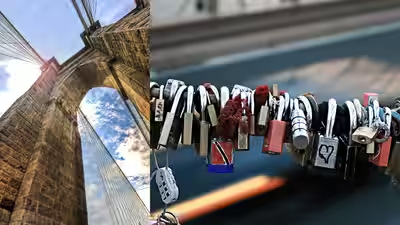
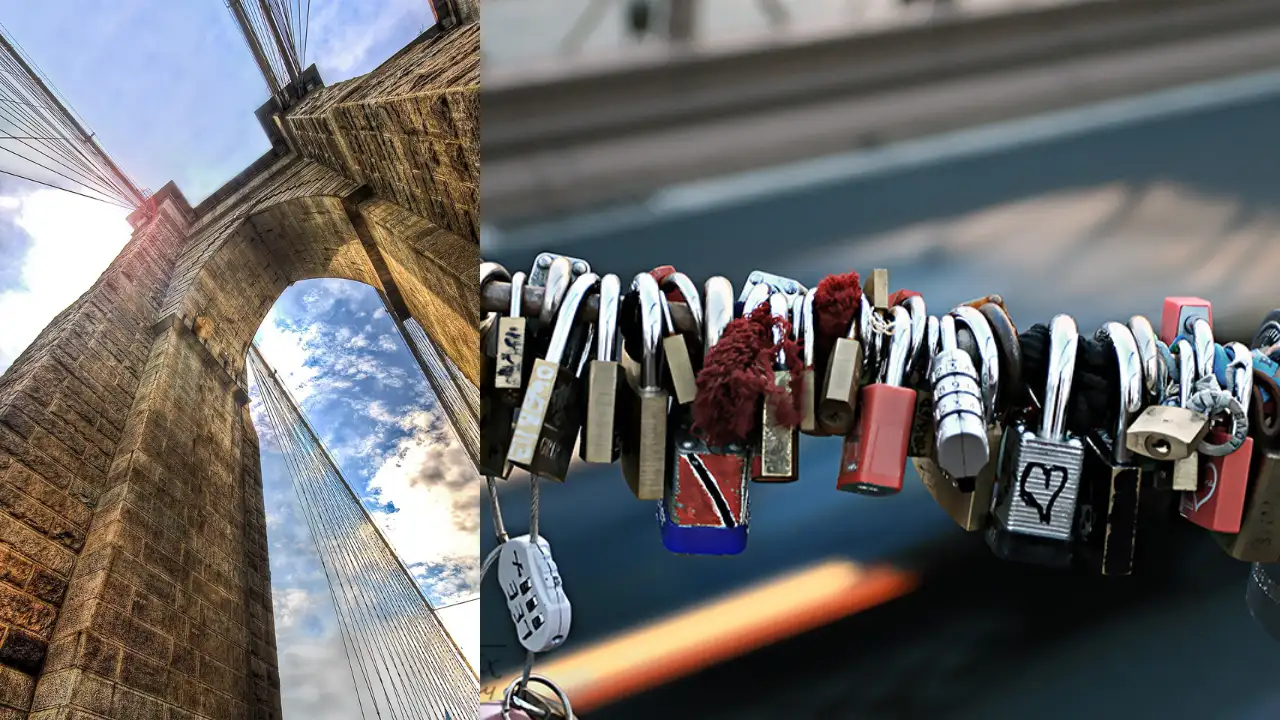
More than 11,000 locks were removed from the Brooklyn Bridge during 2015 | Wikimedia Commons
New York City’s Brooklyn Bridge had collected more than 11,000 so-called love locks in 2015, which was enough for city crews to spend thousands of hours removing the padlocks from the pedestrian promenade. More than 11,000 locks were removed from the Brooklyn Bridge during 2015, according to the New York City Department of Transportation . The agency said its bridge crews conducted regular sweeps several times a year, which cost about $116,000 that year. More than 11,000 locks were removed from the Brooklyn Bridge during 2015 | Wikimedia Commons A wire actually snapped On September 8, 2016, a guy-wire that was connected to an overhead street lamp above Brooklyn-bound traffic snapped under the weight of dozens of love locks and other objects attached to it. The incident was documented in the city’s 2016 Bridges and Tunnels Annual Condition Report . Since the city began keeping count in 2013, more than 34,200 locks had been removed from the Brooklyn Bridge by the end of 2016. The city started warning visitors On October 7, 2016, the Department of Transportation announced a coordinated effort to discourage visitors from leaving locks on the bridge. Crews removed hundreds of locks and other objects that day and installed signs warning visitors that attaching items to city property could result in a $100 fine. The department said the practice had begun with only a few dozen locks in 2009 but had grown over the following years. The cleanup had become routine A 2015 Bridges and Tunnels report recorded 9,363 locks removed between January 1 and September 25 of that year. One April cleanup removed 450 locks weighing about 75 pounds in a single day, and these figures show why the city treated the locks as an ongoing maintenance issue rather than a one-time cleanup.
Couples typically engraved their names or initials on the locks and attached them to the bridge as a symbol of their relationship. City officials were concerned that the added weight and the objects attached to the bridge could damage infrastructure and create a hazard for vehicles below. The break forced the closure of a lane on the Brooklyn-bound roadway for about two hours while emergency crews made repairs. The city did not regard the locks as an isolated cosmetic problem since they were attached to cables, fences, railings and other parts of a structure that was carrying pedestrians above a busy roadway. The signs used a crossed-out padlock and were placed along the pedestrian promenade. The city also contacted major travel-guide publishers, and asked them to discourage tourists from participating in the practice. The enforcement was based on a section of the city’s Administrative Code that prohibits attaching objects to city property. The padlocks themselves were not especially heavy individually, as the problem came from their accumulation. Thousands of pieces of metal that are attached to bridge infrastructure added weight in places that were not intended to serve as storage points for personal objects. Visitors also began tying other items to the bridge, including hair bands, shoelaces and headphones.

In announcing the 2016 enforcement campaign, DOT officials asked visitors to find other ways to commemorate their relationships rather than attaching locks to the Brooklyn Bridge. By October 2016, the city’s response was no longer limited to cutting off the locks; it included warning signs, enforcement and requests that travel guides help change visitor behavior. Pedestrians use the upper promenade while traffic passes below, which means that maintenance work on the bridge can affect road users as well as visitors, and the September 2016 wire failure made that distinction concrete.
The policy was about the bridge, not the gesture The city did not object to the romantic gesture itself, but its concern was where visitors were leaving the objects. The practice had begun with a few dozen locks that had developed into a recurring maintenance operation involving thousands of pieces of metal and, in at least one case, enough weight to break a wire supporting a street lamp. Catch the latest World News and Live updates. Download the TOI app.