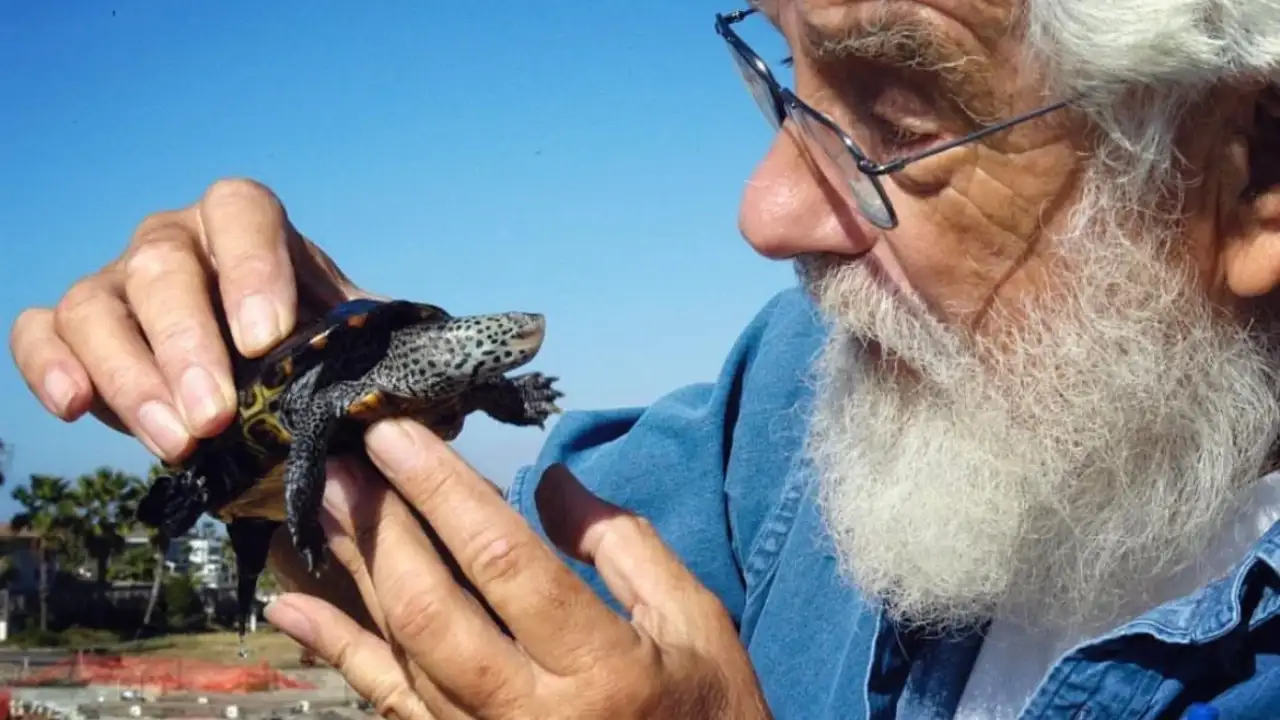
Oceanographer Tony Amos began walking a seven-mile stretch of Mustang Island beach in Texas every other day in 1978 | instagram/@texasscience
Oceanographer Tony Amos began walking a seven-mile stretch of Mustang Island beach in Texas every other day in 1978. Amos died in 2017 at age 80, but the rehabilitation center he helped establish continues to rescue and release injured turtles and birds along the Texas coast. The National Oceanic and Atmospheric Administration’s oral history of Amos confirms that the Mustang Island survey began in 1978. Oceanographer Tony Amos began walking a seven-mile stretch of Mustang Island beach in Texas every other day in 1978 | instagram/@texasscience The survey began as a record of a changing beach Amos joined the University of Texas Marine Science Institute in Port Aransas in 1976, and two years later, he began making his regular beach patrols. A University of Texas account published in 2010 said Amos and his colleagues had counted more than four million birds by then. Ten of the 28 bird species tracked showed major declines in abundance, while four showed major increases. By 2010, the number of people using the beach had quadrupled compared with when the survey began, while the number of cars had nearly doubled. An oil spill changed the work In 1979, the Ixtoc I oil-well blowout in the Bay of Campeche sent oil into the Gulf of Mexico.
The project became known as “Beachops” and covered a seven-mile section of Gulf beach near Port Aransas. He recorded birds, sea turtles, weather, water conditions and trash, building a long-running record of how the coast changed. The routine continued for nearly four decades, through increasing development and thousands of encounters with stranded wildlife. Amos counted birds and sea turtles and recorded environmental conditions, human activity and debris. Over the years, the beach itself changed as development increased. Brown pelicans were among the species that increased during the period. The records also became useful for studying the effects of growing human activity on the beach. The work was not limited to observation, since wildlife in trouble repeatedly appeared during Amos’s patrols. Dead and injured sea turtles and brown pelicans began washing ashore around Port Aransas. Amos had been trained as an oceanographer and was accustomed to monitoring physical conditions in the marine environment. The stranded animals pushed him into wildlife rehabilitation.
Audubon’s account described another long-term survey on privately owned San Jose Island, where Amos monitored a 20-mile stretch and visited every eight days. Andrew Orgill, who joined ARK as a high-school volunteer in 2009, later became a wildlife rehabilitator. Amos died on September 4, 2017, at age 80, and his death came shortly after Hurricane Harvey struck the Texas coast, putting the rehabilitation center itself under pressure. Before the storm, ARK staff moved its 60 turtles into a hurricane-rated building and transferred 40 birds to a nearby private home. The current ARK says it has returned 8,678 animals to the wild during the past 15 years. In January 2026, ARK handled 167 sea turtles during a cold-stunning event and released them after rehabilitation. Amos’s regular patrols ended with his death in 2017, but the wildlife rescue work did not.
By the time Amos died, Audubon reported that he had rescued thousands of turtles and birds during four decades of work on the Texas coast.
Amos received a permit for the facility in the early 1980s, according to his NOAA oral history, and the operation grew from an improvised response into a dedicated rehabilitation program. The University of Texas Marine Science Institute says the ARK’s mission remains focused on rescuing and rehabilitating marine birds and turtles, releasing recovered animals back into their native habitat and improving rehabilitation techniques. He began bringing injured animals back to the Marine Science Institute. Sea turtles were placed in unused tanks, while makeshift shelters were built for birds. That effort eventually became the Animal Rehabilitation Keep, or ARK. His beach surveys also produced thousands of observations that documented changes among species such as brown pelicans and red knots. The ARK became part of his larger conservation work The rehabilitation center and the beach surveys developed alongside each other, and Amos continued monitoring the coast while treating animals that could not survive without assistance. His work eventually extended beyond Mustang Island. Jace Tunnell, who later became ARK’s director, had accompanied Amos on the San Jose Island surveys. Harvey severely damaged the facility, destroying bird enclosures and other infrastructure, but all the turtles survived. The staff then moved the animals to a temporary facility on North Padre Island while repairs began. It remains part of the University of Texas Marine Science Institute and focuses on marine turtles and birds from Mustang Island, St. Joseph Island and surrounding coastal areas. Its work includes treating stranded sea turtles, rehabilitating injured birds and coordinating with veterinarians and wildlife-management organizations. The facility continues to respond to cold-stunning events, when sudden drops in water temperature leave sea turtles unable to maintain their body temperature. The same institution that once housed Amos’s improvised tanks now runs a dedicated wildlife rehabilitation operation. His original beach survey has also left a long record for researchers studying the Texas coast. The ARK remains active, and its current records show that thousands of animals are still passing through the facility before returning to the Gulf Coast. Catch the latest World News and Live updates. Download the TOI app.
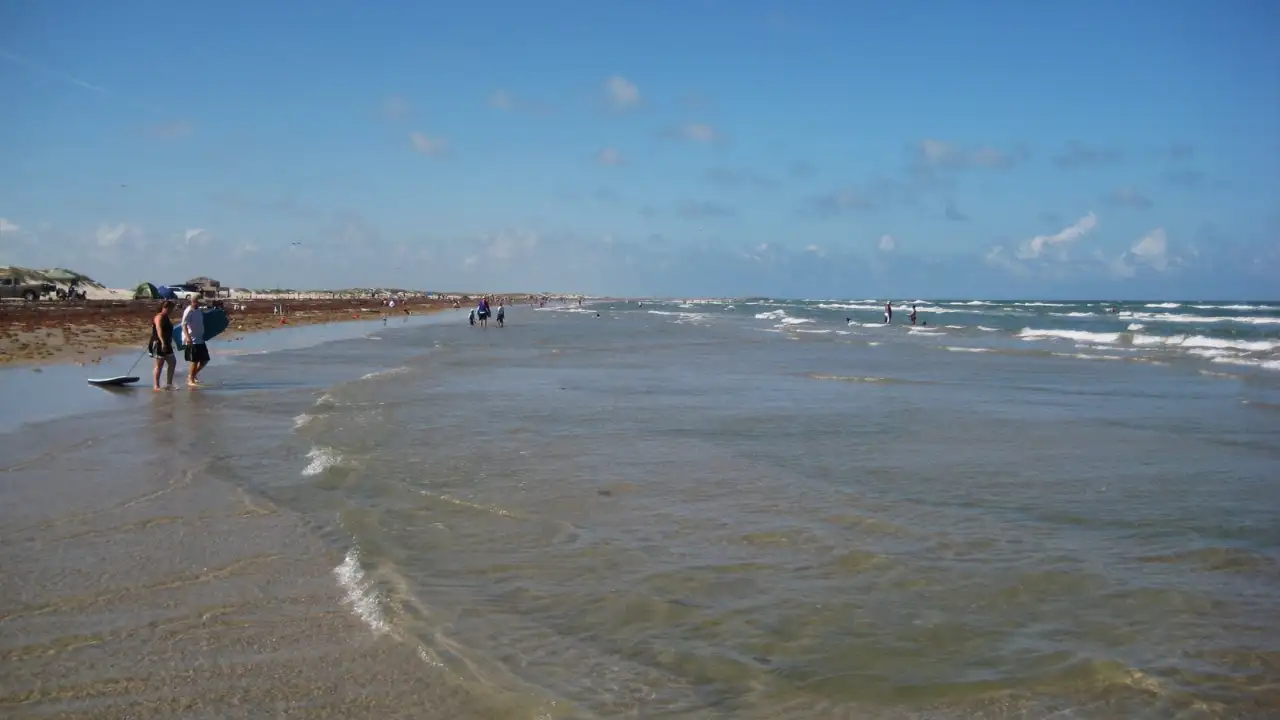
The beach at Mustang Island State Park | Wikimedia Commons The rehabilitation center continues the work Today, the facility operates as the Amos Rehabilitation Keep, a name that honors its founder.