
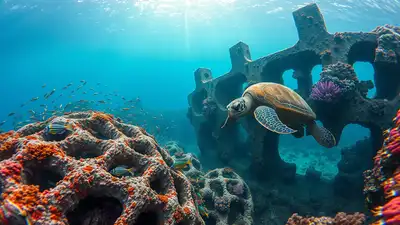
Representative Image of an underwater artificial reef made from cement structures with thriving marine life (AI Generated Image)
The latest example is the HI-54 Deep Artificial Reef Project, a 160-acre reef site that reached a major milestone in summer 2026 after years of planning and coordination. 2026, the completed reef includes 300 pyramids, 102 cement culverts, 400 tons of cement railroad ties, 100 low-relief habitat plates, 17 quarry rocks and numerous cement piling cut-offs, according to a Port Arthur LNG report published on August 25. Port Arthur LNG contributed a $125,000 partnership investment, which the company said was aligned with its climate action and biodiversity priority. The department says nearly 200 marine fish species have been seen around its artificial reef structures. Scientific divers have also recorded red snapper at TPWD artificial reef sites during four out of every 10 visits. Texas currently has artificial reef sites covering 3,440 acres across state and federal waters in the Gulf, including nine sites within nine nautical miles of shore that provide relatively accessible fishing and diving opportunities. TPWD’s program has been operating on a much larger scale than the HI-54 project alone. More than 140 petroleum platforms have found new purpose as marine habitat through the Texas Artificial Reef Program. The HI-54 Deep Reef uses a mixture of purpose-built and repurposed materials rather than relying on a single type of structure. The 300 pyramids and other reef components create physical complexity on the seafloor, while the 102 cement culverts and hundreds of tons of cement railroad ties add additional hard surfaces and shelter. TPWD says 13 ships have been intentionally sunk as part of its Artificial Reef Program. The largest is the USTS Texas Clipper, a 473-foot vessel now serving as a reef off South Padre Island. TPWD says the ship reef generates more than $1 million for the local economy from anglers and between $1.4 million and $2 million from divers. The department reports average spending of $460 per fishing trip and upwards of $2,000 per dive. TPWD says 16 of the 23 U.S. coastal states, or about 70%, maintain artificial reef programs. The HI-54 Deep Reef adds another 160 acres to that network. Its hundreds of structures and 400 tons of cement railroad ties are intended to create the hard, complex surfaces that marine organisms and fish can use, turning a collection of construction and industrial materials into another piece of underwater habitat along the Texas Gulf Coast.
TPWD says the materials used for artificial reefs must be complex, stable and durable, with openings that can provide shelter for marine animals. The Port Arthur LNG account says clean, unused concrete culverts from the company’s project site were also reused in the reef rather than remaining as surplus construction material. The department says materials must be inspected and meet environmental requirements before they can be deployed. “This project reflects what can be accomplished when industry and conservation partners work together with a shared purpose,” Thompson said.
Off the Texas coast, hundreds of tons of cement railroad ties, concrete structures and other durable materials are being placed on the floor of the Gulf of Mexico to create new habitat for marine life. Port Arthur LNG and industry partners, including Bechtel, its engineering, procurement and construction contractor, contributed materials and funding to the project. Clean, unused concrete culverts that had been staged at the Port Arthur LNG project site were also incorporated into the reef. The project is the third artificial reef developed through a partnership involving the Texas Parks and Wildlife Department (TPWD), Coastal Conservation Association Texas, Friends of Sabine Reefs and industry partners. The funding supported the purchase and deployment of additional reef pyramids as well as the transportation and placement of materials at the site. The principle behind an artificial reef is relatively simple. Much of the Gulf seabed off the Texas coast is a broad, relatively featureless expanse of mud and sand, with little naturally hard substrate for marine organisms to colonise. Artificial reef structures provide stable surfaces and spaces where marine life can establish itself. Concrete and heavy-gauge steel are among the principal materials used by the program, while concrete culverts, purpose-designed pyramids, bridge materials, retired petroleum platforms, ships and quarry rock can all become components of reef sites. All reefed materials must meet federal and state environmental guidelines. That approach is consistent with the broader TPWD program, which specifically identifies concrete, heavy-gauge steel, culverts, bridge materials and other durable structures as potential reef materials. The project also brought together private industry and conservation groups. Port Arthur LNG identified Bechtel, its engineering, procurement and construction contractor, as one of the industry partners contributing to the effort. Jim Thompson, permitting and compliance manager for Sempra Infrastructure, described the collaboration as a way for industry and conservation groups to work toward a shared habitat goal. Mic Cowart of Friends of Sabine Reefs similarly pointed to the potential benefits for both conservation and recreational fishing, saying the completed reef would support marine life and create new fishing opportunities. Concrete and railroad ties are only part of Texas’ approach to creating artificial marine habitat. The state’s program also includes entire vessels and retired offshore petroleum structures. The Texas Clipper also demonstrates the economic role that artificial reefs can play. Artificial reef programs are not unique to Texas. In Texas, the system combines purpose-built reef structures, repurposed concrete and steel, retired petroleum platforms and deliberately sunk vessels. You use AI every day. Now get your AI Quotient. Take the AIQ test.
Before the ship was reefed, crews removed hazardous materials and other contaminants, including hydrocarbons, asbestos, PCBs and debris.