Image: AP
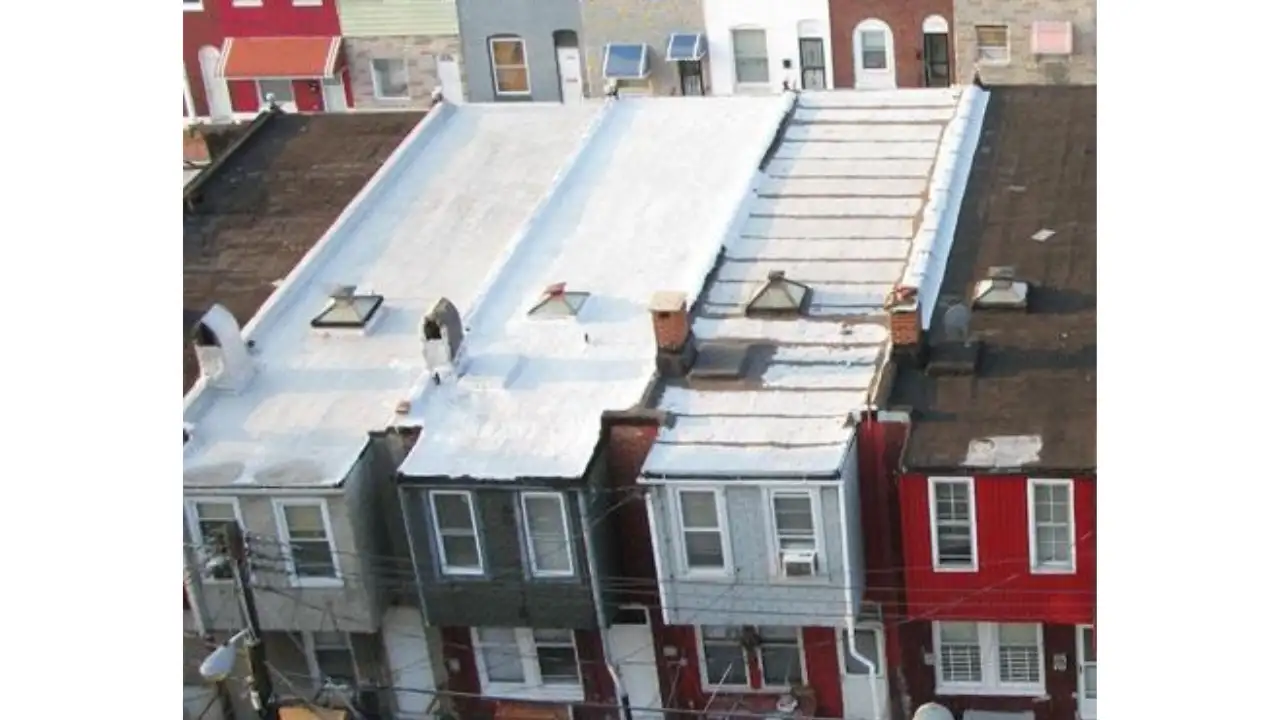
An EPA evaluation found that the treatment reduced daily maximum ceiling temperatures by about 4.7°F, while maximum room-air temperatures dropped by roughly 2°F. A later account of the Philadelphia project reported that each treated home saved about 560 kWh of air-conditioning electricity per year. The original programme evaluation, however, did not have sufficient post-treatment electricity-use data to independently establish the 560 kWh figure. The city adopted cool-roof requirements for certain new construction and major renovation projects in 2010, making reflective roofing part of its building-efficiency strategy. In 2024, the city announced more than $1.3 million in federal funding for energy-efficiency and conservation projects, including a new Cool Roofs Programme developed with the Energy Coordinating Agency.
Because residents needed less mechanical cooling to maintain comfortable indoor temperatures, the cooling effect had an important energy consequence. The electricity-saving figure is therefore best presented as a later reported result of the project rather than as a direct finding of the original evaluation. What began as a targeted effort for vulnerable residents more than two decades ago has therefore become part of a much larger conversation about how simple changes to buildings can help cities cope with rising heat while reducing energy demand.
The principle behind the intervention was straightforward. A conventional dark roof absorbs much of the sunlight that reaches it, causing the roof surface to become extremely hot. A white or highly reflective coating sends a larger proportion of incoming solar radiation back away from the building. Combined with insulation, this reduces the amount of heat transferred into the rooms below. Temperature monitoring during the Philadelphia project showed a substantial difference. The study also found that the combination of reflective coating and insulation greatly reduced solar heat gain through the roof. That figure is equivalent to hundreds of kilowatt-hours of electricity that otherwise would have been used to remove heat from the homes. It did report energy benefits from the broader weatherisation work, including estimated reductions in natural-gas consumption. The experiment became part of a broader shift towards reflective roofing in Philadelphia. More recently, Philadelphia has continued examining cool roofs as a way to improve energy efficiency and neighbourhood heat resilience. The modern programme is examining how reflective roofs can be expanded in homes and communities.