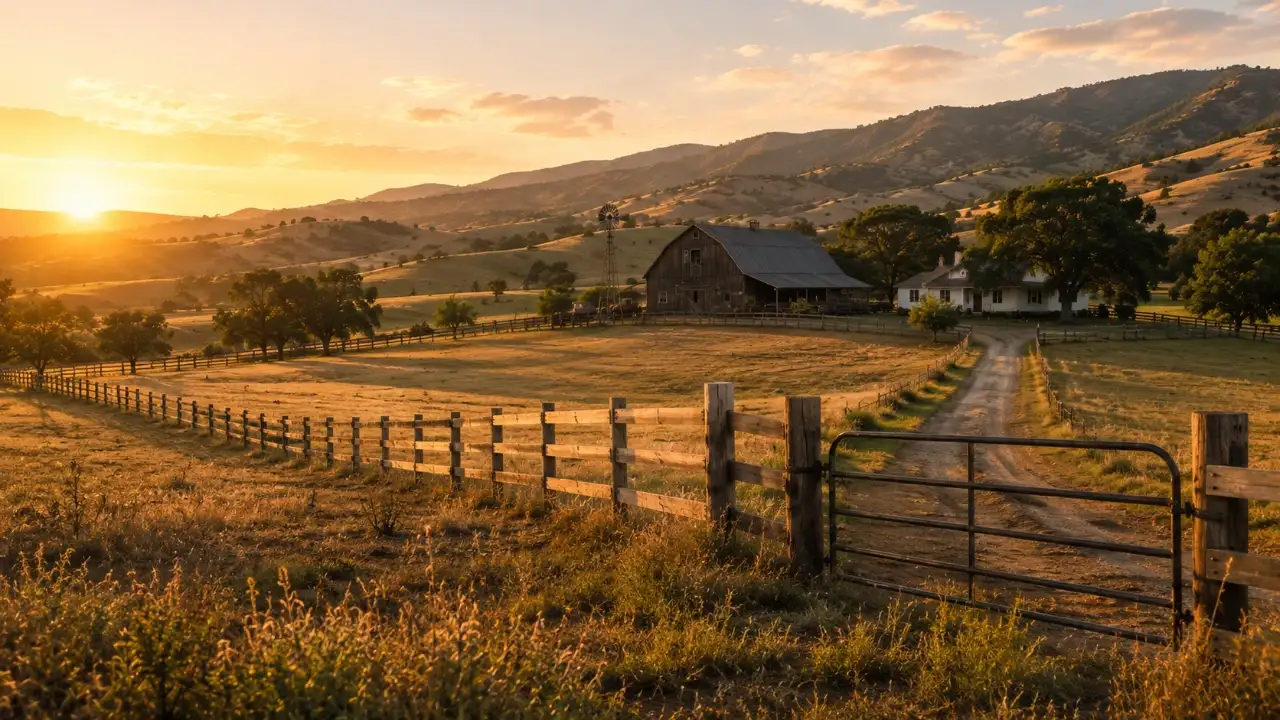
Representative image: A scenic California ranch at golden hour featuring a rustic farmhouse, large barn, wooden fences, rolling hills, and a peaceful countryside landscape. Image Credits: ChatGPT.
In 2004, Greg and Amanda Jones chose to protect their property through a conservation easement, accepting far less than the land’s potential development value in exchange for keeping the ranch intact. Redgate Ranch is a 624-acre property in San Gregorio, California, where Greg and Amanda Jones made a bargain sale of a conservation easement in 2004, according to the Peninsula Open Space Trust . POST paid $1 million for the easement, an amount well below market value, allowing the Joneses to retain ownership while permanently protecting the ranch from development. Redgate Ranch is located in San Gregorio, situated along Highway 84, in California’s coastal area. In the year 2000, the Jones family purchased the property, which was originally part of Souza Ranch. Instead of viewing the 624 acres as an investment in real estate, the couple operated it as a farm and used it as their getaway place. At the time the conservation plan was put into effect, approximately 150 acres were cultivated for growing red oats for hay purposes. In November 2004, Greg and Amanda Jones entered into a bargain sale with the Peninsula Open Space Trust (POST), offering a conservation easement over Redgate Ranch along with a pledge to donate a corridor for a future public trail. POST paid $1 million for the easement, an amount well below market value. The arrangement allowed the Joneses to retain ownership of the 624-acre ranch while permanently restricting development. The family continued to use the property as a working farm and weekend retreat, raising red oats for hay on about 150 acres and restoring grassland elsewhere to improve wildlife habitat. Over 18 years later, the Redgate Ranch becomes an example of a unique form of land conservation.
The agreement protected the property’s scenic and natural values and ensured that the land would remain open, while the family continued to use it primarily as a working farm and weekend retreat. For the Jones family, this solution enabled them to disconnect the future of their ranch from the economic realities of the California coast real estate market. They were free to continue with their farming operations on the ranch and forfeited their right to benefit economically from the development of their land. This case demonstrates the fact that farmland is not always valued based on the market price of its sale. A ranch can serve as an agricultural area, habitat for wildlife, open land, and scenic landscape. Once the right of development is sold, this value remains intact despite any changes in ownership. No transfer of land ownership is necessary to preserve land from development. It is possible for a farmer or rancher to keep their land and still make a permanent choice regarding future developments on their property.