
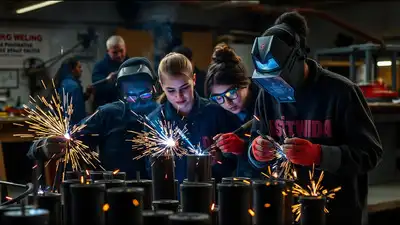
Representative Image of damaged metal posts transformed into marine habitats by welding students at George Stone Technical College (AI Generated Image)
Santa Rosa County says the work is part of a Florida Fish and Wildlife Conservation Commission-funded Natural Resources Damage Assessment artificial reef project consisting of 124 concrete reef modules at the Escambia County nearshore east site. Pensacola News Journal reported that the students normally work on projects such as repairing tables, benches and bike racks, but began applying those welding and fabrication skills to the artificial reef project in September 2026. Escambia and Santa Rosa counties are deploying a larger network of artificial reefs made possible by more than $1.1 million in combined grant funding and a multi-year partnership between the counties. The regional project includes 69 patch reefs using 209 Florida limestone modules and 132 grouper reefs in the eastern portion of the Escambia East Nearshore Artificial Reef site.
Santa Rosa County says the project is specifically intended to determine whether the added structures provide useful shelter for small fish and invertebrates. George Stone student Haley Starr told the Pensacola News Journal that she liked the idea of repurposing material that could no longer be used for its original purpose. Damaged metal posts are being given a second life off the coast of Florida, where they are being transformed into small structures designed to add habitat to artificial reefs. The project brings together Escambia and Santa Rosa counties, George Stone Technical College and Florida’s artificial reef programme, with welding students helping turn repurposed metal into underwater microhabitats. The repurposed metal is not being used as a standalone artificial reef. Instead, it is being fabricated into smaller microhabitat features that are attached to larger concrete reef modules, known as Florida Limestone Artificial Reefs, or FLAR. Students from the welding programme at George Stone Technical College are helping make the additional components. The PNJ report also documents the construction process. The same captions identify student Haley Starr as repurposing aluminium lightposts for the project. The pilot approach allows the counties to observe how the additional structures perform as part of the artificial reef system. The work also gives damaged material another use. The county has similarly described the project as a way to repurpose material that might otherwise be discarded. The student-built structures form only one component of the wider Esca-Rosa Regional Reefs project. Escambia County Marine Resources, working with Santa Rosa County Natural Resources, is directing placement by Walter Marine Inc. of Orange Beach, Alabama, using Florida Fish and Wildlife Conservation Commission Natural Resources Damage Assessment funding. Some of the concrete modules incorporate microhabitat features made by the George Stone Technical College Welding Program using repurposed metal posts.
Its USA TODAY Network photo captions say the project calls for three aluminium tubes to be welded together and later attached to artificial reefs to create additional marine habitat.
Those figures describe the broader regional artificial reef programme and should not be interpreted as projected economic returns from the new metal microhabitats. The current reef-cycling initiative is a pilot within that much larger artificial reef network, with its immediate purpose being to test whether repurposed metal structures can add useful habitat while giving students practical welding and fabrication experience. For now, the project is a relatively small addition to a much greater reef-building effort. Metal that might otherwise have been discarded is being reshaped by welding students, incorporated into concrete artificial reef modules and placed underwater. The counties will now be able to evaluate how those added structures perform and whether marine life uses the new spaces they create. You use AI every day. Now get your AI Quotient. Take the AIQ test.