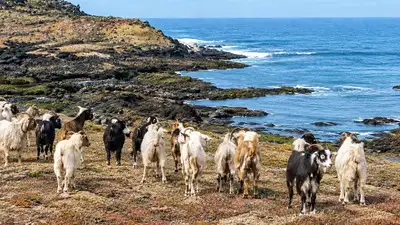
Representative image of goats grazing along a rugged coastal landscape. Image Credits: ChatGPT.
In 1977, it was placed on the federal endangered species list. Research published in Annals of Botany also notes that the plant began to rebound after the goats were removed, with more than 3,500 individuals counted in the late 1990s. The San Clemente Island paintbrush was delisted from the endangered species list in 2023.
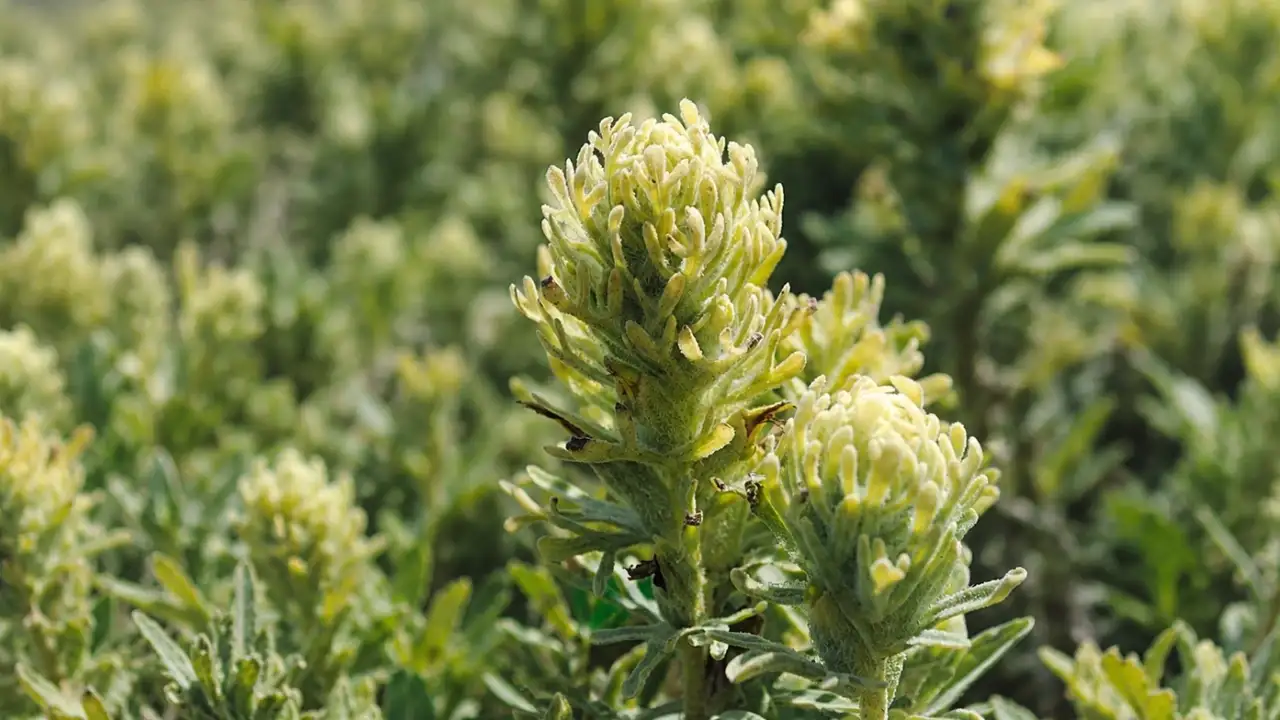
The US Fish and Wildlife Service says the species recovered after non-native herbivores were removed. On San Clemente Island, off the coast of Southern California, an unlikely conservation story unfolded after one of the island’s most damaging pressures was finally removed. Feral goats had grazed across the island for generations, stripping vegetation, trampling the ground, and causing erosion. Among the plants affected was the San Clemente Island paintbrush (Castilleja grisea), a small perennial found nowhere else. The San Clemente Island paintbrush was once fairly common, but intensive grazing sharply reduced its numbers. By the late 1970s, only a few plants were known to remain. But the situation changed once the goats disappeared from the scene. Scientists studying the plant’s genetics noted fairly high genetic diversity despite its long period of scarcity. The removal of the goats took away one of the greatest pressures that the paintbrush faced, but it was not the only problem. The plant’s recovery took place amid concerns about soil erosion, invasive plants, fire, land use, and military activity. The US Fish and Wildlife Service has noted that some of the plant’s current distribution may reflect areas where steep terrain once protected it from goats. Seeds may also have remained in the soil, allowing the species to recolonise areas after grazing ended. This suggests the recovery had multiple contributing factors, though removing non-native herbivores addressed the primary threat identified when the plant was listed. Nevertheless, the plant’s recovery was strong enough to prompt a change in its legal status. Once grazing pressure ended, the plant had a chance to grow again. The plant recovered from a small number to thousands.