pc: Connecticut Department of Transportation
A ferry has crossed the Connecticut River between Rocky Hill and Glastonbury since 1655, when the service began with a small raft pushed across the river using long poles. Cyclists cannot use the Putnam Bridge on Route 2 between Wethersfield and northern Glastonbury, according to CTDOT. The department’s ferry history page states that the Rocky Hill-Glastonbury Ferry is the only crossing available to cyclists between Hartford and Middletown, leaving a barrier of more than 13 miles without the ferry. High water near the landings delayed the April 1 start; CTDOT announced a May 1 opening.
It is the oldest continuously operational ferry in the United States, according to the Connecticut Department of Transportation. Over the centuries, the ferry has changed from horse-powered and steam-driven vessels to its current operation. The Rocky Hill-Glastonbury Ferry operates from April through November, providing a direct river crossing for motorists, pedestrians and cyclists. It was expected to welcome passengers through November. You use AI every day. Now get your AI Quotient. Take the AIQ test.
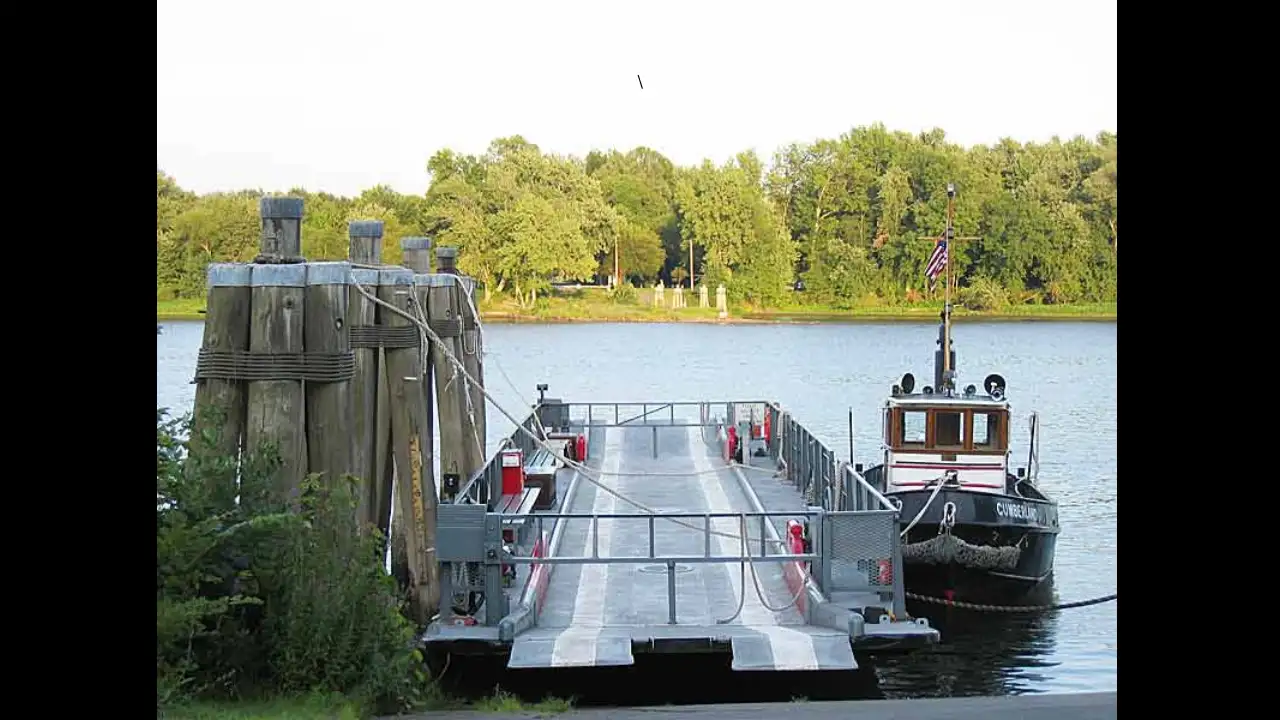
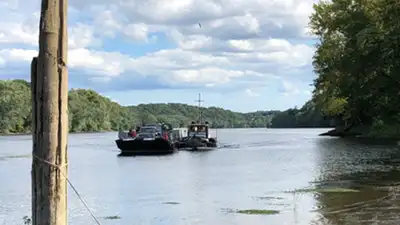
Today, the three-car Hollister III, an open flatboat, is towed across the river by the diesel-powered Cumberland.
CTDOT’s history of the ferry states that it was modernised in 1876, when the service moved to steam-driven craft. The ferry normally operates from April 1 through November 30. CTDOT lists operating hours of 7 a.m. to 6:45 p.m. from Monday to Friday, and 10:30 a.m. to 5 p.m. on Saturdays and Sundays. Vehicles can board for $5 on weekdays and $6 on weekends, while pedestrians and cyclists pay $2 on all days, according to the department’s current ferry information. PC: Connecticut Department of Transportation The ferry provides a direct connection between Rocky Hill and Glastonbury at Route 160.
The ferry operates on demand rather than according to fixed departure times. CTDOT states that there are “no scheduled departure times” and that service is provided as vehicles and passengers arrive. CTDOT says motorists travelling between parts of southern Glastonbury and Rocky Hill can cut nearly eight miles one way from their journey by using the ferry.
The ferry has changed considerably since its early days. At one point, horses on treadmills in the centre of the craft provided the power needed to move it across the river. The ferry’s current operation uses a different form of propulsion. The barge is towed back and forth between the landings by Cumberland, a diesel-powered towboat. The ferry is closed on Thanksgiving, and weather conditions, water levels or mechanical issues can affect service. The department also identifies the crossing as particularly important for cyclists.
CTDOT describes today’s vessel as an open flatboat named the Hollister III, which can carry three cars.