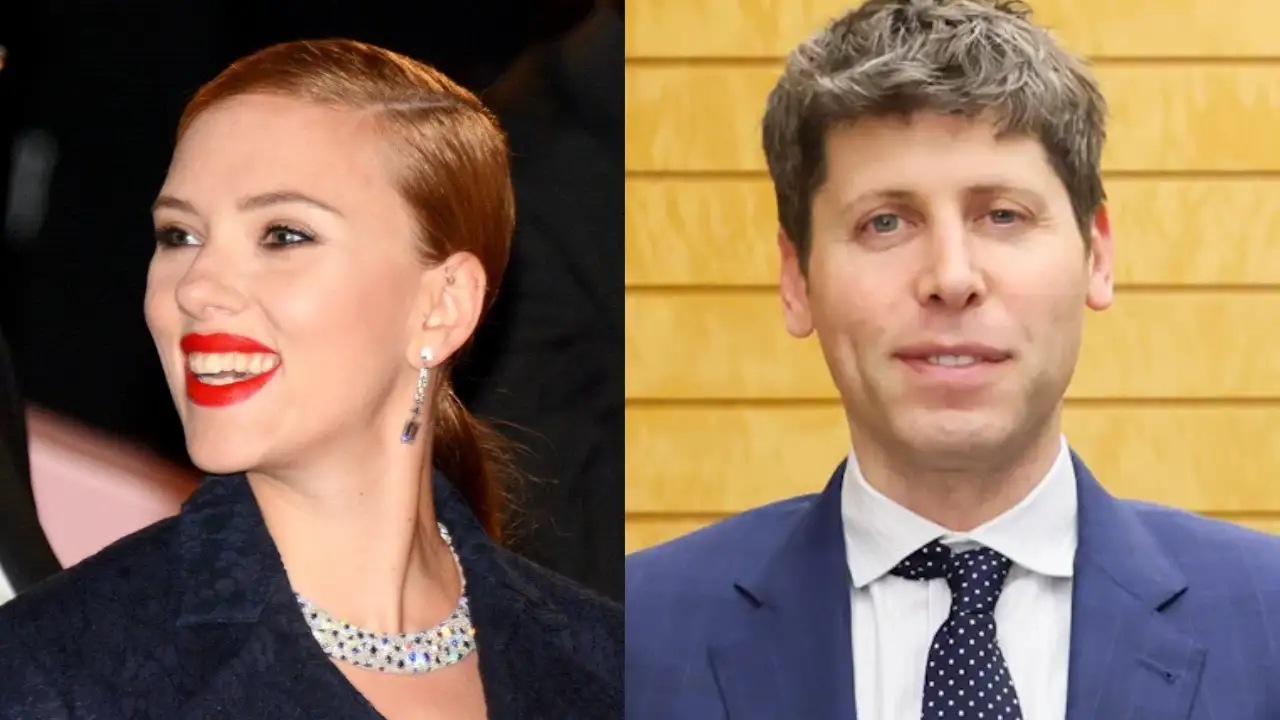
Image: Wikipedia
In October 2023, her representatives acted after an image-generating app used genuine footage of her, alongside an imitated voice, in a social media promotion she never approved. By May 2024, she was accusing OpenAI, the company behind ChatGPT, of copying her voice after she turned down an invitation to provide it, an allegation chief executive Sam Altman rejected. An app called Lisa AI: 90’s Yearbook & Avatar posted the 22-second advertisement on X, the platform formerly known as Twitter, according to The Guardian. Altman contacted her agent again two days before the 13 May 2024 announcement, asking her to reconsider, she said. OpenAI had also said in a blog post on Sunday 19 May 2024 that Sky belongs to a different professional actress using her own natural speaking voice, and that it would not share the names of its voice performers, to protect their privacy. The Washington Post reported on 20 May 2024 that she was threatening legal action against the company. She had taken on a large company before: in 2021, she and Walt Disney settled a breach of contract lawsuit she had brought against the studio. OpenAI’s own timeline says it paused the Sky voice on 19 May 2024, four days after talks with Johansson’s team began.
The system was released before they could connect. No court ruling or settlement has been publicly reported for either the advertisement or the OpenAI dispute.
The screen then switched to generated photos resembling her, while a voice imitating the actor told viewers the app could also create images from text and even videos. Nine months later, she said, friends, family and the public all remarked on how much the newest system, named Sky, sounded like her. Johansson told CNBC she was shocked, angry and in disbelief that Altman would pursue a voice so close to hers that her closest friends and news outlets could not tell the difference. She also pointed to Altman’s post of a single word, “her”, on the day OpenAI announced ChatGPT-4o, which she took as a hint that the resemblance was intentional. Altman rejected the allegation in a statement reported by CNBC, saying Sky’s voice was “never intended to resemble hers”. He said OpenAI cast the voice actor behind Sky before any approach to Johansson. Out of respect for Johansson, Altman said, OpenAI paused the use of Sky’s voice in its products, adding that the company was sorry it had not communicated better. Reports said that OpenAI did not immediately respond to a request for comment on Johansson’s statement. Johansson told CNBC that the episode forced her to hire legal counsel, who wrote two letters to Altman and OpenAI setting out what the company had done and asking it to detail exactly how the Sky voice was created. She said OpenAI reluctantly agreed to take the voice down, which differs from Altman’s account of pausing it out of respect. Johansson said she hoped for a resolution through transparency and the passage of appropriate legislation to protect individual rights.
Scarlett Johansson’s legal action over artificial intelligence misuse of her likeness and voice spans two separate disputes within seven months, one over an advertisement and one over a chatbot voice. Both cases were handled through lawyers rather than a court ruling. It opened with a behind-the-scenes clip of Johansson on the set of the Marvel film Black Widow, in which she appears to greet viewers by name and invite them along. The word refers to the film in which she voiced Samantha, an assistant who forms an intimate relationship with a man. She framed the dispute as part of a wider struggle over deepfakes and the protection of a person’s likeness, work and identity, saying these questions deserve absolute clarity. You use AI every day. Now get your AI Quotient. Take the AIQ test.
Johansson’s team spotted the advertisement on 28 October 2023 and confirmed that she is not a spokesperson for the company. The advertisement was taken down, though when The Guardian reported on 1 November 2023, several apps by the same developer were still listed on the App Store and Google Play. Johansson was not the only public figure to react in 2023. In 2018, she told The Washington Post about deepfakes that add women’s faces to pornographic videos. Image: Wikipedia Johansson said in a statement provided to The Washington Post on 20 May 2024 that Altman asked her in September 2023 to be the voice of OpenAI’s conversational system.
Small print beneath the video says the images were produced by the app and have nothing to do with the person shown. Her lawyer, Kevin Yorn, told Variety that the team does not take such matters lightly and would pursue every legal remedy available. Nothing, she said, can stop someone from pasting her image onto another body and making it look realistic, and she described the internet as virtually lawless, apart from American policies that apply only within the country. In her statement to CNBC, she said Altman told her that her voice could help bridge the gap between technology companies and creatives and make consumers more comfortable with the shift towards artificial intelligence.
In October of that year, Tom Hanks wrote on Instagram that a dental plan had used an artificially generated image of him in a promotional video, warning fans that he had nothing to do with it. Authors, including the comedian Sarah Silverman, have sued OpenAI and Meta, the parent company of Facebook, for copyright infringement, claiming the companies’ models were trained on their work without consent. Nor was it the first time Johansson’s image had been used without her consent. She declined after much consideration, for personal reasons.