
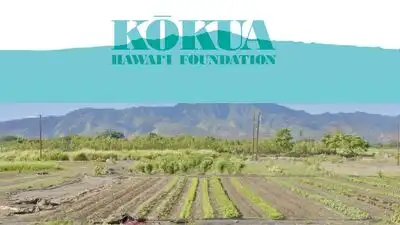
Photo credit: Kōkua Learning Farm
In 2019, musician Jack Johnson’s Kōkua Hawaiʻi Foundation acquired neglected farmland on Oʻahu with a plan to turn it into a place for education, food production and community involvement. Six years later, the Kōkua Learning Farm had reported harvesting more than 40,000 pounds of produce and welcoming over 2,200 students on educational field trips. More than 40,000 pounds of produce had been harvested, showing how much food can emerge when land is restored with consistent care and community support.
The foundation says field trips can include lessons on food production, compost, agroforestry and pollinators. Activities are adapted according to the age of the students, the size of the group and what is happening on the farm during the visit. The figures were included in a document submitted to the City and County of Honolulu, while the foundation’s Kōkua Learning Farm website describes the site’s wider work in farming, composting, agroforestry and food education. What began as a neglected agricultural property has gradually become a working classroom where children, teachers, volunteers and young farmers can learn how food is grown. The Kōkua Learning Farm was created on land that had not been fully used for many years. Rather than treating the property simply as a place to grow crops, the foundation imagined a broader community resource that could connect people with Hawaiʻi’s food systems. The farm’s work reflects the Kōkua Hawaiʻi Foundation’s focus on environmental education and sustainable living. Its programmes encourage students to understand where food comes from, how soil is maintained and why healthy ecosystems are important to farms and communities. Turning neglected land into productive farmland required more than planting seeds. The property needed preparation, infrastructure, soil care and a long-term plan for managing water, crops, pathways and educational spaces. The gradual transformation allowed the organisation to build the farm around practical learning instead of creating a purely decorative garden. By the sixth year, the site had become a functioning agricultural operation. The visits are designed to help students experience the food system directly. Instead of learning only from textbooks or classroom diagrams, children can see crops growing, examine soil, observe insects and discuss what happens to food scraps after meals. The farm’s educational approach is also connected to Hawaiʻi’s relationship with the ʻāina, or land. The Kōkua Learning Farm website describes a Hawaiian Garden as the final piece of the farm’s development. The garden was designed through a collaborative process involving experts and community organisations.