
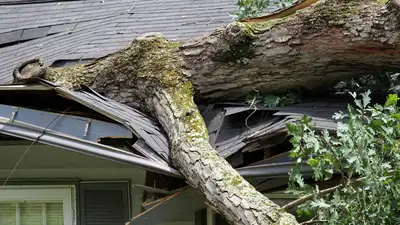
Tenants reportedly warned the owner about falling branches repeatedly, but no effective action was taken before disaster struck.
6, the Florida District Courts of Appeal overturned the judgment, finding that previous cases about healthy trees could not be used to automatically protect a property owner who is accused of knowingly allowing a dangerous, decaying tree to remain. The dispute then went to court where USMI sought judgment on the pleadings on the basis that it owed no legal duty to prevent a tree on its property from damaging the neighboring property. The trial court sided with USMI and ruled in its favor that the company had no legal duty to avoid the damage. Vaughan’s claim for negligence was thus dismissed. His separate negligence-per-se claim based on an alleged statutory violation had already been dismissed and was not part of the subsequent appeal. The Sixth District Court of Appeal, however, disagreed. In their ruling on Nov. The appellate court explained that the general principles of negligence in Florida recognize a legal duty when someone’s actions create a foreseeable risk of harm to others. So a property owner who knows he has a rotten tree that could damage neighboring homes may have a duty to take reasonable precautions. The appeals court didn’t decide if USMI was ultimately negligent, or what compensation Vaughan might get. Rather, it held that the allegations in his complaint were sufficient to establish a potential legal duty, and the case should not have been dismissed at the pleading stage. Also, the ruling sends the dispute back for further proceedings, giving Vaughan another chance to pursue his claim.
Also, the court clarified that the prior case law did not grant blanket immunity to owners of diseased or dangerous trees.