
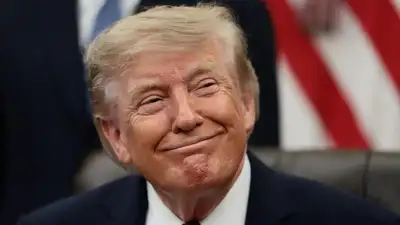
File photo: US President Donald Trump
Turning his attention to Iran, Trump imposed his face on the country and posted an AI-generated image involving demolition of Kharg Island. Trump’s previous AI depiction of its Kharg Island’s destruction prompted administration officials to explain it was intended as a message rather than an announcement of an actual US strike.
Reuters reported Monday that Iran planned to announce a new restricted zone in the Gulf, while oil flows through the waterway remains a major source of global concern. That distinction – between a meme, a threat, a joke, and government policy — is now becoming increasingly difficult to maintain amid Trump’s social media mayhem. Sunday’s posts arrived amid renewed fighting around the Strait of Hormuz, where Iran is threatening additional restrictions after the US ramped up military pressure. So when the US president posts something about the Strait of Hormuz, the world is having a hard time determining whether it is comedy, propaganda, psychological warfare or an actual policy signal.
At home, critics have been quick to interpret the Trump barrage of AI slop with alarm, some describing the latest outpouring as another “mental health episode” that calls for invoking the 25th Amendment, a constitutional mechanism to remove the President in the event of incapacity.
No one seriously expects this to happen although the British Medical Journal reported in May that 30 US mental-health specialists had signed a statement declaring Trump mentally unfit for office and citing what they regarded as observable concerns about cognition, judgment and impulse control.
But there is another interpretation of the President’s digital excesses: The Trump White House has increasingly operated as a social-media and influencer machine, using memes, videos and rapid-response posts to “drown out” opponents, generate viral attention, and overwhelm conventional news coverage. Its involuntary provisions require the vice president and a majority of the Cabinet to act, followed by a two-thirds vote of both chambers of Congress to remove the president if he contests the determination.