
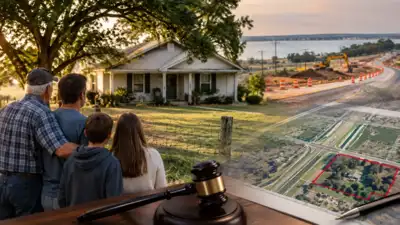
Representative Image (AI-generated)
The Willis family moved to the area in 1962, when the surrounding land was largely farmland. A CBS News Texas report published on October 27, 2026, said the city’s final offer was $429,000, which the family rejected. Because it represents decades of family history and remains home to relatives, the property has significance beyond its monetary value.
Texas Metro News reported that the family had been given a deadline to accept the offer and that the city council was expected to discuss in executive session whether to pursue an eminent domain lawsuit.
More than six decades later, the family says the city’s compensation offer does not reflect the value of the property it is being asked to leave. Roy Willis told CBS News Texas that his family moved to the property when the surrounding area was undeveloped, with cotton fields and cornfields occupying much of the land. Willis said he, his father and his brother built the house. The city of Rowlett said it does not comment on pending or anticipated litigation, including matters that may involve eminent domain proceedings.
A home that has remained in a family for generations is now at the centre of a property dispute in Rowlett, Texas, as the city seeks to acquire it for a road improvement project. The dispute centres on the planned widening of Chiesa Road and the city’s use of eminent domain to obtain land for public infrastructure. The home, near Lake Ray Hubbard and Chiesa Road, has since become a longstanding family residence spanning four generations. That distinction is important in disputes involving compulsory acquisitions. A property owner’s attachment to a home may be profound, but compensation negotiations generally focus on legally relevant valuation considerations rather than sentimental value alone. The family can dispute the proposed compensation through the applicable legal process. The reports do not establish that a lawsuit has been filed or that a court has ruled on the compensation.
In its October 26 report, Texas Metro News quoted Timothy expressing sadness about the prospect of losing the family home. For the family, therefore, the issue is not simply the sale of a property. It is the possible loss of a place connected to their family history and present living arrangements. The dispute involves eminent domain, the legal authority that allows government entities to acquire private property for public use, subject to applicable legal requirements and compensation rules. Texas Metro News quoted eminent domain attorney Clint Schumacher of Dawson & Sodd PLLC, who was not involved in the Willis case, explaining fair market value as the price a willing buyer would pay a willing seller when neither is compelled to complete the transaction.
For a family that has lived on the property since 1962, the proposed road expansion represents more than a change to the local landscape. It could mean leaving a home that has shaped family life for 64 years. Rowlett’s plan reflects the infrastructure demands of a growing community, but for the Willis family, the proposed acquisition threatens a home built through generations of family effort. The disagreement now centres on whether the city and the family can reach an acceptable compensation agreement or whether the dispute will proceed through the legal system. The final outcome will depend on the negotiations and any subsequent legal proceedings.