
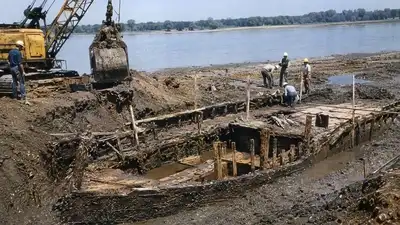
AI-generated representative image of an excavated 19th-century steamboat emerging from the muddy bed of a lake. Image credits: ChatGPT
Treasure hunters who were searching the grounds of DeSoto National Wildlife Refuge in 1968 discovered evidence of a steamboat that had disappeared under the Missouri River more than 100 years ago. Nearly 30 feet below the surface, buried under layers of sand, silt, and dense blue clay, lay the Bertrand. The sternwheel steamer had sunk on April 1, 1865, while it was carrying commercial cargo from St. Eventually, this discovery led to the recovery of more than 250,000 artifacts . The discovered supplies allowed the researchers to paint a better picture of how products were being transported towards the American West in 1865. A commercial shipment that was bound for Montana’s gold mine s On March 18, 1865, a newly loaded Bertrand departed the harbour of St. DeSoto National Wildlife Refuge was established in 1958, and in October 1960, the US Army Corps of Engineers completed the DeSoto Bend Cut-off Project. Image credits: Wikimedia Commons The search for Bertrand gained momentum in 1967, when Omaha-area treasure hunters Sam Corbino and Jesse Pursell obtained permission from the federal government to look for the vessel. In February 1968, test borings showed material from a large man-made object roughly 27 to 32 feet below the surface.
Archaeological accounts from the National Park Service note that the passengers and crew survived, but the boat and most of its remaining cargo were lost beneath the river. A preserved record of frontier commerce The excavation revealed a shipment that went beyond just mining equipment. Furthermore, tools like axes, hammers, ploughs and mining implements were also found, as reported by Iowa PBS.
Louis to Montana. The commercial supplies on the ship included tools, clothing, food, household goods and equipment that were likely intended for growing gold-mining settlements around the region. Bertrand, unlike many other shipwrecks whose organic contents have deteriorated, preserved a notable range of everyday merchandise. Louis under the command of Captain James Yore. The vessel was moving upriver towards Fort Benton in the Montana region, which was at the time considered an important trading point on the upper Missouri River. Despite the journey being a difficult one, steamboats provided a way of transporting huge quantities of provisions to frontier communities, military installations and mining camps. The shifting sandbars, changing channels and submerged obstacles made navigation along the Missouri particularly difficult. Alongside the common household supplies, mercury, known as quicksilver, was among the valuable materials aboard. It was considered valuable as it was used in gold extraction. The shipment reflected a demand for practical supplies in Montana’s growing mining settlements, where merchants relied heavily on river transport to bring goods from established trading centres farther east. About two weeks after leaving St. Louis, the steamer struck a submerged log, known as a snag, while it was travelling along the Missouri River north of Omaha. The impact damaged most of the vessel, and it sank near what is now the DeSoto National Wildlife Refuge. Initial operations reportedly recovered parts like its boilers and engine, while much of its merchandise remained underwater. How treasure hunters discovered the wreck After the sinking of Bertrand, the Missouri River did not remain in the same channel. Its shifting course and the sand movement alongside the silt slowly buried the wreck, and subsequent engineering work also altered the surrounding landscape. The wreck site lies within the refuge, close to the Iowa-Nebraska border. The DeSoto National Wildlife Refuge. They analysed historical documents and old river maps and used a fluxgate magnetometer to detect buried metal. Through the year, excavation crews removed the overlying earth, managed groundwater and slowly unearthed the hull. Researchers recovered barrels of flour and nuts, jars of honey, mustard, canned fruit, bottles of patent medicines, rolls of silk, shirts, coats and around thousands of shoes and boots. The condition of the cargo was significant. Most of the material had been sealed inside the holds with tightly packed blue clay, thus restricting the movement of oxygen and slowing the deterioration of organic materials. Alongside the goods, labels and packaging also survived, thus allowing researchers to identify manufacturers, consignments and product types. Join conversation Share your thoughts in the comments Be respectful · TOI community guidelines Initially, the treasure hunters had hoped to find something valuable like gold and whiskey. However, the findings failed to match their expectations. No gold was found, and the whiskey did not prove to be the valuable cargo the searchers had anticipated. The greater discovery was the extensive collection of ordinary merchandise that had survived beneath the riverbed.
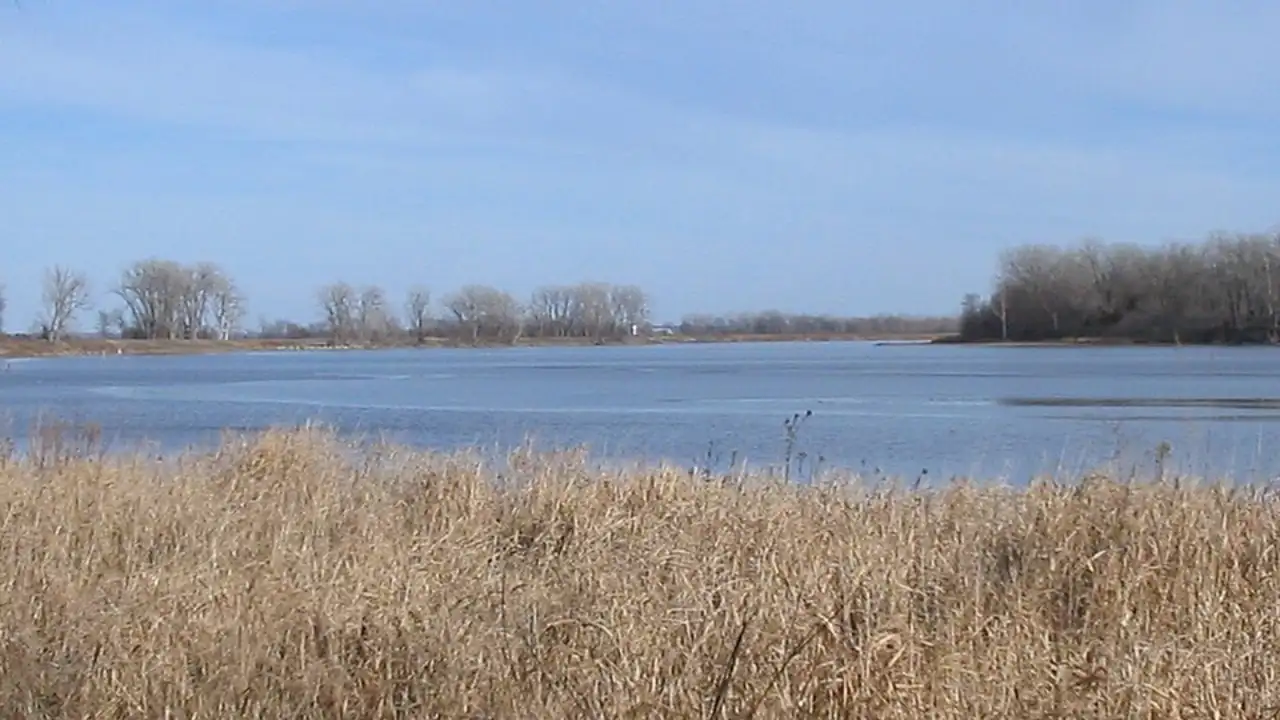
Today, the DeSoto National Wildlife Refuge preserves a collection of more than 250,000 artifacts as noted by the US Fish and Wildlife Service. Following the excavation, the artifacts underwent conservation, cataloguing and analysis before being prepared for storage and exhibition. Selected objects can be seen in the refuge’s visitor centre. You use AI every day. Now get your AI Quotient. Take the AIQ test.