AI-generated representative image. Credits – Gemini
For nearly 70 years, Ball State University in Muncie, Indiana, relied on coal to heat its campus during winter. The campus heating plant had four coal-fired boilers that burned, according to later estimates, about 36,000 tons of coal a year to keep classrooms and residence halls warm. But as the equipment aged and the cost of installing a new fossil fuel boiler increased, university leaders began to look at renewable options instead. The university has installed a campus-wide geothermal network that now supplies heating and cooling across much of the campus.
The campus is avoiding the burning of coal, thus saving roughly 85,000 tonnes of carbon dioxide a year, along with reductions in sulphur dioxide, particulate matter and coal ash, the engineers’ design summary said. The system has also substantially reduced the university’s carbon footprint by replacing coal-fired heating.
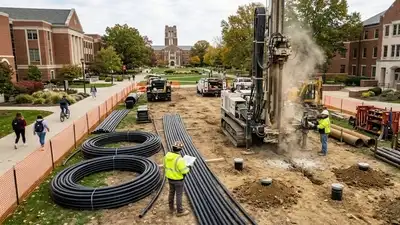
Construction began in 2009 to replace four coal-fired boilers and eventually provide heating and cooling to 47 buildings across the campus. Drilling started in July 2009 after Lowe refused to accept that. The remaining coal-fired boilers were shut down in March 2014. The bill arrived at $83 million, covered by state appropriations and federal grants, including Recovery Act money.
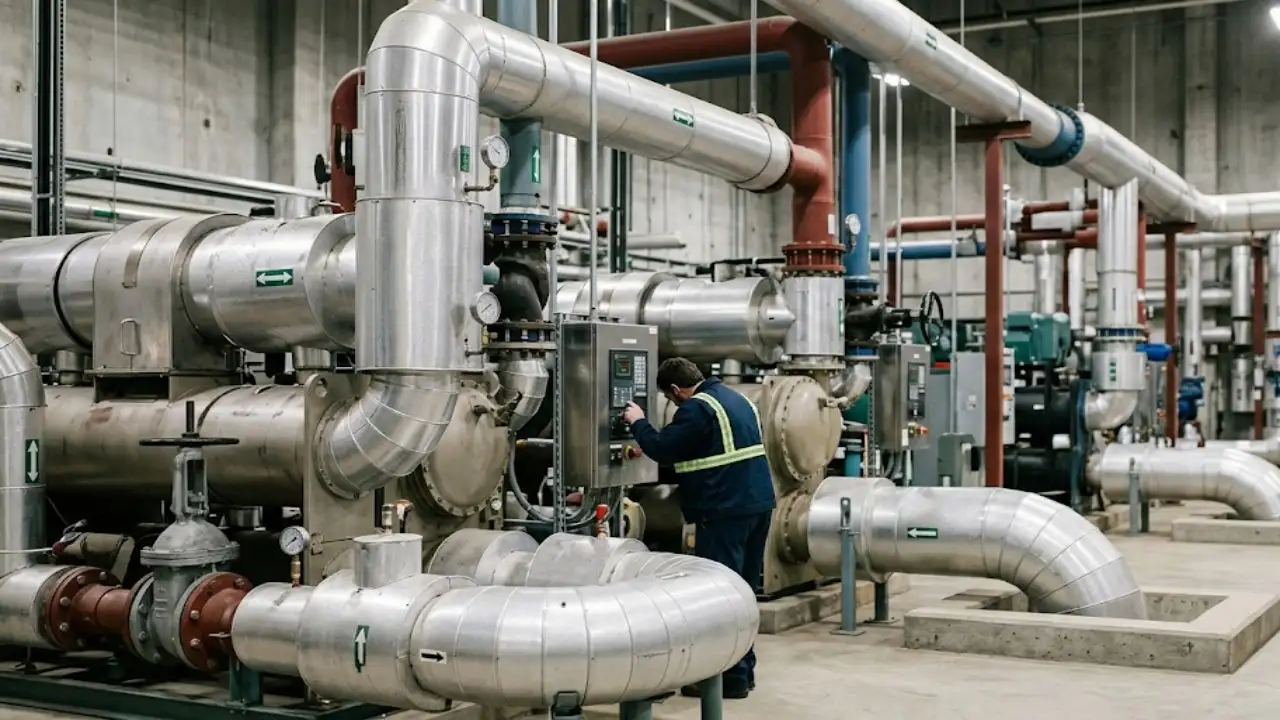
It is one of the country’s largest ground-source geothermal heating and cooling systems, according to the US Department of Energy. Two reputable geothermal system designers informed project manager Jim Lowe they weren’t sure a system this big would be practical and effective, according to Ball State’s own magazine. Geothermal heat pumps had long been used to heat and cool individual buildings, but applying the technology at this campus scale was unprecedented at the time. Not everyone saw that as wise. AI-generated representative image showing geothermal heat-pump equipment transferring thermal energy through Ball State University’s campus-wide heating and cooling network. Credits – Gemini