
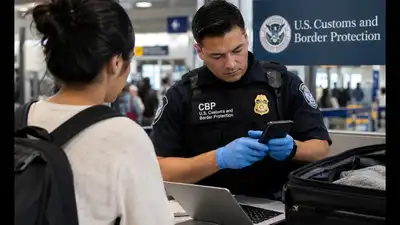
US border agents can manually search a traveler’s phone without a warrant, a court upheld. (AI Photo)
In its 2014 decision in Riley v California, the US Supreme Court generally required police to obtain a warrant before searching the contents of a cellphone seized during an arrest.
They said the First Amendment does not create a separate requirement that officers obtain a warrant before examining information on a person’s phone. Border agents do not require a search warrant to stop a traveler and go through their electronic items like phones and laptops, an appeals court panel has now ruled. The court treated a manual search of a cellphone as a routine border search. Under the longstanding border-search exception, government officials generally have broad authority to inspect people and belongings entering the United States without obtaining a warrant. The ruling also distinguished border searches from ordinary police searches inside the US. The court noted that phones can contain both constitutionally protected expression and information that does not receive First Amendment protection. It also pointed to the government’s authority to enforce immigration and border laws, including restrictions involving certain forms of extremist or terrorist-related expression.
An important distinction is that the court ruled on manual searches, such as an officer scrolling through information stored on a phone.