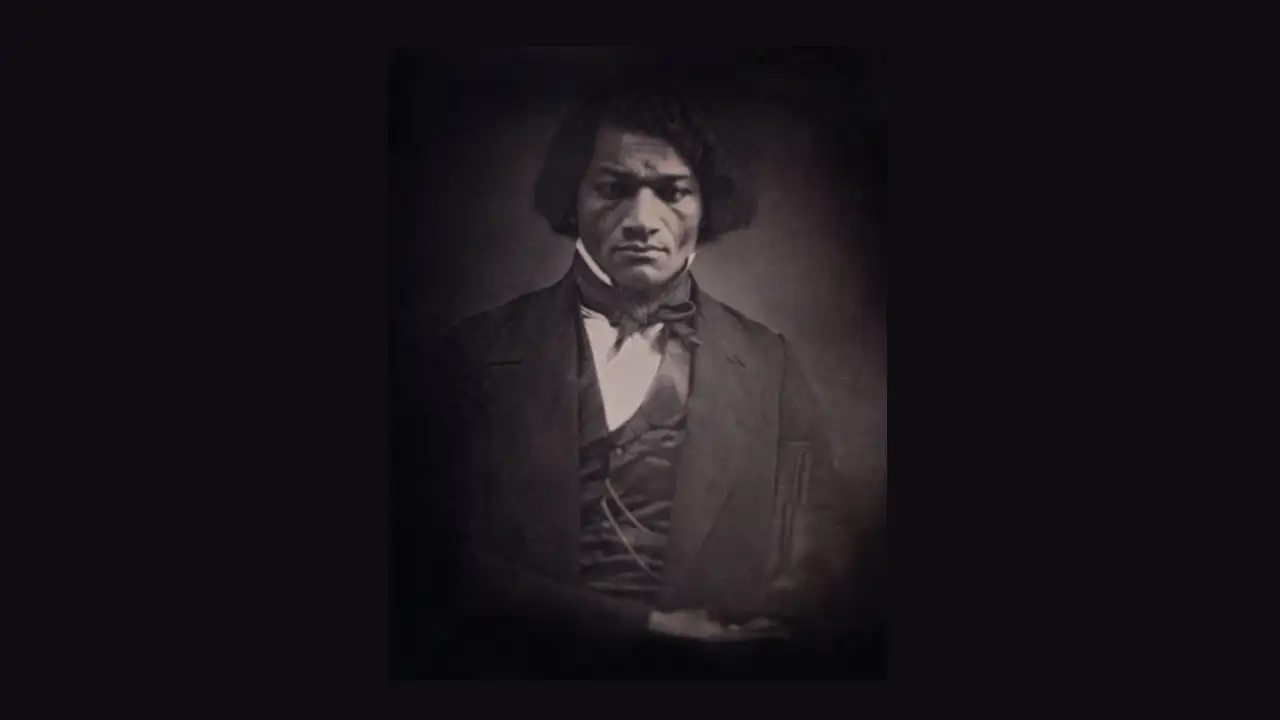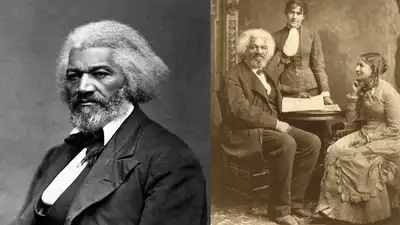
Image: Left/Douglass, 1879/Right/ National Park Service/Wikipedia
He spent much of his time and money improving the property between 1878 and 1895, according to the National Park Service. He expanded the house from 14 to 21 rooms, added a library and second-storey bedroom, and filled the home with books, art, antiques and other possessions. Douglass did not leave Cedar Hill unchanged.
It eventually contained more than 1,000 books covering subjects including history, religion, science and government. Douglass moved into Cedar Hill with his first wife, Anna Murray Douglass, in 1878. The former abolitionist, author and civil rights advocate later served in several government positions and was appointed US minister to Haiti in 1889. Douglass died at Cedar Hill in 1895, at the age of 77. In 1900 Congress chartered the Frederick Douglass Memorial and Historical Association, according to The Frederick Douglass Memorial and Historical Association. What began in 1877 as a $6,700 purchase of a restricted property became the setting for the final 18 years of Douglass’s life.
The library became one of the home’s defining spaces. Portraits of people Douglass admired, including John Brown, Susan B. Anthony and William Lloyd Garrison, were also displayed there. He continued living there for the rest of his life, even while his public career took him well beyond Washington. His connection with the property continued after his death. His second wife, Helen Pitts Douglass, worked to preserve the home. Preservation efforts eventually helped keep Cedar Hill available to the public. More than a century later, Cedar Hill remains preserved in Washington as a place where visitors can see the home, possessions and landscape connected to one of the most prominent abolitionists and civil rights advocates of 19th-century America. Douglass’ roll-top desk sits in the library, while his Panama hat and clothing are on display in his bedroom. The rooms are also filled with gifts from prominent antislavery figures of Douglass’ time, including President Abraham Lincoln and Harriet Beecher Stow.