
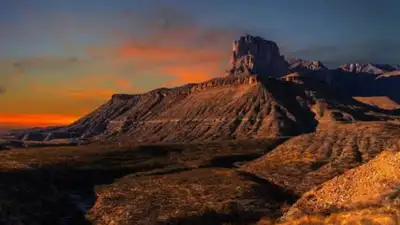
When petroleum geologist Wallace Pratt first visited McKittrick Canyon in 1921, he had been sent to West Texas on a trip with oil brokers to acquire leases for Humble Oil and Refining Company. Pratt’s first land donation included 4,942 acres and was accepted by the federal government in 1959, according to historical records maintained by the National Park Service. He and his family later gave an additional 690 acres between 1960 and 1961. Together, these gifts formed the core of the land that became Guadalupe Mountains National Park in 1972.
Local land brokers offered to show him what they called the most beautiful spot in Texas, a hidden oasis of clear streams, waterfalls and lush greenery in the Chihuahuan Desert. Impressed by the canyon’s geology and natural beauty, Pratt bought land there with two business partners to use as a private summer retreat. Nearly four decades later, that personal refuge became the foundation for Guadalupe Mountains National Park.
During the winter of 1931 and 1932, he hired architect John Staubs to build Pratt Cabin, a two-bedroom stone structure made with locally quarried stone and timber. After Pratt’s first wife, Pearl, died in 1940, he married Iris Calderhead in 1941. The house, completed in 1943 and named Ship on the Desert, became an important early example of modernist architecture in West Texas. National Park Service records say construction began in 1942 and was completed in 1943.
The house was designed to look like an ocean-going oil tanker, according to National Park Service records. The Pratt family used the cabin as a summer home. But its location deep inside the canyon, near a wash, left it exposed to strong floods and bad weather. The family continued using it as a retreat even after building a second home on higher ground. Calderhead was a prominent early 20th-century suffragist and former leader of the National Woman’s Party. Soon after their marriage, the couple decided to build a permanent home on higher ground near the mouth of McKittrick Canyon. To design their new home, the Pratts hired the New York City architecture firm Milliken and Bevin. The design reflected Pratt’s long career in the oil industry. The long, narrow home used local limestone, wide areas of glass and a layout designed to blend with the surrounding mountains. The design also included details tied to Iris Pratt’s life. The entrance door was painted bright purple, a color linked to the women’s suffrage movement and the National Woman’s Party. Pratt’s letters credited Newton and Elizabeth Bevin with much of the actual design work Although Milliken and Bevin received formal credit for the design. The couple stayed at the original Pratt Cabin while supervising construction of the new house.