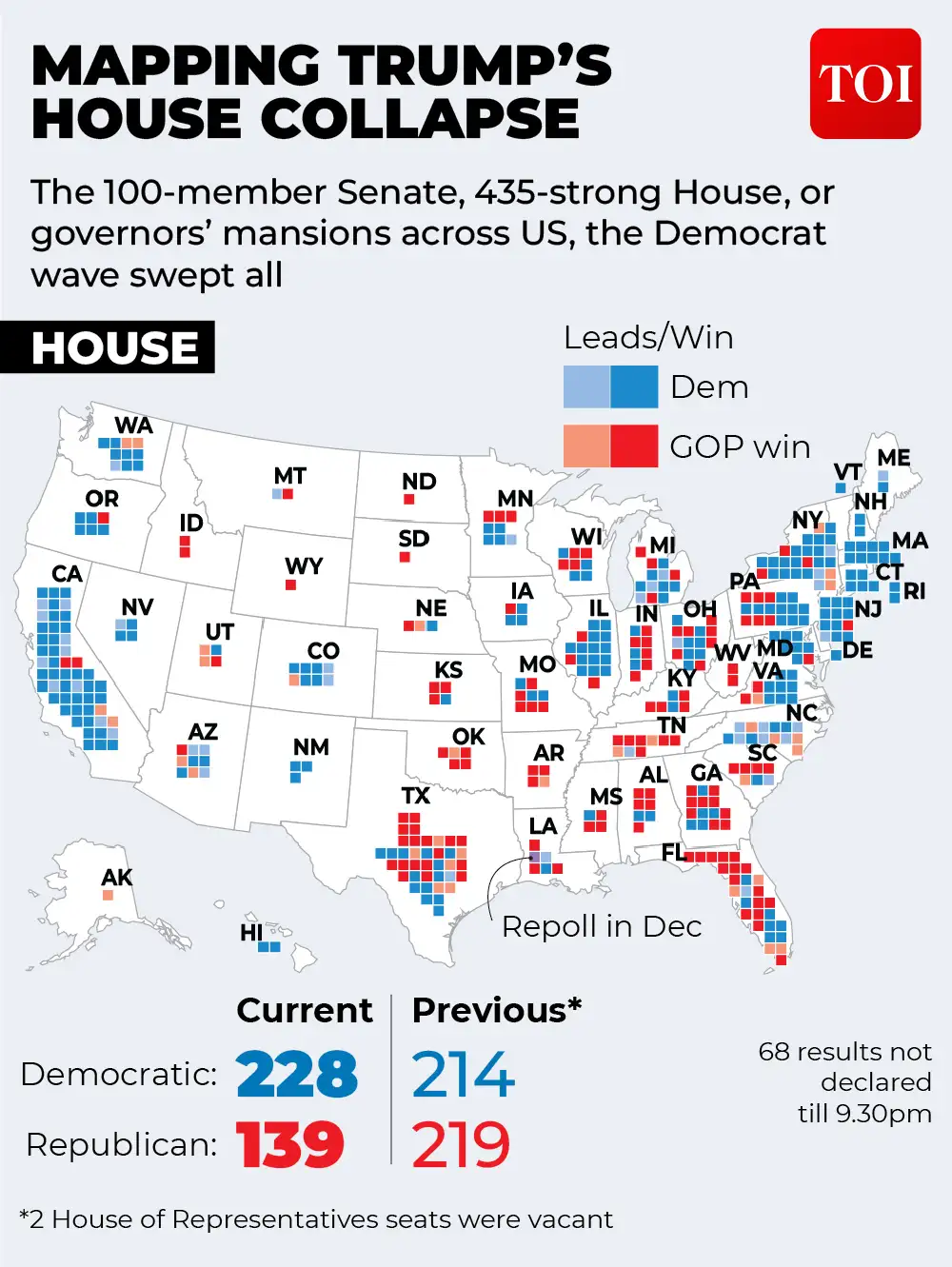
Donald Trump, as he had wanted voters to think, was on the ballot in these US midterms. And that was the problem.
Nearly nine in 10 voters identified living costs as a crucial or major consideration, according to SSRS exit polls reported by Reuters. Two-thirds blamed Trump for high prices; 62% disapproved of his performance. Only 69% of Republican voters approved of Trump’s foreign policy performance. Pew’s late September to early October survey put Trump’s approval among Latino registered voters at 24%, down from 38% in February 2025. Among those who said they had voted for him in 2024, approval had fallen from 93% to 57%. The AP Voter Poll found that about seven in 10 voters wanted Congress to do more to check presidential power. That included four in 10 Republicans.
Paxton lost.
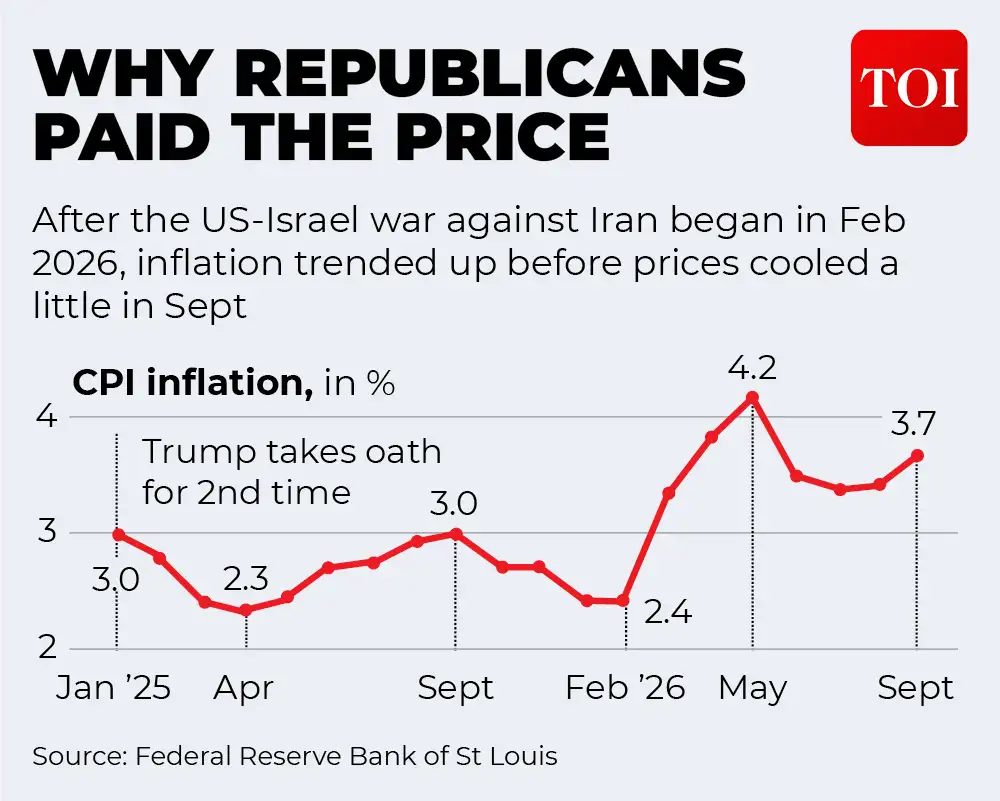
Conservative commentator Tucker Carlson said he was leaving the Republican Party over its foreign policy direction. These figures measure voter perceptions, but perceptions of who is responsible are central to an election fought over affordability. The Iran war compounded the failure on inflation. It added an overseas commitment to a presidency built on promises to concentrate on American interests. And rising fuel costs connected foreign policy directly to domestic hardship. Before polling day, an AP-NORC survey found that roughly two-thirds of registered voters counted the Iran war among their leading election issues. In Texas, he backed attorney general Ken Paxton over incumbent Senator John Cornyn, a safer choice. So did Trump-backed Senate candidates in North Carolina, South Carolina and Michigan. North Carolina illustrated this particularly clearly. Democrats fielded Roy Cooper, a former two-term governor with statewide recognition. Republicans put up Michael Whatley, a political operative who had never held elective office. Cooper campaigned on food and energy costs. Warning signs preceded election day. Economic dissatisfaction also became a demand for institutional checks.