
Image: Troutnut
The park has also confirmed that the treatment will not affect the potability of water at Slough Creek Campground, where drinking water will remain safe.
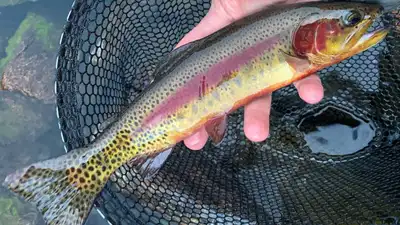
Yellowstone National Park said the operation will target invasive rainbow trout using rotenone, a piscicide approved by the US Environmental Protection Agency. Signs will be posted to alert visitors to the temporary restrictions. The announcement comes as Yellowstone continues efforts to prevent nonnative fish from spreading through sensitive waterways and undermining long-term native fish restoration projects.
Because they can selectively target fish while conservation teams take steps to minimise impacts on other aquatic organisms, the National Park Service says piscicides such as rotenone are used. Rotenone is not a new tool in Yellowstone’s fight against nonnative fish. Before treatment, biologists survey the area and use the lowest effective concentration, while chemical use is timed to reduce risks to amphibians and other wildlife. Those efforts have helped remove invasive populations and create conditions in which native cutthroat trout can recover.
Any native Yellowstone cutthroat trout captured through electrofishing before the Buffalo Creek project will be moved outside the treatment zone. Yellowstone has previously used rotenone during native fish restoration efforts, including projects in the Soda Butte Creek drainage.
Beginning August 31, Buffalo Creek will be temporarily closed from the northern Yellowstone boundary downstream to its confluence with Slough Creek. The closure is scheduled to last until September 7, allowing fisheries biologists to carry out the treatment without public access to the affected stretch.