
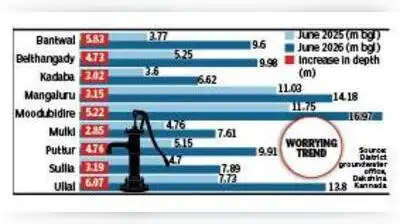
Worrying trend
An analysis of groundwater data over the past 10 years showed that levels had not fallen to this extent during the period. The district’s average depth to static groundwater increased from 6.4 m below ground level (mbgl) in June 2025 to 10.7 mbgl in June 2026, indicating that the water table was 4.3 m deeper than a year earlier. The difference narrowed to 2 m in July and around 0.5 m in Aug. Dakshina Kannada normally receives around 4,000 mm of rainfall.
Senior geologist Sheikh Davood said that despite the fall, the district remains in the safe category for groundwater availability. However, he said the district was not facing a serious groundwater crisis at present and that it remained in the safe category compared with other districts. The El Nino effect is also a factor,” said Davood. If rainfall reaches the normal level, groundwater availability is unlikely to pose a serious problem, he said. “Households, apartment complexes, industries and commercial establishments should adopt water-saving devices, including efficient taps and showers, which could reduce water consumption by 50% to 70% and farmers should also adopt measures such as drip irrigation to minimise wastage,” he said. Davood said both state and Union govts are working on water budgeting initiatives and it is at a planning stage.
Mangaluru: Groundwater levels in Dakshina Kannada have fallen to their lowest levels in a decade, with delayed and below-normal monsoon rainfall emerging as the primary reason for the decline. He attributed the situation mainly to inadequate rainfall and also pointed to rising water consumption amid rapid urbanisation. “Rainfall is the major triggering factor. The monsoon was delayed, and the district did not receive rainfall in the required quantity. He stressed the importance of public awareness and conservation. “We can see such initiatives in the future. At the panchayat level water budgeting could help assess the water available and plan its use across different sectors,” he added.