
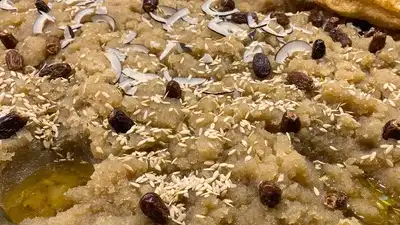
Sindhi seero also known as Suji ka Halwa (Image credit-Canva)
Food has always been one of the finest ways of taking us on a journey through our memories, heritage and more. It is through the language of cooking that we have long remembered our heritage. Particularly, with the ongoing festival of Navratri, many communities and households turn to the pages of legacy, recipes and stories that have travelled through plates and into our daily lives, rituals and remembrance. A chef who goes by P’s Kitchen shares memories of Sindhi food and traditions in a Pakistani Hindu family, along with a recipe that holds a special place in their festive celebrations.
You might know it as suji halwa, but in Sindhi kitchens, this sweet preparation is known as seero. Shared by P’s Kitchen, the recipe offers a glimpse into how familiar ingredients can take on a different meaning when prepared as part of a family’s religious traditions. For many households, festival preparations are as much about the rituals surrounding a dish as they are about the food itself. A bowl of halwa, made with ingredients commonly found in the kitchen, becomes part of a tradition that brings together prayer, family and the familiar tastes of home. Interestingly, some Sindhi families even serve Seero with malpuro during Holi, showing how a traditional preparation can find its place across different festive occasions. P’s kitchen shares a wonderfully unique prasad recipe for the prayer While recipes may vary from one household to another. If you are looking to try something different this Navratri, this Sindhi-style suji halwa brings together dates, nuts, milk and ghee for a sweet preparation that can be offered as prasad. What makes this recipe stand out is not simply its combination of ingredients, but the place it holds in a family’s celebration of Navratri. The first serving becomes an offering, while the bowls that follow bring the family together over a familiar taste. In such recipes, food becomes a way of holding on to traditions, allowing them to travel across generations and borders, one preparation at a time.
In her Pakistani Hindu home, the halwa is made on the very first day of Navratri, when the first bowl is offered to Mata before the family shares it as prasad.