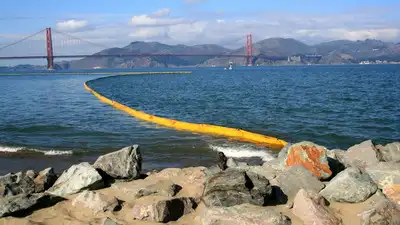
Representative image of an Oil spill in San Francisco Bay (Image Credits: Wikimedia Commons)
In 1971, an oil spill in San Francisco Bay prompted John Francis to reconsider his relationship with the environment. He made a commitment to give up motorised transport for travelling on foot, a commitment which endured for 22 years. This collision between the Arizona Standard and the Oregon Standard released a total of 800,000 US gallons of oil into the bay, according to the University of Wisconsin. Francis, who was 26 at the time , joined volunteers responding to the damage and subsequently stopped using cars, buses, and aeroplanes as a personal responsibility to reduce pollution. Initially, the silence was intended to last one day, but he renewed the commitment after pondering it each year and eventually maintained it for 17 years. Completing his education without motorised transport According to the Nelson Institute , Francis pursued his higher education by travelling between universities on foot, and the journeys required covering approximately 350, 800, and 1,400 miles respectively for his bachelor’s, master’s, and doctorate. Subsequently, he continued his environmental education work through public speaking and writing, publishing The Planetwalker: 17 Years of Silence, 22 Years of Walking and The Ragged Edge of Silence: Finding Peace in a Noisy World . The realisation dawned on him in 1994, while travelling in Venezuela on a journey through South America, prompting him to fly to see his parents, who had not seen him in years. In April 2025, the Nelson Institute reported that Francis had begun a walk across Africa, covering a planned distance of approximately 6,000 miles, at the age of 79.
Recalling the experience, Francis said to the Nelson Institute for Environmental Studies, “They were freaked out, but overjoyed because they thought they would never see me again,”. The decision was met with negative responses from friends and family, which prompted Francis, on his 27th birthday, to stop speaking. He received his bachelor’s degree from Southern Oregon University, continued with a master’s in environmental studies from the University of Montana, and a doctorate in land resources from the University of Wisconsin–Madison. Later, through the years, Francis reconsidered his decision not to use motorised transport, calling it very limiting and akin to a prison. Francis’s philosophy is to bridge the gap between human welfare and environmental conservation; he believes the way humans treat one another is reflected in the environment. You use AI every day. Now get your AI Quotient. Take the AIQ test.
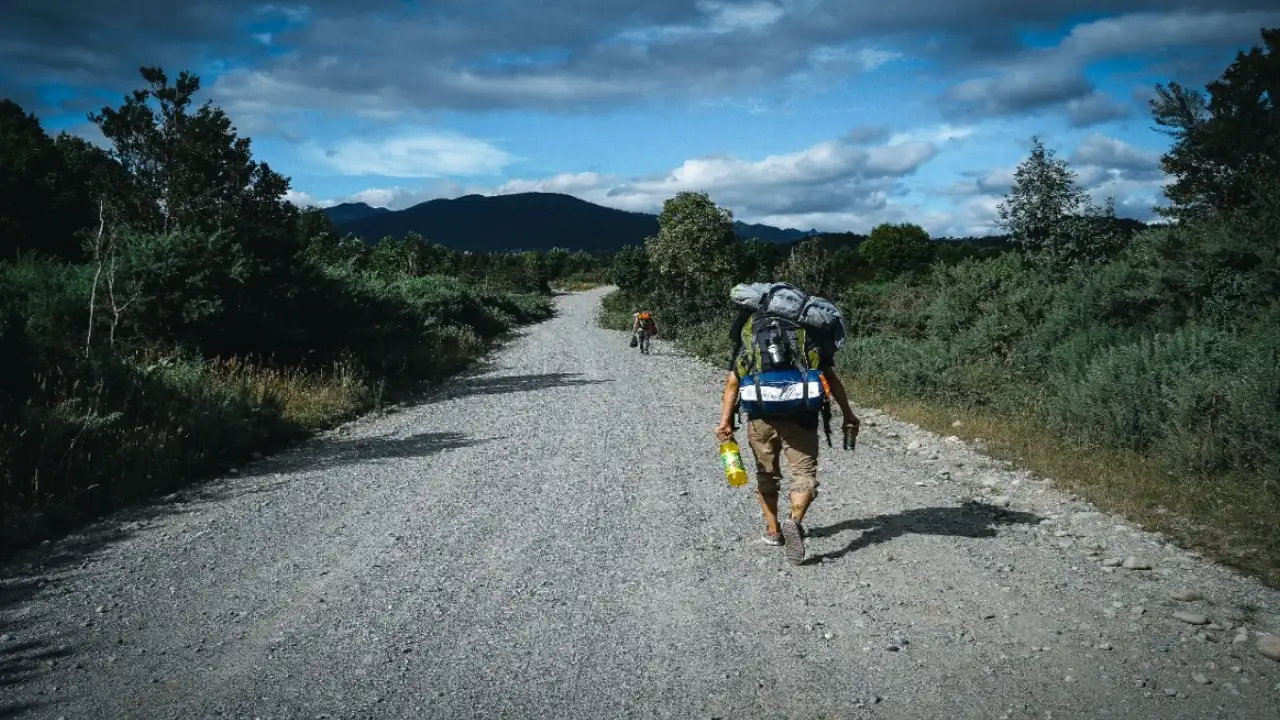
The physical effort to make this possible was very demanding; it required Francis to walk around 20 miles a day, which eventually wore out his shoes. On top of the complications, his size 13 feet and limited finances narrowed the options for finding new replacements. Representative image of a man backpacking on the road. (Image Credits: Pexels) From environmental activism to public service After Francis completed his doctorate, he travelled to Washington, DC, and joined the United States Coast Guard Oil Pollution Act of 1990 Staff. Eventually, in 1991, he was appointed as the Goodwill Ambassador to the World’s Grassroots Communities by the United Nations Environment Programme.
He supported his education by taking up jobs occasionally and playing his Banjo. Eventually, down the line, he was sponsored by the shoe company Timberland, which provided him with new footwear when needed. His vow of silence did not hinder his ambition to participate in academic life, and before he started his doctorate, Francis assured his professors that his personal commitment would not affect his studies. Later, he credited listening to lectures and fellow students for helping him understand environmental issues. Subsequently, he also founded a nonprofit organisation called Planetwalk, an effort that promoted environmental awareness through international friendship, newsletters, films, and other publications. He worked there in the capacity of project manager and assisted in writing regulations for oil spills.
The process of entering university required Francis to move months or years ahead of schedule before the classes began.