
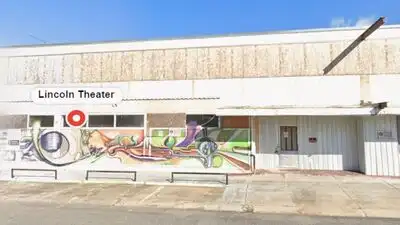
Louisiana’s historic Lincoln Theater set to reopen after years of restorationPhoto credit: Google street view
First opened in 1949, the landmark hosted legendary Black performers during segregation and became an important meeting place during the 1953 Baton Rouge bus boycott. After more than a decade of restoration work and a $4 million investment, the Louisiana Black History Hall of Fame will hold a ribbon-cutting ceremony and community open house on October 29 to mark its reopening, according to WBRZ and 225 Baton Rouge. New exterior windows were made by the same manufacturer as the originals, while the historic terrazzo floor tile has been preserved and matched with a new 17-foot tile entryway.
Its restoration is therefore seen not only as the revival of a performance space, but as the preservation of a place where community organising and cultural life came together. Baton Rouge’s historic Lincoln Theater is finally ready to welcome the public again. That history has made the theatre an important part of Baton Rouge’s civil rights memory. Organisers have tried to retain the character of the original building wherever possible.

The October 29 event will run from 5:30 pm to 7 pm at 1305 Myrtle Walk Street and will also commemorate the theatre’s 77th anniversary, according to WBRZ. The theatre’s interior has also been carefully updated. Attendees will be able to preview the updated facility, including the restored theatre, expanded community areas and the new museum.
Fresh stage curtains carry the same embroidered script “L” as their predecessors, while paint and chair colours were chosen to reflect the venue’s earlier design. The Louisiana Black History Hall of Fame Board of Directors said the project represents an investment in preserving history while creating opportunities for education, cultural enrichment and community engagement. The museum is expected to feature kiosks with rotating subjects, including former Lincoln performers, civil rights leaders, politicians, educators and business leaders. The project has taken years of patience, fundraising and volunteer effort, but it now stands as an example of how historic preservation can protect both architecture and community memory. The Lincoln Theater’s return will give Baton Rouge a restored cultural venue, a civil rights landmark and a museum dedicated to Black history in one place.