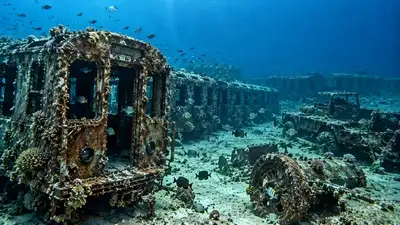
AI-generated representative image of retired subway cars sunk off. Image credits: ChatGPT
In June, 2008, 44 retired New York City subway cars were submerged into the Atlantic Ocean off Virginia’s Eastern Shore. The commission reported that each car measured 50 feet and that the cars weighed 17 tons combined. Image credits: Wikimedia Commons The Blackfish Bank Reef lies 5.8 nautical miles southeast of Assateague Island, Maryland, off the coast of Chincoteague, Virginia. The deployment in 2008 was the third major addition to the site documented in the commission’s announcement. In 1998, 40 surplus Army armoured personnel carriers had been lowered there. Together, the three deployments account for 134 vehicles: 94 subway cars and 40 armoured personnel carriers. They were installed in separate operations over a decade, and the 17-ton figure refers to the combined reported weight of the 44 cars deployed in 2008. Meanwhile, for Blackfish Bank, the immediate purpose of the 2008 operation was to expand the existing fishing reef. By June 2008, the agency reported maintaining 23 artificial reefs throughout Chesapeake Bay and coastal waters of Virginia.
The agency presented the deployment as a method to expand habitat and recreational fishing opportunities, not as proof that fish populations had already increased as a result of the new structures. Therefore, the project extended beyond one unusual deployment, using different structures to create habitats underwater at several locations. The VMRC reported that such materials provide shelter for marine species and can help support a food web that attracts larger predatory fish.
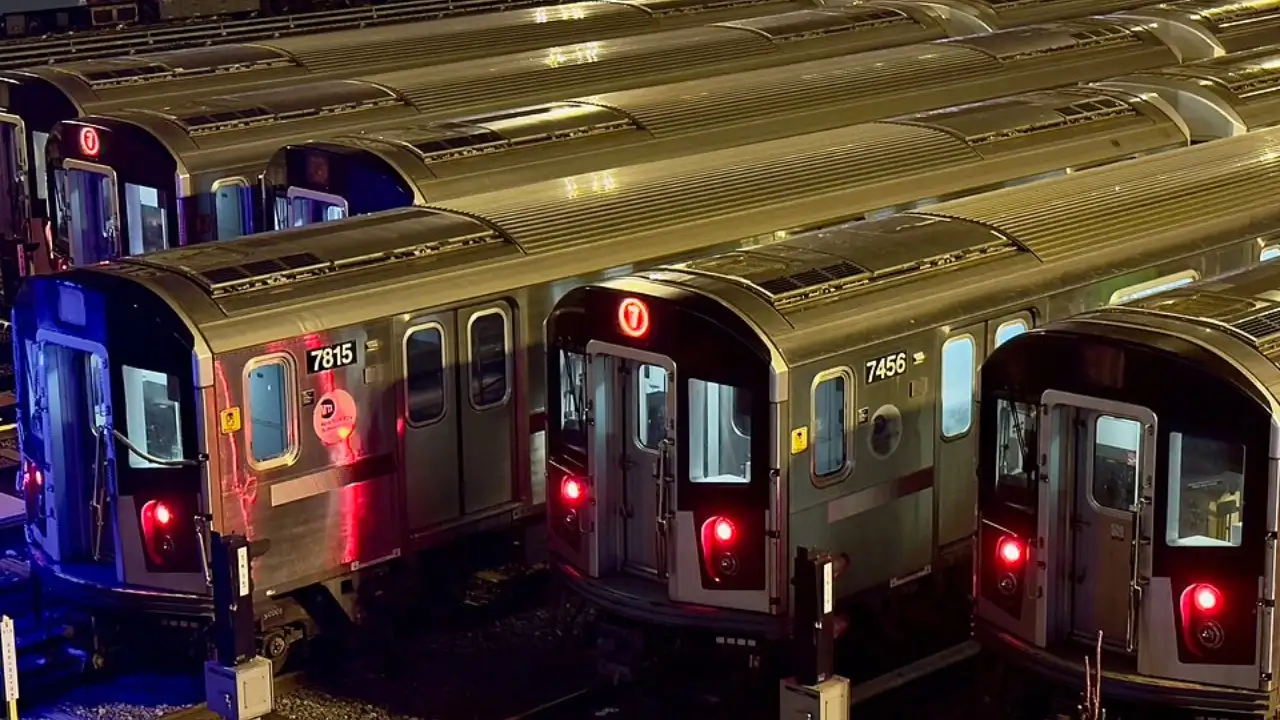
50 retired New York City “Redbird” subway cars followed in November 2003. The submerged cars have been deployed as structures that could attract gamefish, thus making the site more useful for recreational anglers, according to the VMRC. With this, the subway cars began a new chapter as part of an artificial fishing reef. The Virginia Marine Resources Commission (VMRC) carried out the deployment near Chincoteague in an operation that carried on for the whole day, designed to expand Blackfish Bank Reef. New York’s Metropolitan Transit Authority had donated the stainless-steel cars, and they were placed in a grid pattern on the seabed. Instead of creating a new reef, the operation expanded an established site that already contained retired subway cars and surplus military vehicles. From New York’s subway system to Virginia’s seabed The cars initially served New York City’s public transport network. Following retirement, they were repurposed as artificial reef material, adding physical structures to the underwater environment. New York Subway trains at night. How artificial reefs create underwater habitat Artificial reefs are formed by placing suitable structures on the seabed to provide additional physical support and surfaces that marine organisms can colonise. These structures can create shelter for invertebrates and fish depending on the material, location and environmental conditions. Additionally, the organisms living on or around the structure can become a part of the local food web. The New Jersey Department of Environmental Protection describes artificial reefs as structures that provide habitat on otherwise sandy seabeds and attract marine organisms and fish. Part of Virginia’s wider artificial reef programme The subway-car deployment formed part of a programme that the VMRC had been developing since the early 1970s. These sites used a range of materials, including old concrete pipes, demolished bridge sections, pier remains, a lighthouse, subway cars, armoured personnel carriers and retired ships. You use AI every day. Now get your AI Quotient. Take the AIQ test.