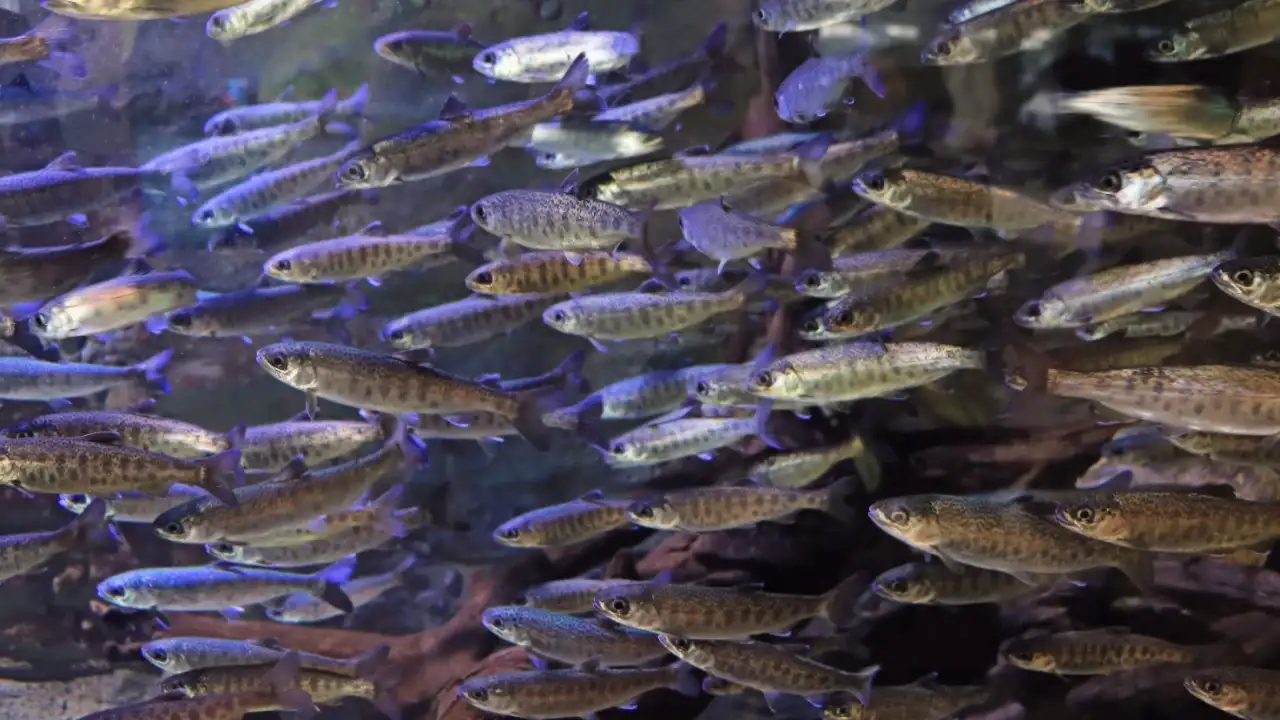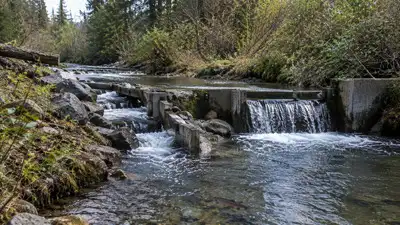
Representative AI image of a restored fish passage at a small creek dam. (Image Credits: ChatGPT)
The obstruction was addressed in 2016 by a fish-passage project through a redesigned channel, which restored access to 11.2 miles of stream habitat. The construction involved establishing a new channel of approximately 200 feet, according to Prunuske Chatham Inc. (PCI) .
After the problems caused by the dam were identified, the NOAA National Marine Fisheries Service deemed it the highest-priority barrier for remediation, according to California Sea Grant. For decades, a five-foot concrete dam on Mill Creek in Sonoma County, California, prevented fish from reaching upstream habitat. The dam had restricted fish movement towards upstream stretches that retain water throughout the year, limiting access to spawning and rearing habitat. The engineering solution aimed to modify the existing barrier, adding a new channel around it instead of relying on conventional passage structure alone.
Trout Unlimited led implementation of the project and worked side by side with PCI on the design and construction. The project also involved California Sea Grant, UC Cooperative Extension, and public agencies such as the California Department of Fish and Wildlife and the Sonoma County Water Agency. As far as the funding was concerned, it was provided by three agencies: the NOAA Restoration Center’s Community-based Restoration Program, the California Department of Fish and Wildlife’s Fisheries Restoration Grant Program, and the Sonoma County Water Agency.