
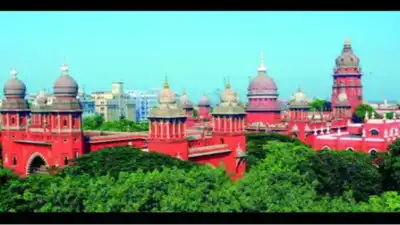
Madras high court
CHENNAI: Coordinated actions that use abusive, defamatory or caste-based language to attack a sitting judge do not fall under protected free speech, Madras high court has said, adding: “There is a clear legal line between criticizing a legal conclusion and attacking a judge who authored it. The bench further said: “If a permitted assembly turns into a personal attack, the officers concerned shall end the event immediately and take appropriate legal action. The court directed the state police not to grant permission for any public gathering or march that aims to personally target, defame or intimidate a sitting judge. A blanket order completely banning all public discussions or peaceful gatherings concerning court rulings would go too far. It would infringe upon legitimate democratic expression. However, the state remains under strict obligation to ensure that its public spaces and digital networks are not used to threaten the safety and integrity of our judicial institutions, The cybercrime division of the Tamil Nadu police has also been directed to maintain active surveillance over digital platforms, ensure that online content does not transgress into criminal intimidation directed against sitting judges, and initiate swift action in accordance with law against any infractions.
The dispute traces back to a judgement delivered on June 25 by a Madurai bench of the court which declared as unconstitutional a 2024 GO passed by the Tamil Nadu govt that allowed individuals who converted to Islam from Backward Classes (BC), Most Backward Classes (MBC), Denotified Communities, or Scheduled Castes to claim the state’s 3.5% reservation for Backward Class (Muslim) communities.