
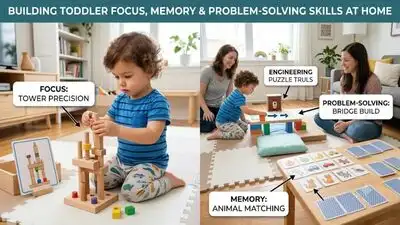
You ask any parent of a toddler about their child’s attention span, and you probably won’t get a definite answer. One moment, the child is playing happily with a toy; the next, they have abandoned it. They may ask you to build blocks with them, only to have their attention diverted by a plane passing overhead. It may look like a problem, but Mrs Munira Dattani, co-founder of Tickle Right and early childhood consultant, explains that this is a natural part of early childhood development. Young children are not expected to concentrate for long periods. Their brains are constantly exploring, learning and building the foundations for skills such as focus and memory through everyday experiences and play.
Various organizations, like the American Academy of Paediatrics, say that between birth and age 5, the brain forms neural connections at a rapid pace. Toddlers or kids between the ages of 1 and 3 need about 11-14 hours of sleep a day, which includes their nap as well. These connections strengthen with repetition and interaction. Skills like attention, holding information in mind, and working through problems are part of the daily routine. You don’t need to create a structure at home, but something as simple as hands-on play or an adult interacting with them and paying attention to them is enough. Let’s see some of the things that you can easily do at home to build their focus, memory, and problem-solving skills. CHOOSE LOW TECH ACTIVITIES -You can involve them in some household activities like sorting items like big pom-poms or fruits by colours or stacking the cups which all holds a toddler interest while building concentration and hand-eye coordination. Sleep helps your brain to process what it has done the whole day. Kids with poor sleep struggle to focus or concentrate.
Building problem-solving skills
- GIVE THEM REAL WORK : When you involve them in real household work or anything that you are doing, it helps them build confidence. For example, let them match or arrange fruits in the basket and carry clothes from one room to another. Sort different pulses. The answer is no. Your everyday household items like containers, blocks, and cardboard are enough. Does sleep affect memory and focus?
ENGAGE THEIR SENSES : When you are at home doing something, let your child explore different things in the home itself. For example, let them feel the texture of different things; make them smell fresh coriander. When different senses are involved, it will create an experience easier for them to remember.