
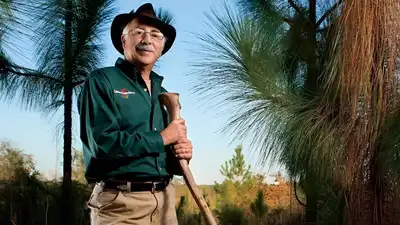
Dr Salem Saloom spent decades restoring his tree farm near Evergreen, Alabama. Image Credits: Salem George Saloom/Facebook
What the research says In a 2009 article published in the Southern Journal of Applied Forestry , Kurt Johnsen and colleagues examined three pine species in southeast Mississippi after Hurricane Katrina in 2005. Only 7% of the longleaf pine trees died from wind damage. For the loblolly pine, the figure was 26%. Slash pine fell in between at 14%, and only the gap between longleaf and loblolly was statistically significant. A 2004 paper, ‘ Habitat Associations of Gopher Tortoise Burrows on Industrial Timberlands ,’ looked at where they dig. In 1994, Jeanne Jones and Brian Dorr surveyed timberlands in Southern Mississippi and Southwestern Alabama, finding 460 active burrows. In 2024, The Nature Conservancy reported that his newest parcel included an old cemetery with headstones dating to the 18th century. Saloom died on 29 July 2026, aged 78.
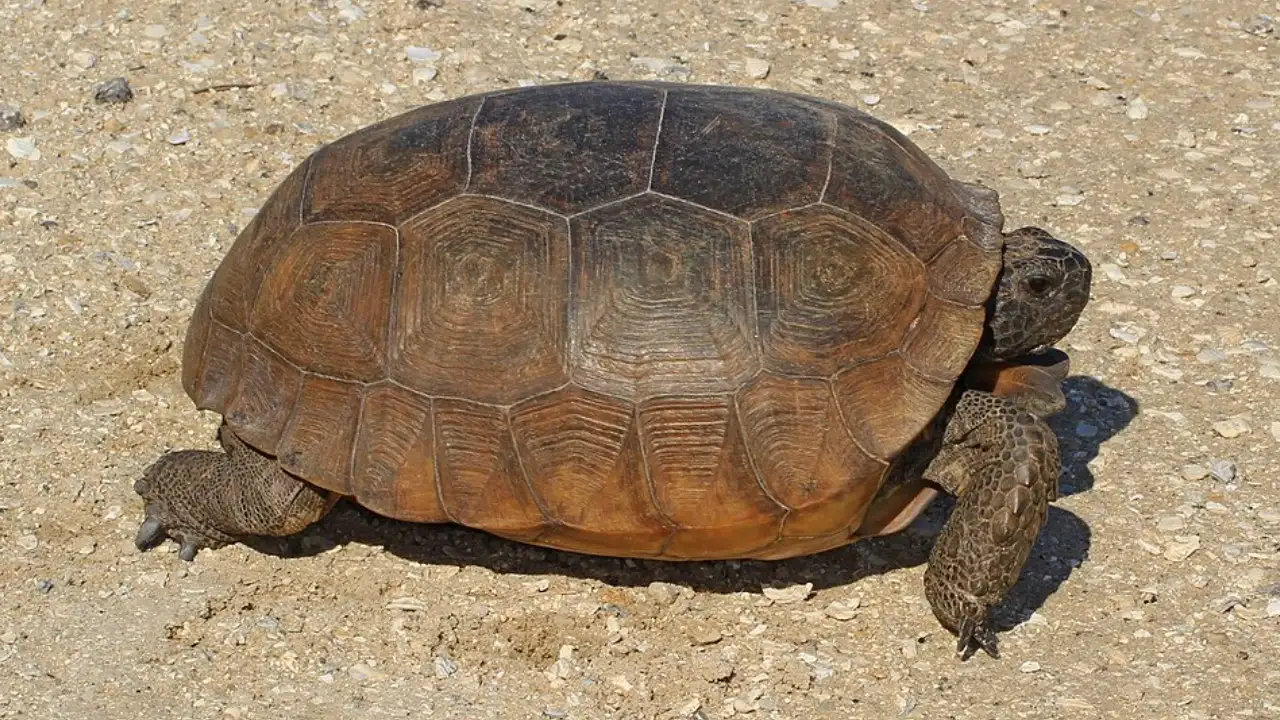
“It’s never been work for me,” he said. The authors’ conclusion was that longleaf pine is more resistant to wind damage compared to loblolly. This is a single study and cannot be treated as the last word. However, it does support Saloom’s choice, since most of the trees Ivan knocked down on his farm were loblolly. Then there are the tortoises. The white sticks scattered across Saloom’s farm mark gopher tortoise burrows. Active burrows are more common in deep sandy soils and in sites with open tree cover. The authors theorised that by restoring longleaf pine on sandy ridges, good tortoise habitat could be created. They recommended things such as prescribed fire, midstory control and thinning. Saloom’s farm was not part of the study, but the theory and advice matched with his farm and his methods. He planned to clear the overgrown land, replant it and sign it up for a USDA carbon credit program. Saloom believed that well-managed family forests could help in the fight against climate change. He imagined a naturally regenerated longleaf forest, like the ones that had flourished there for thousands of years. “It goes beyond work. The forest he left behind will continue his legacy.