
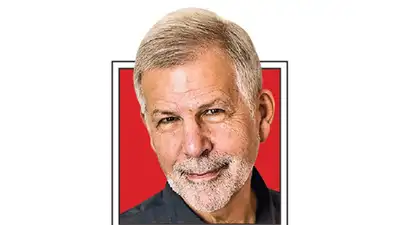
Michael Kazin
The labour movement in the 1930s to 1950s had about a third of the labour force involved — now, as unions decline, it’s down to 10%. The prohibition movement was very successful for a while — it actually amended the Constitution in 1919, abolishing a major business. That got repealed in 1933 but it showed the strength of evangelical Protestantism in American history. America is turning 250 years old — what makes you optimistic and fearful about its path? ■ I believe the ideals of the Republic are still great ones.
Because it did help end slavery and the discriminatory laws against integrating public facilities, voting rights, etc, the Black Freedom Movement has been the most contentious and consequential struggle in America. MAGA therefore wants to fight these cultural wars. Because they believed the Soviet Union was evil and the United States had to stop communism, most Americans supported that later on during the Cold War too.
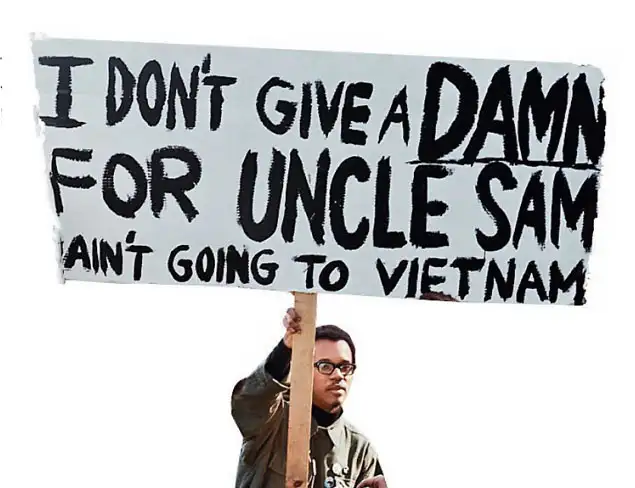
However, the Vietnam War — the first war America really lost — caused most Americans to no longer be celebratory of American power overseas. The issue of enslavement and then, rights for African Americans has been central in US political history. Further, the United States had possibly the strongest feminist movement globally in the 20ᵗʰ century — that impacted the entire world. Other movements had their apexes at different times. There was the environmental movement too, a forerunner in this country, and struggles for LGBTQ rights as well. You mentioned feminism and the climate movement — is Donald Trump ’s victory now a negation of these? ■ There’s a deeper history there. What happened in the 1960s was very tumultuous in many ways, with anti-Vietnam War protests, the Black Freedom Movement, feminism, LGBTQ campaigns and the environmental movement. All of these also provoked a large backlash against liberalism — the energies Donald Trump has harnessed are part of this older backlash. Trump successfully mobilised those discontents, appealing primarily to white Christian voters, people whose grandparents even were uncomfortable with those movements. A lot of what happened the 1960s onwards was very radical in America — that includes the idea that women should have the same jobs as men, same-sex relations should be as legal as heterosexual ones and black people, kept down for centuries, could have the same rights as whites. Similarly, the idea that economic growth under capitalism could damage Earth was groundbreaking. There’s been a backlash to all that. Trump’s core supporters in the MAGA movement wish the America they remember was around and think their country was destroyed by the left and the deep state. So, they’re doing a counter-revolution. These movements influenced the mainstream, as I wrote in my book ‘American Dreamers’ — they didn’t always change the political structure but they did change American culture. Anti-Vietnam War protests became legendary, yet the US is often at war worldwide, despite its citizens’ wishes. What does this show us about the state of American democracy? ■ It’s not in good shape. American military expansion began in World War II when the United States took over as an unofficial imperial power from Britain and other European nations. At the same time, they didn’t want to seem opposed to the military. At the same time, there is a sense that those who go into the military serve the country — there is a desire to honour them, such as at sporting events like baseball games where the announcer asks everyone to rise and honour the service people in attendance for free there. So, there is this ambivalence. The recent Iran war was also very unpopular — yet, it’s hard to give up the idea that America is the most powerful country in the world. One way to unite people in a country which has several internal conflicts is to say, you’re part of a great power — do you really want to give that up? Do you actually want China or India to take over? So, while Americans don’t want to go to war, they remain reluctant to give up the sense that America is the most powerful country on Earth. First, most Americans do their reading now on mobile phones — many probably haven’t even read F. Scott Fitzgerald. Rather than books, some movies have been iconic, like ‘The Godfather’, a great portrait of American power held by immigrants who made good by doing bad. Part of the problem is our culture is very fragmented — there are thousands of TV channels, YouTube platforms and all kinds of social media, so it’s difficult to have ‘iconic’ cultural representations of the country. Reading the canon of American literature, which includes Mark Twain to Toni Morrison, Henry James, Hemingway and others, is voluntary for most students and many adults don’t read older books anymore. The highest-selling recent novels in the US were probably Harry Potter books. The concept that all men are created equal and should be treated thus has been extended by social movements to women and people of all races. Those ideals remain a place for people to stand, fight and see them turn into reality. For all the problems Donald Trump poses for immigrants, many people still want to come to the US — it’s still seen as a place where people find opportunity and tolerance. I also think Americans will get used to us no longer being the most powerful country — others, like China and India, are rising and it’s better for the world if there isn’t one hegemon. Alongside, I’m hopeful seeing environmental movements, including calls for climate action by people who are altruistic and want to save ecology and protect others. However, I’m fearful Donald Trump could be succeeded by another person with the same politics — but shrewder. The US has changed in very positive ways since the 1960s. If that was rolled back, it would be a serious problem. Being a historian is frightening. You know contingency matters — we have structures and contexts, we can see deep historical factors at work in what happens but, in the end, one person like Donald Trump can amass power in a nation holding nuclear weapons. That is scary. Views expressed are personal Catch the latest world news and top headlines. Download the TOI App.
Since then, there have been cross-currents — on the one hand, Americans don’t want to go to war and basically support battles that are quick, where Americans clearly win and not many die, like the first Gulf War in the 1990s or snatching away the President of Venezuela. We once knew America through ‘The Great Gatsby’ — is there an iconic American book today? ■ I don’t think so.

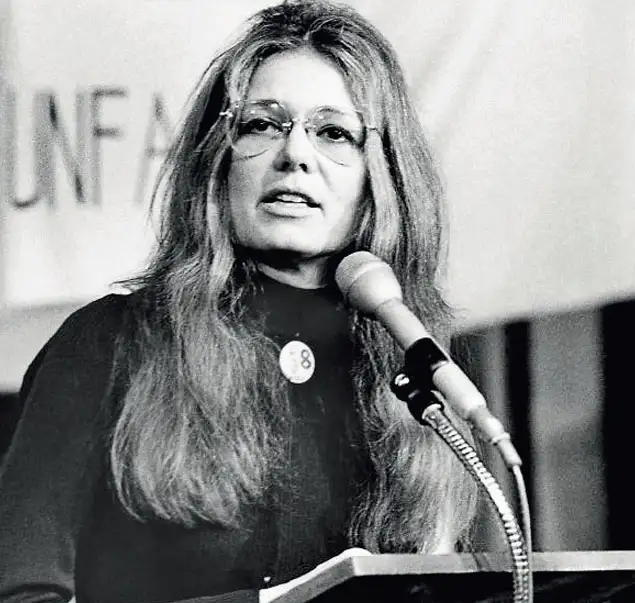
Michael Kazin is Professor of History at Georgetown University. Speaking with Srijana Mitra Das at Times Evoke , he outlines the rich social movements which shaped America — and their future path: Which social movements have been most important in America? ■ First, I’d point to the greatest event in US history, the American Civil War, a battle about whether slavery could exist. This was extremely important as the United States was one of the few societies in the world that didn’t just ‘have slaves’ — it was a slave society.