
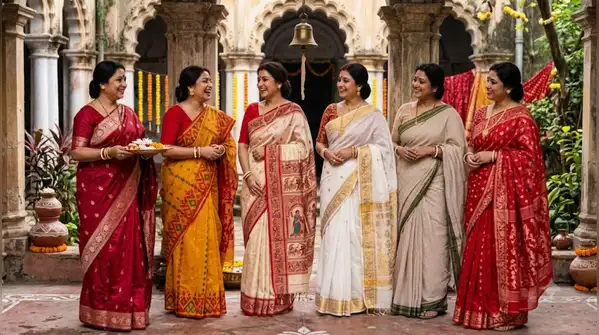
The narrative of sarees from Bengal stretches much further than the traditionally known Tant and the well-renowned red-and-white sarees. The different types of sarees range from delicate muslin textiles to luxurious silks and detailed hand-crafted designs that have gone through generations of use. Instead of thinking you are familiar with the traditional sarees of Bengal, look at these five types and rethink your point of view.
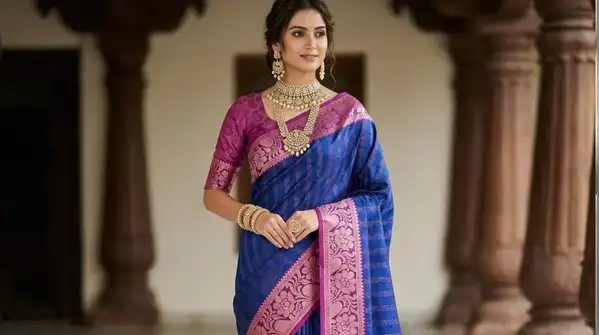
In case Bengal presented a reply to the concept of understated luxury, Neelambari sarees would assert themselves quite convincingly. Neelambari is a traditional saree from the Santipur weaving technique and was recognised for its rich indigo-blue body, excellent-quality yarn, and velvet-like texture. The textile documentation of the government of Nadia district stated that the traditional Neelambari is famous for being one of the best varieties of hand-spun yarn, and its exquisite indigo dyeing process is a hallmark of this variety.
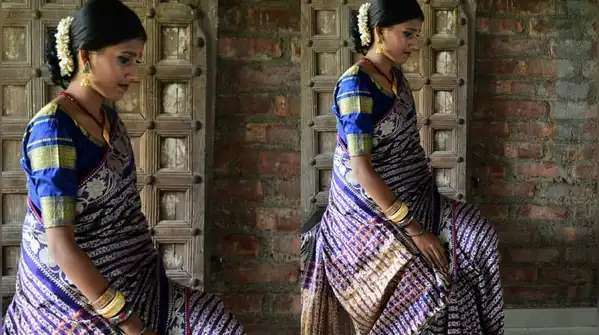
Fine textiles of Dhaka became known around the world due to their unique composition and technique of hand weaving, along with Jamdani being one of the best-known types of muslin. When people hear the word Dhakai, they most likely think of Dhakai Jamdani sarees, but many are not aware of different textiles like Dhakai Bheeti that are mentioned in the history of Bengal’s fine-count cotton sari making. The Dhakai tradition is closely linked to the rich tradition of muslin in Bengal. Korial is one of the lesser-known traditional sarees used to generate a visual language Bengal is known for. The Indian government’s textile mapping documents include Korial as a mulberry-silk saree in the collection of traditional Bengali mulberry-silk sari types, which include Garad, Bishnupur, and Baluchar. Korial’s simple red-and-white appearance makes it closely associated with Bengali ceremonial clothing. (Image Credits: Pinterest)