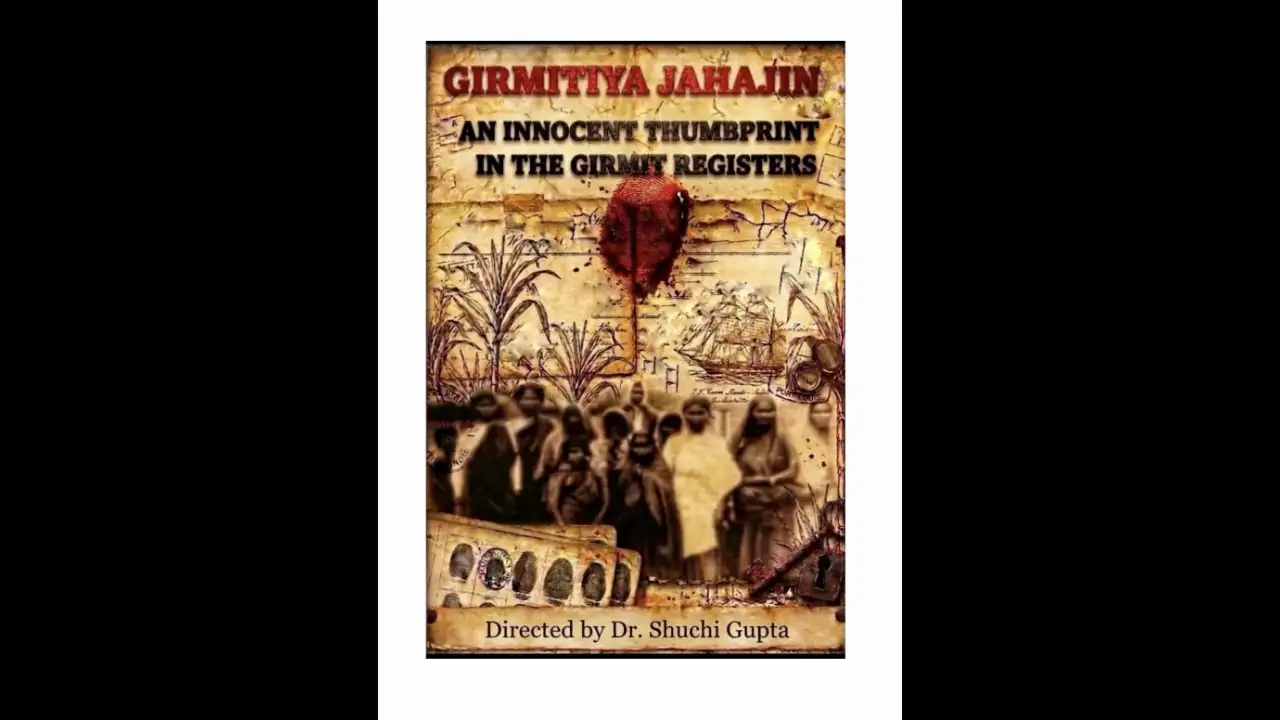
Documentary explores the untold histories of Girmitiya women
Their emotional worlds, domestic knowledge, memories and cultural labour were rarely considered worthy of systematic documentation,” she says. “The archive reduces a person to a number and at the same time gives descendants the possibility of recovering the person behind that number,” Gupta says. A new documentary by Shuchi Gupta, Indologist and cultural documentarian, examines the largely undocumented experiences of Girmitiya women who crossed the kala pani under the colonial indenture system, tracing what they carried with them and how they helped preserve Indian culture in plantation colonies across the world. The documentary draws on immigration registers, ship manifests, marriage certificates, photographs, petitions, court proceedings, medical reports and plantation records to reconstruct women’s lives across Mauritius, Fiji, British Guiana, Trinidad and Tobago, Natal and Suriname. “The colonial archive recorded women primarily when they became administratively visible. Gupta’s research examines how the formal existence of an agreement often obscured the unequal circumstances in which women were recruited and transported. A major focus of the documentary is the difficulty of finding women as individuals within colonial records.
One such case is that of Kunti, a 20-year-old woman from Lakhuapur in Gorakhpur who arrived in Fiji with her husband in 1908. Kunti resisted an alleged sexual assault by an overseer in 1912 and jumped into a river when she feared she was about to be overpowered, according to the records examined by Gupta.
Gupta says such cases also challenge the portrayal of Girmitiya women solely as victims. They complained, negotiated and challenged men, entering legal and administrative spaces that had not been designed around their autonomy,” she says. “The woman who cooked an inherited recipe, taught a child a Bhojpuri word, remembered a village deity, observed a ritual, sang a song from home or transmitted a family story was performing historical work even if no colonial official thought it worth recording,” Gupta says.
The documentary also looks at cases in which women challenged violence and exploitation. She survived after being rescued, and the case led the Government of India to seek an investigation into the treatment of indentured Indian women in Fiji. Petitions and court records from Mauritius document women contesting forced marriages, domestic abuse and exploitation and approaching authorities for intervention. “Women were not simply victims of the indenture system. The documentary further examines the role of women in preserving cultural practices after migration. Food traditions, songs, rituals, languages, religious practices, child-rearing knowledge and family stories travelled with them but rarely appeared in plantation records. The film looks beyond the Girmitiya woman as an indentured labourer to examine her role in the transmission of memory, language, customs and community across generations of the Indian diaspora. New documentary traces Girmitiya women’s journeys across the colonial world Looking for trusted parenting advice? Follow TOI Parenting Circle on Instagram for expert guidance, relatable stories, and practical tips delivered every day.