
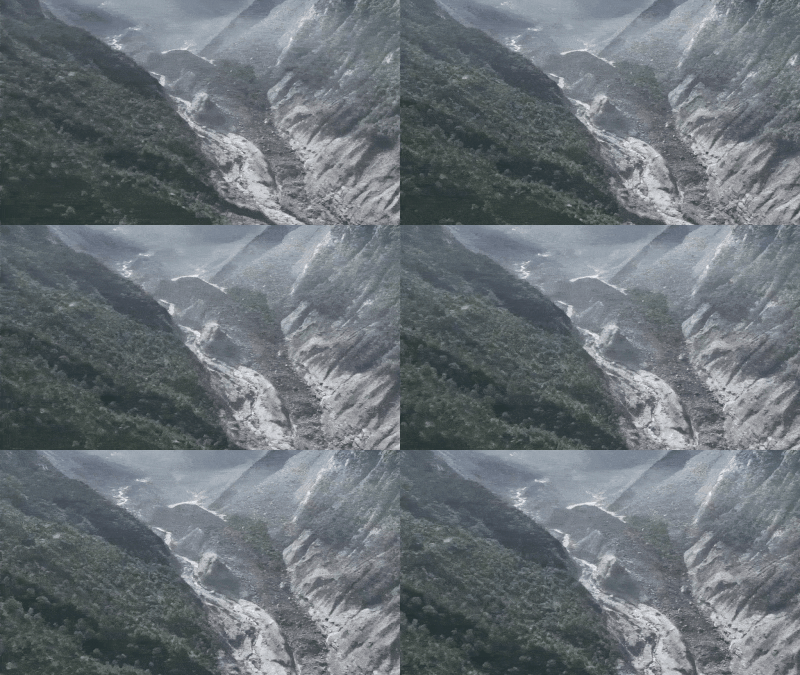
China’s Ministry of Water Resources has warned that another 3 million cubic metres of water could flow into the already lake over the next three days
Nepal and China have both warned of fresh flooding after Wednesday’s catastrophic flash flood killed at least 469 people in Nepal and left nearly 1,000 missing. Chinese authorities said on Friday that the newly formed lake had grown to more than 2.5 million cubic metres of water, up from an estimated 1.5-2 million cubic metres recorded a day earlier. Nepal Police said 469 people had died across eight districts, while 977 people, including security personnel and foreign tourists, remained missing. A further 1,545 people have been rescued.
The disaster was triggered after a glacier collapse in the Himalayas sent huge amounts of ice, rock and water downstream, devastating settlements, bridges and hydropower projects. The rising water has already forced Chinese rescue personnel and vehicles to withdraw to a safer area amid fears of a breach and further landslides and avalanches. The warnings come as Nepal’s rescue operation enters its third day.
A lake formed by a landslide on the Nepal-China border began overflowing on Friday, triggering a fresh flood alert and forcing Nepal to temporarily suspend rescue operations in areas devastated by a flash flood two days ago.
Because the glacier collapse had left isolated and steep cliffs around the shoreline, engineer Chen Hanxiao said access to the site was difficult.
“With a blockage still lodged upstream on the Nepal-China border, authorities warn a second flood is imminent,” Qianggong Zhang, head of climate and environmental risks at ICIMOD, told The Independent, which reported that evacuation orders had been issued for Jilong Port because of the risk of another wave of flooding. Chinese authorities have deployed an eight-member engineering team to conduct aerial surveys and 3D modelling of the lake.