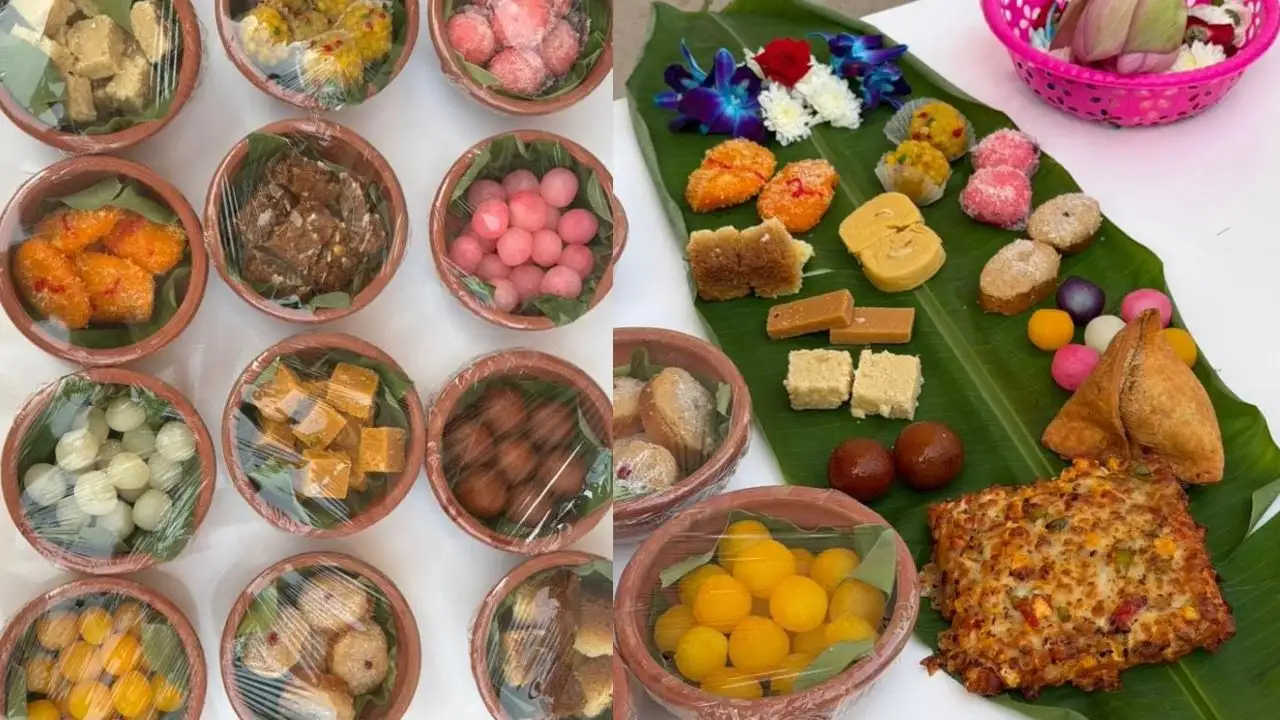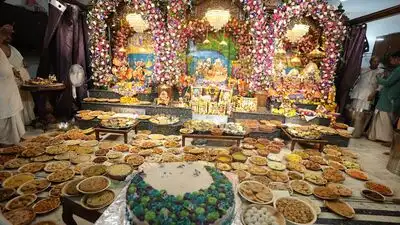
Janamashtami Offerings
The bhog will be offered from the early morning of September 4 through to midnight, with different preparations placed before the Lord at different hours of the day. The traditional 56 bhog will sit within this larger spread. Once offered, everything is distributed among devotees as prasad. Considering Lord Krishna’s love for roses gulkand delicacies like Gulkand shrikhand, gulkand ladoo, gulkand barfi, gulkand gujiya and gulkand dry fruit ladoo have been created especially for the festival.
This year’s celebration on September 4 will bring together more than 5600 preparations, dry and wet offerings for the Lord. The temple will also prepare 1,108 kg of cake, baked through the day in small batches. A 200 kg cake will be cut at midnight along with 1108 bhog varieties as part of the appearance day celebration, after which it too goes out as prasad. When is Janamashtami This year, Janmashtami, which celebrates the birth of Lord Krishna, will be observed on September 4, 2026. In many homes and temples, the offerings are laid out in an elaborate chappan bhog or 56-item spread, symbolising the traditional offering made to Krishna.
Soumya Vaishnavi Mataji, who heads kitchen and food coordination at Shri Shri Rukmini Dwarkadhish temple,ISCKON Dwarka says, “Janmashtami is an offering of love and devotion to Lord Krishna. As Shri Krishna Janmashtami approaches, the kitchens at the Shri Shri Rukmini Dwarkadhish temple, have begun work on one of the largest bhog offerings of the temple’s calendar. Dry cakes, muffins and cream cakes will all be made, offered at the altar and then given out to devotees. As per the devotees, work on the dry prasad started several days ahead of the festival. Ladoos of various kinds, panjiri and mewa barfi have been under preparation at the temple kitchen, all of them made from dry fruits and meant for distribution once the offering is complete. The rest of the spread runs across grains, sweets, savouries, dairy, fruits, dry fruits and beverages. Til barfi, Mysore pak, besan barfi, kalakand, malpua with khoya and pista, ghewar with gulkand and khoya, chenapoda, rabri and several kinds of ladoo will feature, along with barfis made from groundnut, kaju, khoya, moong dal, milk powder and coconut. On the savoury side there will be aloo samosa, dal samosa, dry fruit samosa, kachori filled with dal, dry fruits and khoya, bhakarwadi, khaja and a range of namkeens. The temple is expecting between seven lakh and ten lakh devotees over the course of the day, and the prasad counters have been planned around that number. Fresh fruit and cooling drinks such as chach, shikanji and thandai will be served to devotees waiting for darshan. The offering draws on the traditions of Braj, where Janmashtami is remembered for the food prepared for Krishna by Radharani and her sakhis. Makhan mishri, dhaniya panjiri made with roasted coriander powder, ghee, sugar and dry fruits, and panchamrit of milk, curd, ghee, honey and sugar hold their usual place of honour. Every preparation is made with a spirit of seva and a desire to please the Lord. The festival is marked by devotees observing fasts, singing devotional songs and preparing elaborate bhog offerings. The most significant moment comes at midnight, traditionally believed to be the time when Krishna was born in Mathura. At midnight, temples and homes perform the ceremonial birth celebration, with the deity being bathed, dressed and placed in a cradle, followed by prayers and the offering of bhog. Devotees then break their fast and share the festive offerings as prasad. Bhog offered to Lord Krishna Popular foods for Janmashtami Food is the mainstay of Janmashtami celebrations and devotees prepare a variety of sattvic offerings as bhog to Lord Krishna. Krishna is traditionally associated with milk, butter and dairy products and many of the festival’s most popular offerings are made using milk, curd, ghee and other dairy ingredients. One of the most iconic offerings is makhan mishri, a simple combination of freshly churned white butter and sugar crystals, closely associated with Krishna’s childhood love of butter. Another important preparation used during prayers and the midnight birth celebrations is Panchamrit, a mixture of milk, curd, ghee, honey and sugar. Dhaniya panjiri is prepared with coriander powder, ghee, sugar and dry fruits and is usually offered as bhog and later distributed as prasad. Makhana kheer, prepared from fox nuts, milk and sugar is another popular festive preparation, especially in homes where devotees observe a fast. Other traditional foods for Janmashtami are sabudana khichdi, sabudana vada, kuttu puri, singhara atta preparations, roasted makhana, fruits and dry fruits. They are often prepared without grains and are suitable for devotees observing the festival fast. The festive bhog platters also comprise of sweets like pedas, ladoos, barfi, shrikhand and gujiya. The regional variations make for a diverse spread. The actual dishes vary from region to region, but the focus is always on fresh vegetarian preparations made with devotion. Following the midnight prayers in celebration of Krishna’s birth, the bhog is presented to the deity and then distributed to the devotees as prasad. Image credit: Shri Shri Rukmini Dwarkadhish temple . Looking for trusted parenting advice? Follow TOI Parenting Circle on Instagram for expert guidance, relatable stories, and practical tips delivered every day.