
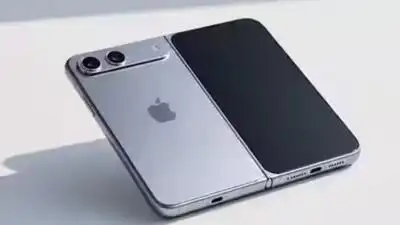
Apple foldable iPhone (Representiave image)
The event is also the first that John Ternus will host as chief executive, after taking over from Tim Cook on September 1, and he inherits an awkward pricing situation. Memory costs have climbed steeply through 2026, Apple has already raised prices on Macs and iPads in June, and the iPhone has so far been shielded from that. Most estimates now point to increases of Rs 9,000 to Rs 26,000 over last year’s equivalents in dollar terms, with the foldable landing in a bracket no iPhone has occupied before. Preorders are expected on Saturday, September 12, rather than the usual Friday, which falls on September 11 this year, with retail sales starting Friday, September 18.
India is expected to be part of the first wave for the Pro models, though foldable availability at launch is less certain.
The iPhone 18 Pro keeps the 6.3-inch size and the camera plateau introduced last year, so this is an internal upgrade rather than a redesign. Cases from the 17 Pro are expected to fit. The A20 Pro moves to a 2nm process and is tipped to be about 18 per cent faster and 30 per cent more efficient than the A19 Pro, with a wider memory interface and a larger cache for the efficiency cores. iPhone 18 Pro Expected specifications and price Display 6.3-inch LTPO+ OLED, Dynamic Island around 35% smaller Processor A20 Pro, 2nm, WMCM packaging Memory 12GB RAM Main camera 48MP with variable aperture Other cameras 48MP ultra-wide, 48MP telephoto with wider aperture Camera Control Revised, capacitive layer removed Battery 4,288mAh in most markets Connectivity Apple C2 modem, satellite 5G support Build Anodised aluminium, around 8.8mm to 9mm thick Colours Dark Cherry, light blue, silver, dark grey Expected price $1,299 to $1,399, about Rs 1,14,000 to Rs 1,23,000 Last year for reference iPhone 17 Pro started at $1,099
Reports point to a 5.4 to 5.5-inch outer screen and a 7.8-inch inner display, a titanium frame, and a body around 4.5mm thick when open and roughly 9mm when shut. There is also no telephoto lens, leaving a 48-megapixel main and a 48-megapixel ultra-wide on the back, positioned so they work whether the phone is open or shut. A liquid metal hinge, ultra-thin glass, a structural glass mid-frame and an optically clear adhesive that fills micro-cracks over time are all in play, with a target crease depth below 0.15mm. Feature Expected specification Inner display 7.8-inch OLED, minimal crease, liquid metal hinge Cover display 5.4 to 5.5-inch OLED, hole-punch camera Processor A20 Pro, 2nm, up to 18% faster than A19 Pro Memory and storage 12GB RAM, 256GB to 2TB Rear cameras 48MP main + 48MP ultra-wide, no telephoto Front cameras One per display, 18MP to 24MP Security Touch ID on the power button, no Face ID Battery Split cells, roughly 4,900mAh to 5,800mAh total Connectivity Apple C2 modem, MagSafe charging Build Titanium border, about 4.5mm open and 9mm closed Weight Around 229g to 240g Colours Silver or white, plus a near-black deep indigo Software iOS 27 with side-by-side multitasking Expected price $1,999 to $2,299 for 256GB, about Rs 1,76,000 to Rs 2,02,000 Higher configurations Up to $2,699 for 1TB, about Rs 2,37,000
The iPhone Ultra is a book-style foldable that opens wider than it is tall, closer to an iPad mini cut in half than to the tall Android foldables sold here. That is thinner than the iPad Pro and close to the thickness of a current Pro Max, which is the specific claim worth testing in person. Two things had to go to get there. There is no room for the Face ID module, so authentication moves to a Touch ID power button of the sort the iPad Air and iPad mini already use. Both screens get their own front camera. Most of Apple’s engineering effort has reportedly gone into the crease. The intent is not just an invisible crease out of the box but one that stays invisible after a year of folding, which is where every rival has struggled. A magnetic Apple Pencil was prototyped and reportedly dropped over concerns the tip would mark the inner display.
Pingback: Apple iPhone Ultra in the rumoured white and black colour options: The wider industry
Pingback: Apple's first foldable iPhone starts at $2,000, ships October —: The wider industry impact
Pingback: Apple has officially unveiled the iPhone Duo, its first-ever folding: The wider industry
Pingback: Here is how the Apple iPhone Duo compares with the Samsung Galaxy Z: The wider industry