
The attack came as Tehran seeks to open another pressure point against the United States and its ally Saudi Arabia.
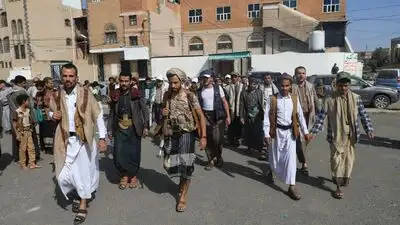
The Houthi takeover of Yemen’s Red Sea port city of Mocha was backed by a rapid offensive involving Iranian-supplied weapons, drones and direct guidance from commanders of Iran’s Islamic Revolutionary Guard Corps (IRGC), according to Reuters. The attack came as Tehran seeks to open another pressure point against the United States and its ally Saudi Arabia.
Reuters, citing Yemeni government, Iranian and regional sources, reported that Iran instructed the Houthis last week to intensify attacks on Saudi Arabia and promised additional funding, weapons and senior officers to support the campaign.
Several senior IRGC commanders had also travelled to Yemen to help oversee and command Houthi attacks targeting Saudi Arabia, according to a regional diplomat briefed by Tehran. Five Saudi-backed Yemeni military sources told Reuters that the new Houthi campaign along the Tihama coastal plain began with a barrage of rocket fire and was directed by IRGC personnel. The sources, citing communications intercepts and accounts from captured Houthi fighters, said they believed the operation was being overseen by Abdolreza Shahlaei, a senior IRGC commander associated with the Qods Force. They said, however, that IRGC personnel had previously spent time in Yemen and that the force continued to move weapons and personnel into and out of Houthi-controlled areas despite an aerial and maritime blockade. Iran publicly denies directing the Houthis and says the group is an ally rather than a proxy. One Iranian official cited by Reuters said the move on Mocha was a Houthi decision, although it also served Tehran’s interests by putting upward pressure on oil prices and increasing pressure on the US and Saudi Arabia. Saudi Arabia had sought to reduce its dependence on Hormuz by routing oil through pipelines to the Red Sea port of Yanbu, but renewed Houthi threats have curtailed that activity, according to Lloyd’s List Intelligence.
Iranian sources did not immediately confirm Shahlaei’s involvement. The strategic importance of the route has increased further as Iran’s conflict with the US and Israel has disrupted shipping through the nearby Strait of Hormuz.
Pingback: Saudi Arabia calls Mecca attack a ‘red line’ as Houthis dismiss it as ‘worn-out lie’
Pingback: Saudi Arabia on Tuesday rejected an Iraqi claim that it had purchased 25 oil tankers