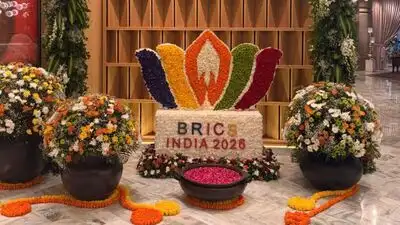
Lobby Decor at ITC Maurya
From personalised rice-grain keepsakes and heirloom recipe books to chocolate Matryoshka dolls, regional Indian menus and heightened security, Delhi’s luxury hotels have turned the BRICS 2026 summit into an elaborate showcase of Indian hospitality. BRICS began as an economic grouping of Brazil, Russia, India and China, the acronym originally coined in 2001. South Africa joined in 2010, turning BRIC into BRICS. In its current form, BRICS has 11 full members: Brazil, Russia, India, China, South Africa, Egypt, Ethiopia, Iran, the United Arab Emirates, Saudi Arabia and Indonesia. Together, they represent about 49.5 per cent of the world’s population, 40 per cent of global GDP and 26 per cent of global trade, according to the Indian government. The 18th BRICS Summit is being held in New Delhi on September 12 and 13, 2026, under India’s chairship. Delhi has deployed around 25,000 security personnel, more than 100 NSG commandos and anti-drone systems for the summit, while 11 hotels and 35 major routes have been brought under special security arrangements. In-room hospitality at Taj Mahal, New Delhi Taj Palace: Where China’s delegation meets India’s hospitality Chinese President Xi Jinping is staying at Taj Palace on Sardar Patel Marg, with the Chinese delegation reported to be nearly 400-strong, the largest delegation at the summit. Among the dishes prepared are Nalli Nihari with Khamiri Roti, Delhi 6 Chicken Korma and Gucchi Chole Pulao. The property is hosting the iBRICS 2026 summit and gala dinner on September 12–13, underlining how hotels around the diplomatic summit are simultaneously becoming venues for business conversations, networking and private meetings. Demand has pushed tariffs at some properties to more than Rs 2 lakh a night, with ITC Maurya rates reported at around Rs 2.3 lakh during the summit window. Other reports have put some luxury-room rates above Rs 2.5 lakh a night, highlighting the extraordinary pressure placed on Delhi’s limited inventory of five-star accommodation. Delhi’s security plan covers 11 designated hotels and 35 major routes, with around 25,000 police personnel, NSG commandos, anti-drone measures and repeated mock drills. That is why the most revealing details of BRICS 2026 may not be found inside the summit conference rooms.
The hotels therefore have to operate simultaneously as luxury properties and highly controlled security zones. Because the hospitality challenge is not merely to serve Indian food to international guests, the menu has been a true passion project for our culinary team and reflects what The LaLiT stands for—hospitality that is warm, dignified and unmistakably Indian.” says Vishal Sharma, General Manager, The LaliT New Delhi This is important. Because the summit is not bringing only presidents, that shortage is significant. The challenge for the hotels is therefore to make extraordinary security feel ordinary.
ITC Maurya’s approach was also reported as a special culinary welcome prepared specifically for Putin. Several marquee properties, including Taj Mahal, Taj Palace, The Oberoi and The Leela Palace, have reported no availability for the summit dates.
India’s theme for its 2026 presidency is “Building for Resilience, Innovation, Cooperation and Sustainability”, placing development, sustainability and innovation at the centre of its agenda. Giveaways and decor-Taj Mahal, New Delhi Dr Anmol Ahluwalia, Area Director, Operations and General Manager, Taj Mahal, New Delhi, says the gesture reflects the hotel’s larger approach to hosting international leaders. Goodies inside the room-Taj Mahal, New Delhi And then there is the food The culinary preparations at Taj Mahal, New Delhi are designed to introduce guests to the breadth of Indian cuisine rather than reducing it to a single definition of “Indian food”.
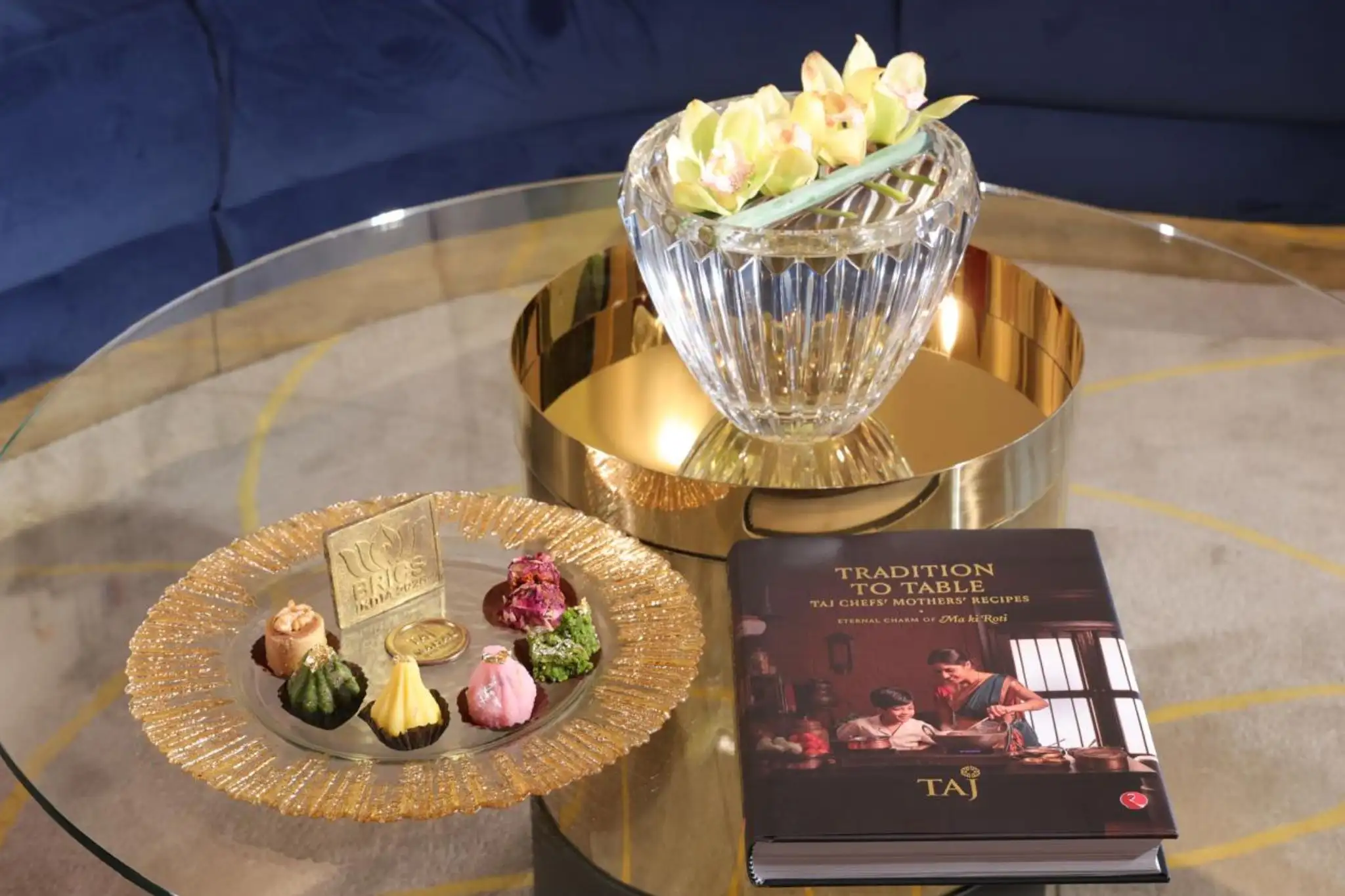
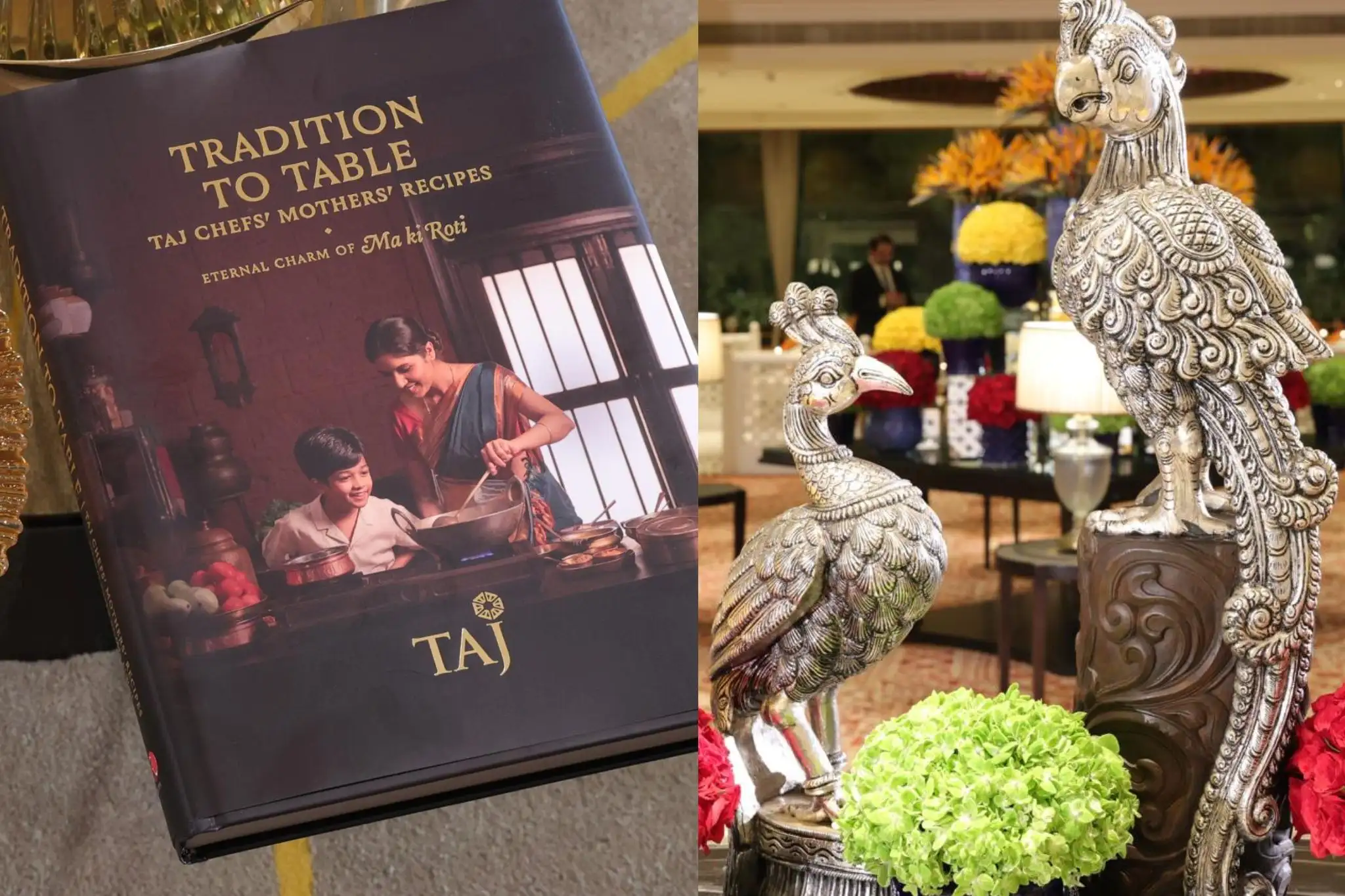
As world leaders arrived in New Delhi for the 18th BRICS Summit, the diplomatic theatre is not confined to Bharat Mandapam. Across the capital, some of Delhi’s most recognisable luxury hotels have been transformed into temporary diplomatic addresses, hosting presidents, prime ministers, foreign ministers, senior officials and large delegations while simultaneously navigating unprecedented security requirements. The Taj Palace, ITC Maurya, The Oberoi, The Leela Palace and The Lalit are among the properties at the centre of this hospitality operation. Behind their marble lobbies, manicured gardens and restaurants, hotels have spent days preparing personalised menus, cultural performances, bespoke amenities and carefully designed welcome gestures for guests representing some of the world’s most powerful emerging economies. First, what exactly is BRICS? The grouping has since expanded dramatically. The expansion means that BRICS is no longer simply a grouping of the original emerging-market economies. It has become a much broader platform for countries from Asia, Africa, the Middle East and Latin America to discuss trade, development, finance, technology, energy and global governance. That diversity is also visible in Delhi’s hotels. When a hotel becomes part of the summit For the hotels hosting delegations, the challenge is unusual. A normal luxury stay is built around discretion, personalisation and seamless service. A summit stay adds multiple layers of security, restricted movement, controlled access, special transport arrangements and close coordination with government and security agencies. And yet, the guest experience cannot feel clinical. That is where Indian hospitality has become particularly important. At Taj Mahal, New Delhi, the welcome experience has included Indian dance and musical performances, instruments such as the flute and sitar, drummers and conch players, traditional rituals involving aarti, flowers and dhoop, handcrafted scarves, floral and peacock installations, and brass lotus installations around the property that are illuminated at night. There are also BRICS flags and framed portraits of visiting heads of state and foreign ministers. One of the most unusual details is a personalised name engraved on a single grain of rice, turned into a keychain- a tiny object designed around the idea that something as small as one grain can symbolise connection. But the most significant culinary-cultural gesture is Traditions to Table, the collection of recipes from Taj chefs inspired by their earliest culinary mentors: their mothers. He describes Traditions to Table as a collection of recipes curated by Taj chefs and inspired by their mothers. “The book brings together the diversity of India’s culinary traditions while celebrating the memories, techniques and flavours passed down through generations. We hope this keepsake conveys something of the warmth, care and spirit of connection that have always been at the heart of the Taj experience, while offering our distinguished guests a taste of India that they can carry with them. The book is being presented to heads of state, First Ladies and foreign ministers as a personal memento from the hotel. The hotel’s culinary team is also presenting international dishes such as steamed Chilean seabass with turmeric and lime in banana leaf, Tom Rang Me -wok-tossed prawns with tamarind, chilli and palm sugar and lamb chops with black pepper and chilli. The gesture illustrates an increasingly sophisticated aspect of luxury hospitality, personalisation that goes beyond a guest’s name on a welcome card. The experience is designed around the identity of the individual guest and the relationship between the two countries. The Oberoi: discretion for the Iranian delegation Iranian President Masoud Pezeshkian and his delegation are staying at The Oberoi, New Delhi, near Golf Links. The property represents a different model of luxury hospitality from the more visibly grand hotel experiences. Its appeal lies in discretion, privacy and personalised service, qualities that become particularly important when the guest list includes heads of state. The Oberoi has also been closely associated with BRICS-linked business activity. Its own official BRICS Business Forum offering for the UAE Embassy also demonstrates the level of tailored service being deployed during this period, including airport transfers, dedicated accommodation and personalised attention. The Leela Palace: A multinational address The Leela Palace has become one of the most multinational hotel bases during the summit. The property is hosting delegations from the UAE, Thailand, Bahrain and Saudi Arabia, along with some members of the Russian delegation. With its palace-inspired architecture, large banquet spaces and extensive food-and-beverage infrastructure, the hotel is equipped to handle multiple delegations while maintaining separate requirements and service protocols. Its culinary preparations have also been designed around India’s cultural identity. Among the more distinctive elements is the lotus, India’s national flower, which has been translated into an edible and visual motif. The property is also offering millet cookies, handmade granola bars and wellness infusions — bringing together Indian ingredients, contemporary presentation and the growing global interest in healthier and more sustainable food. It is a useful example of how the summit menus are moving beyond stereotypical Indian fare and using ingredients such as millets to tell a contemporary Indian food story. Special offerings at The Lalit, New Delhi The Lalit: taking India’s regional cuisine to the table The Lalit New Delhi is hosting South Africa’s delegation, while Egypt’s officials are based at the Sheraton New Delhi. Other visiting delegations and overflow guests have been accommodated at properties including The Imperial, The Claridges, Le Meridien and The Ashok. At The Lalit, the culinary team has taken a particularly regional approach. “Our culinary team has curated a special menu for the BRICS Summit that celebrates India’s rich regional culinary heritage while bringing in subtle influences that reflect the spirit of the gathering. The menu moves beyond conventional banquet fare, with refined interpretations of classics such as Galouti kebabs and tandoor-baked breads, alongside a strong millet-forward selection that highlights both India’s nutritional traditions and contemporary culinary possibilities. For the summit, our chefs have also created a few distinctive preparations, including Braised Eggplant with Miso Paste, Simmered Chinese Cabbage and Kidney Bean Sweet Japanese Style with Amber Sauce . These thoughtful touches are our way of bringing different culinary influences to one table while staying rooted in the warmth and character of Indian hospitality. It is to make regional Indian food accessible without stripping it of its character. From a personalised rice grain to a recipe book What emerges across the hotels is a common philosophy: hospitality as storytelling. At one end is the single grain of rice carrying a guest’s name. At another is a book of mothers’ recipes that can travel home with a visiting leader. There are handcrafted scarves, flowers, brass lotuses, traditional rituals, chocolate Matryoshka dolls, music, dance, regional cuisine and ingredients that carry stories of particular parts of India. For international leaders who may have only a few hours outside official meetings, these small gestures create a compressed version of the country. T he summit has also changed Delhi’s luxury hotel economics The BRICS influx has produced a dramatic impact on the city’s luxury accommodation market. There are ministers, diplomats, security teams, business delegations, aides, communications teams and other officials accompanying the leaders. The result is a hotel ecosystem operating at a scale far beyond a conventional luxury event. Security meets service The most difficult part of the exercise may be achieving something that luxury hotels usually make invisible: security. For guests accustomed to privacy and seamless movement, additional screening, restricted access, secured floors, controlled vehicles and coordination with multiple security agencies can easily disrupt the experience. Inside the hotels, that means the usual choreography of check-ins, restaurants, housekeeping, room service, meetings and banquets is happening within a much more tightly controlled environment. India’s hospitality moment The BRICS Summit is ultimately a diplomatic event, but for Delhi’s luxury hotels it is also a test of India’s hospitality infrastructure. The hotels are being asked to deliver several things simultaneously: absolute discretion, high-level security, personalised service, international cuisine, Indian cultural storytelling and the ability to accommodate enormous delegations without compromising the experience. They are in the chocolate Matryoshka dolls prepared for Putin, the recipe book carrying the stories of Taj chefs’ mothers, the rice grain engraved with a visiting guest’s name, the brass lotuses lit at night, the traditional music and dance, and the regional dishes making their way to international tables. For a summit that brings together countries representing almost half of the world’s population, Delhi’s hotels are doing something more subtle than providing rooms. They are presenting an idea of India – one personalised welcome, one dish and one carefully curated experience at a time. Looking for trusted parenting advice? Follow TOI Parenting Circle on Instagram for expert guidance, relatable stories, and practical tips delivered every day. Get the latest Lifestyle News and more. Download the TOI app.
The property has previously hosted Xi during his visits to India.
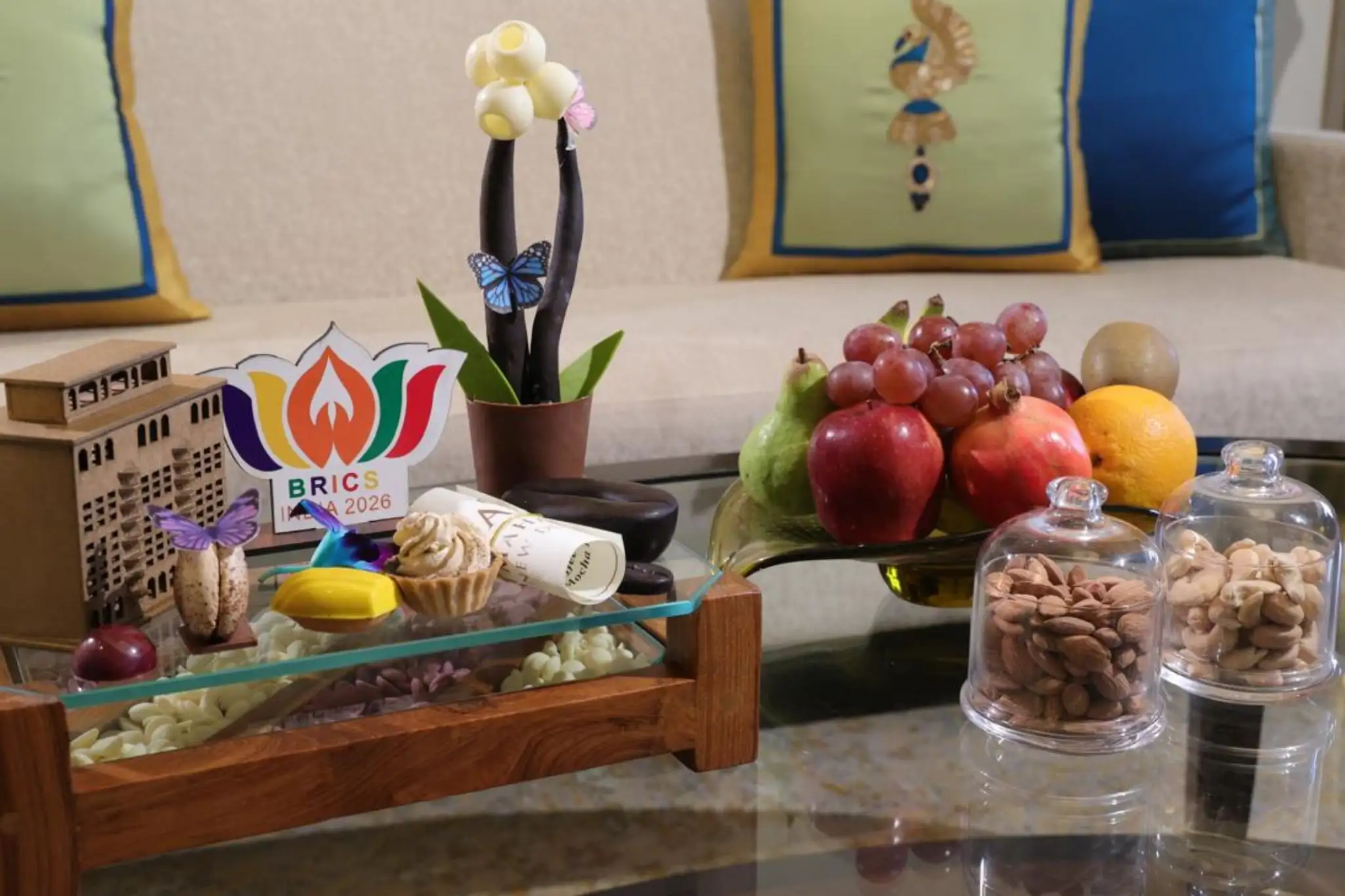
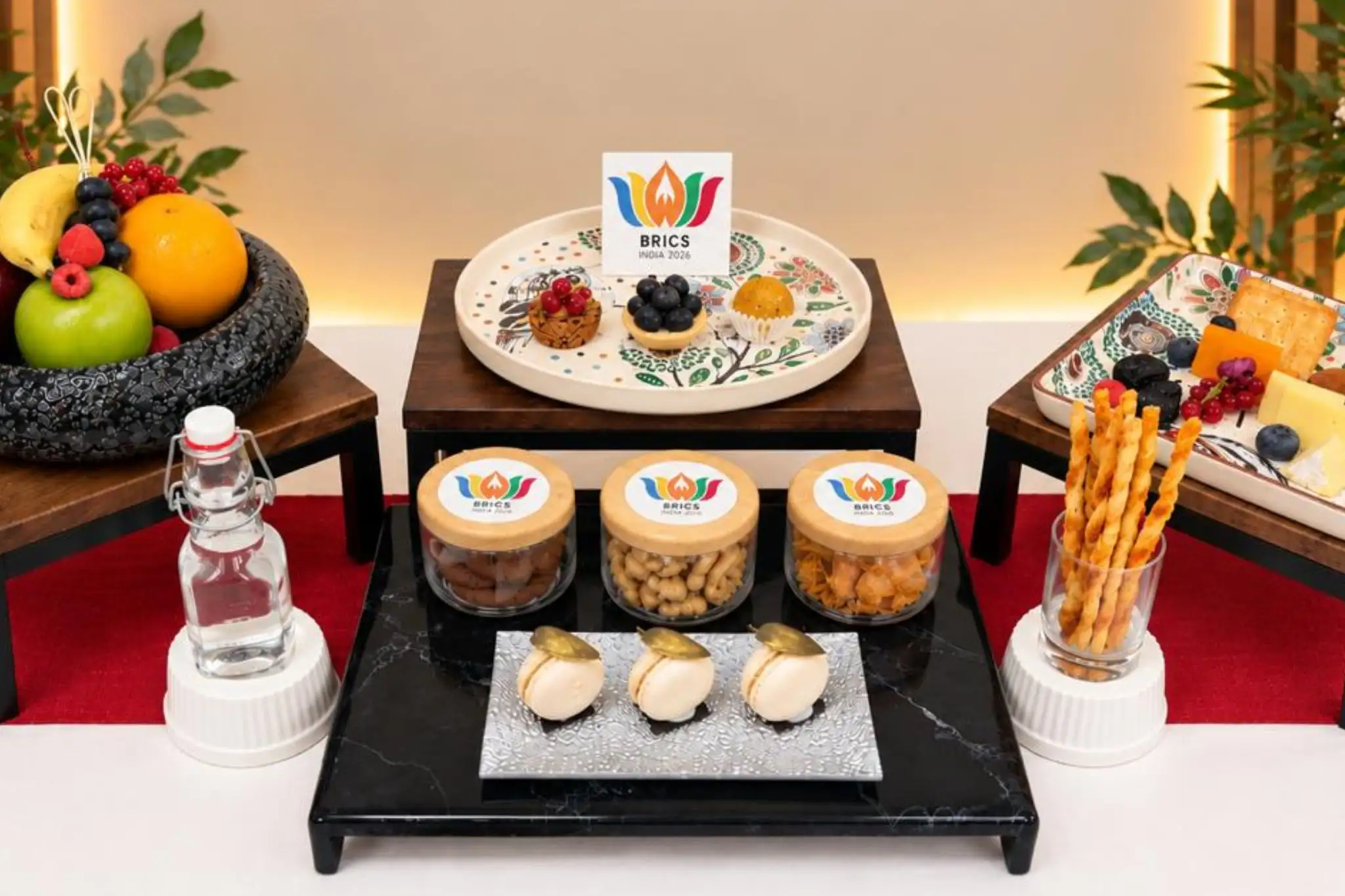
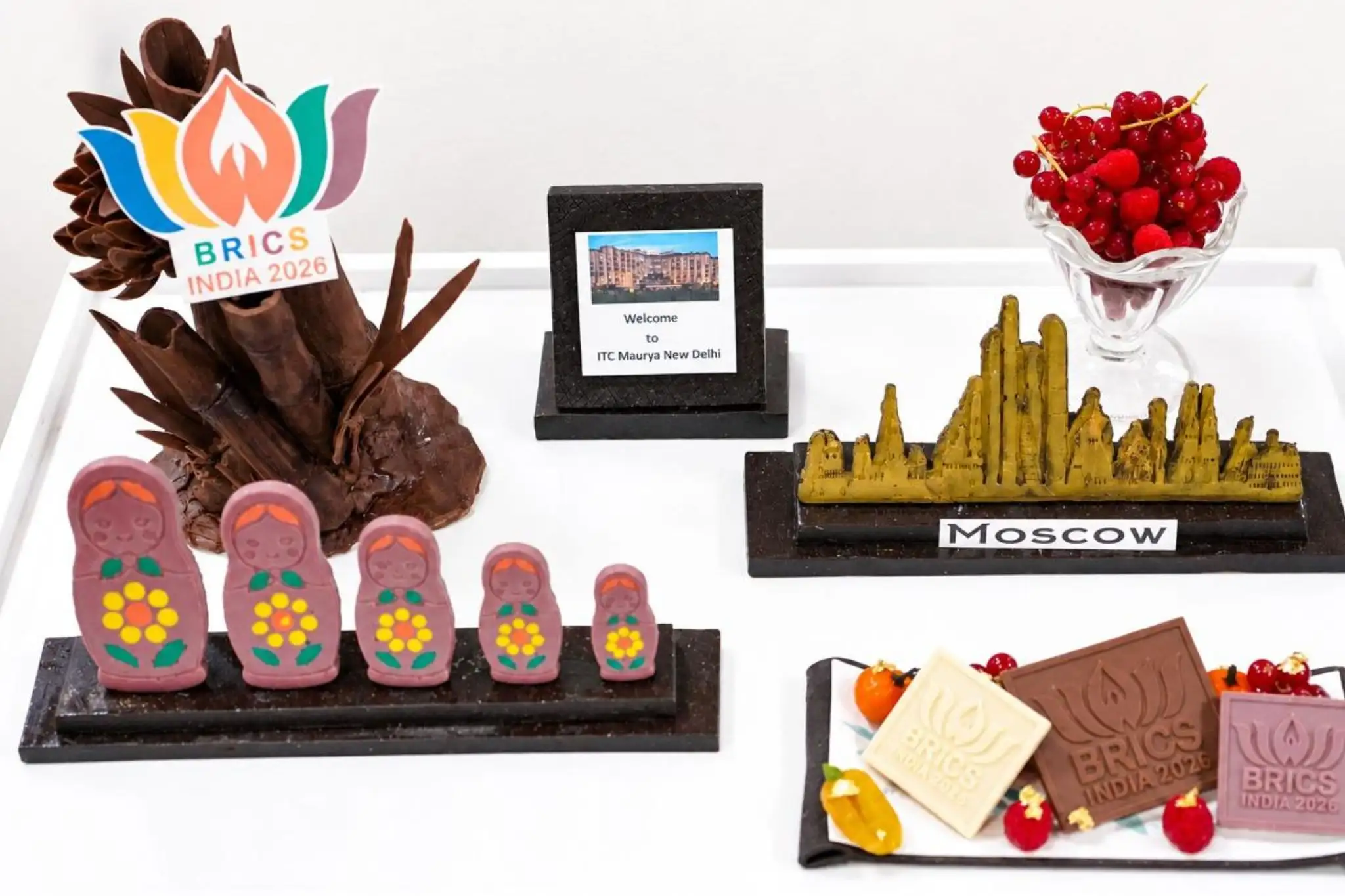
Executive Chef Kaushik Misra has been at the centre of these preparations. The idea is not simply to feed a delegation. It is to use the dining table as another way of introducing visitors to India’s regional ingredients, techniques and culinary history. Recent reporting on the summit menus has similarly highlighted the emphasis on regional Indian food and ingredients such as millets. Goodies inside the room at ITC Maurya ITC Maurya: Putin’s welcome is built around Russia and India If Taj’s approach leans heavily into India’s culinary traditions, ITC Maurya has taken a different route for Russian President Vladimir Putin, creating a bespoke amenity that places Russian cultural symbolism alongside Indian flavours. Putin is staying at ITC Maurya, where entire floors have reportedly been cleared for his stay. The hotel has hosted Russian leaders during previous visits and has long been one of Delhi’s preferred addresses for visiting heads of state. For this BRICS visit, the hotel’s culinary team created an elaborate edible interpretation of India-Russia cultural exchange. At its centre is a collection of chocolate Matryoshka dolls, the instantly recognisable Russian nesting dolls representing heritage, continuity, tradition and unity. Alongside them is a chocolate sculpture depicting the Russian landscape, incorporating architectural landmarks as its main visual element. The Indian component comes through a traditional thali of Indian sweets, accompanied by handcrafted chocolate bonbons flavoured with ingredients such as cardamom, saffron, rose, ginger and fennel. The result is deliberately cross-cultural: Russian symbols are recreated through chocolate, while Indian culinary traditions appear through sweets, spices and the thali.