
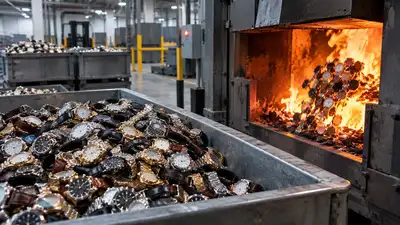
Representative image of luxury watches being destroyed to protect a premium brand’s market value. Image Credits: ChatGPT.
The Swiss luxury group behind Cartier carried out exceptional watch inventory buy-backs worth €203 million in the year to March 2018, following €278 million in the previous year, according to Richemont’s 2018 annual report . The two rounds totalled about €481 million and were aimed at reducing excess stock held by multi-brand retail partners and bringing inventories closer to end-client demand. For the companies behind brands such as Cartier, allowing large quantities of unsold watches to circulate at deep discounts could therefore create a problem that went beyond excess stock. Because manufacturers have less control over how their products are priced and presented once they leave authorised channels, the grey market creates an additional challenge.
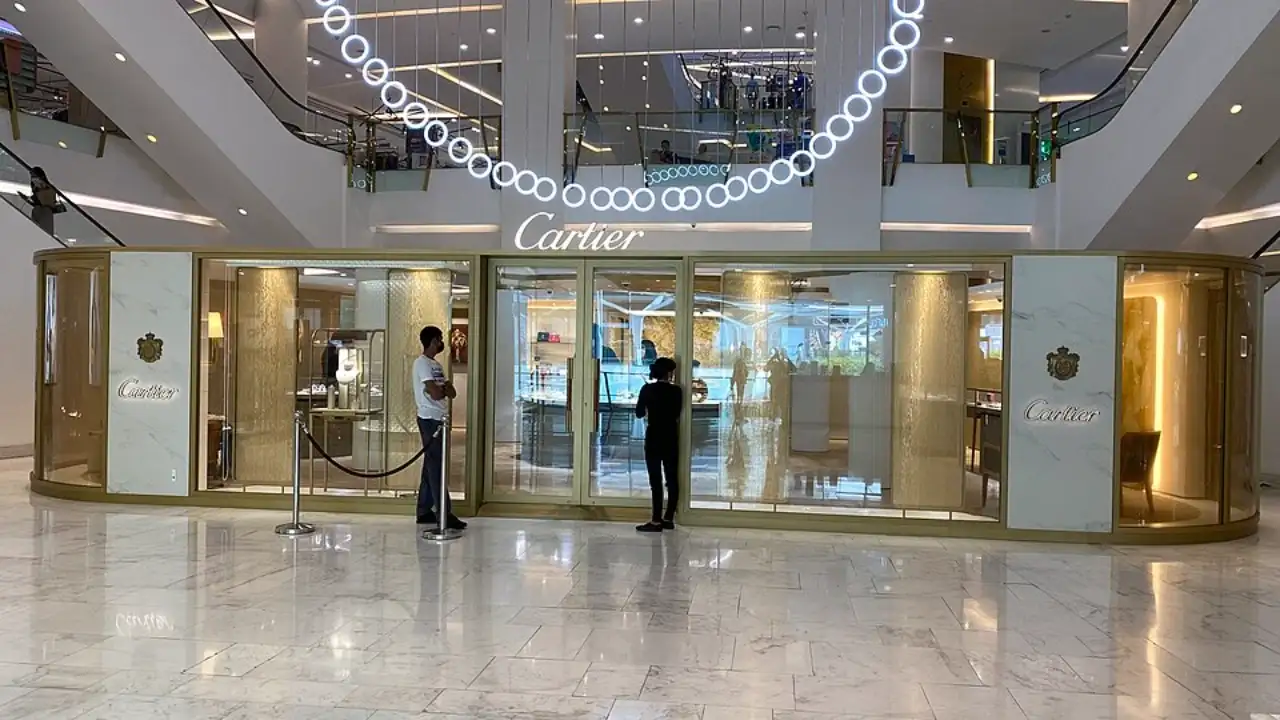
Luxury watches rely on a simple idea: scarcity can be part of the product itself. A timepiece may contain intricate mechanical components and expensive materials, but its value can also depend on where it is sold, how widely it is available and how consistently its price is maintained. Richemont’s move came as it sought to prevent unsold watches from entering unauthorised channels, where they could be offered at lower prices. Research published in Transportation Research Part E has examined grey-market activity in luxury supply chains and highlighted the difficulty manufacturers face in managing prices and distribution when products move through unauthorised markets. For Richemont, getting rid of the surplus watches was thus a way of safeguarding the pricing system associated with its brands. They did not have to sell the unwanted inventory at increasingly lower prices, while retailers could reduce their inventories without flooding the market with discounted merchandise. Cartier Emporium, Bangkok. Image Credits: Wikimedia Commons. The episode showed how differently luxury firms handle unsold products. In other sectors, excess supply is handled via discounts and sales or different distribution channels. However, for a luxury watch company, a significantly discounted watch can have negative effects on the value proposition of that watch itself. It follows that Richemont’s hundreds-of-millions-of-euros inventory programme was not about breaking down watches but about controlling where those watches would be seen. Catch the latest World News and Live updates. Download the TOI app.
Richemont’s 2018 annual report also states that the group had undertaken exceptional inventory buy-backs to address this excess stock. In 2018, The Guardian reported that Richemont had been destroying watches after buying them back from retailers as the group dealt with excess inventory. When unsold watches became a problem The stock buildup was linked to a slowdown in luxury demand and a build-up of inventory among retailers. Some dealers had held watches for years without finding buyers, leaving them with an incentive to clear the products through unofficial channels. The situation became particularly visible in Asian markets, where changing consumer behaviour and China’s anti-corruption campaign had contributed to weaker demand for some luxury goods. Rather than allowing retailers to reduce prices sharply, the company purchased watches back from them. This gave retailers a way to clear their inventories while allowing Richemont to regain control of products carrying its brands before they reached the grey market. The issue was not that the watches were defective. They were legitimate luxury products that had become difficult to sell through the authorised retail network at their intended prices. Once watches entered the grey market, they could appear alongside authorised products at considerably lower prices, making the difference visible to consumers. The cost of protecting a luxury price Research published in the Journal of Business Research has examined how consumers perceive luxury goods when price, rarity and status are closely connected. The findings help explain why discounting can have consequences beyond the immediate loss in revenue: for some luxury consumers, high prices and limited availability can contribute to perceptions of exclusivity. Why destroying the watches made sense However, the value of the brand names was what was considered during the calculation, not the potential value of each watch. By then, the company had begun to bring its stock levels under control, and Richemont indicated that the exceptional buy-back programme was coming to an end.